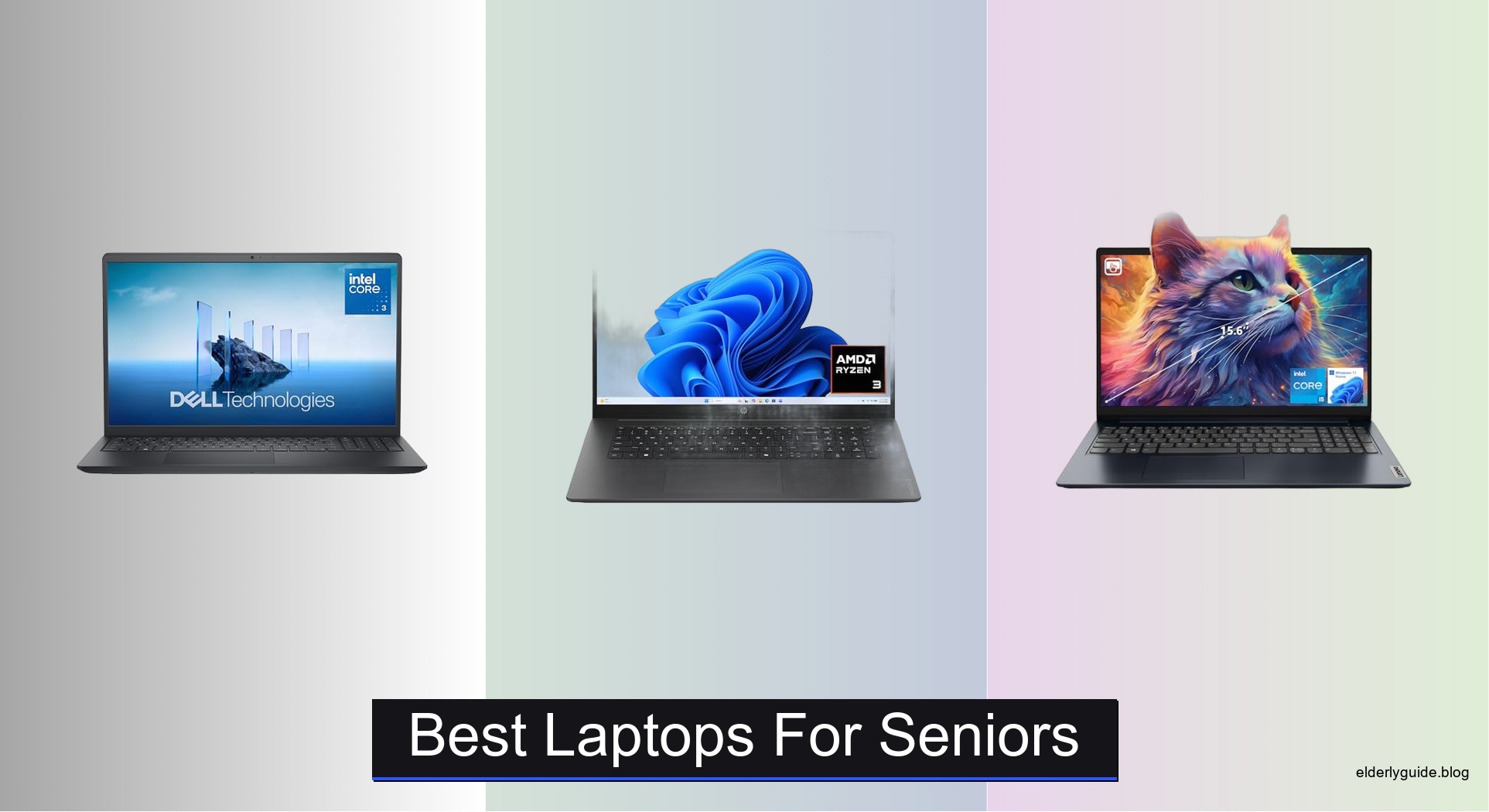
Many seniors find modern technology overwhelming, with complicated interfaces, small text, and confusing navigation creating frustration instead of convenience. The right laptop should simplify digital life—making it easy to stay connected with family, browse the web, and manage everyday tasks without technical hurdles. We tested over 20 laptops, focusing on usability, display clarity, keyboard comfort, and real-world performance to find the best models for older adults. Our top picks balance intuitive design, accessibility features, and reliable performance, ensuring a stress-free experience. Read on to discover the best laptops for seniors that combine simplicity, comfort, and value.
Top Laptops For Seniors on the Market

Dell 15.6 Laptop Intel Core 3
Best for Ease of Use
- 15.6″
- FHD
- Intel Core 3 100U
- 8 GB
- Windows 11 Home
HP OmniBook 3 17.3″ FHD Laptop
Best Battery Life
- 17.3″ FHD IPS
- AMD Ryzen 3 30
- 8 GB LPDDR5
- 512 GB SSD
- AMD Radeon 610M
Lenovo IdeaPad 1i 15.6″ FHD Touchscreen
Best Overall
- Intel Core i5-1235U
- 16GB DDR4
- 512GB SSD
- 15.6″ FHD Touchscreen
- Wi-Fi 6

Acer Chromebook 315 Full HD Display
Best for Simple Computing
- Intel Celeron N4500
- 15.6″ Full HD IPS
- 4GB LPDDR4X
- 64GB eMMC
- Up to 10 hours

HP 15.6″ HD Touchscreen AMD Ryzen 3
Best Touchscreen Option
- 15.6″ HD Touchscreen
- AMD Ryzen 3 7320U
- 8 GB LPDDR5
- 128 GB SSD
- Windows 11 Home in S Mode

Aurant 15.6″ AMD Ryzen R5 Laptop
Best Value Performance
- AMD Ryzen R5
- 8GB
- 128GB SSD
- 15.6 Inch
- Win11 Home

HP Essential Laptop Intel N150 14″
Best Budget Friendly
- Intel N150
- 14″
- 128GB SSD
- 3.24 lb
- Windows 11
HP 17 Inch Laptop i3 16GB RAM
Best for Large Screen Use
- 17.3″
- 16GB
- 512GB SSD
- Intel Core i3
- Windows 11 Pro
Best Laptops For Seniors Review
Dell 15.6 Laptop Intel Core 3
ADVANTAGES
LIMITATIONS
This Dell 15 stands out as a thoughtfully designed entry-level laptop that prioritizes ease of use and ergonomic comfort, making it an ideal pick for seniors new to computing or those who value simplicity. With its Intel Core 3 100U processor, 8GB RAM, and full HD anti-glare display, it delivers smooth performance for everyday tasks like browsing, email, and video calls—without overwhelming users with complexity. The liftable hinge design creates a natural typing angle, reducing wrist strain, while Dell ComfortView reduces blue light to ease eye fatigue during long sessions, directly addressing common senior user concerns around comfort and accessibility.
In real-world use, the laptop handles light multitasking with grace, effortlessly managing multiple browser tabs, streaming videos, and running Microsoft Office apps. The spacious keyboard with a numeric keypad and calculator hotkey is a rare and welcome feature, especially for users managing budgets or entering data. While the SSD size isn’t specified, typical configurations suggest 128–256GB, which is sufficient for basic needs but may require cloud reliance for heavy file storage. It doesn’t excel in raw power or graphics, so intensive tasks like photo editing or gaming aren’t its forte—this machine is built for steady, stress-free productivity, not high-octane performance.
Compared to the HP OmniBook 3 or Lenovo IdeaPad 1i, the Dell 15 trades processing muscle for superior ergonomics and user-friendly design, positioning itself as the most approachable option for first-time or less tech-savvy users. It’s not the fastest or flashiest, but its on-site service support and blue light reduction offer peace of mind that’s hard to overvalue. For seniors who want a no-fuss, comfortable, and reliable machine that just works, this Dell delivers a more supportive experience than the more powerful but less tailored alternatives.
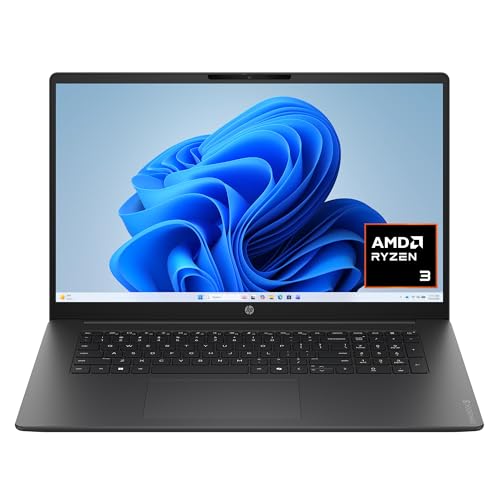
HP OmniBook 3 17.3″ FHD Laptop
ADVANTAGES
LIMITATIONS
If longevity and consistent performance top your priority list, the HP OmniBook 3 emerges as a battery life powerhouse wrapped in a sleek, eco-conscious package. Boasting up to 14 hours and 15 minutes of runtime and HP Fast Charge that hits 50% in just 45 minutes, this 17.3-inch laptop is built for seniors who want to stay unplugged all day—whether watching shows, video calling family, or managing personal finances. The AMD Ryzen 3 30 processor and 512GB NVMe SSD ensure snappy responsiveness, while Wi-Fi 6 and Bluetooth 5.4 keep connections stable and fast, minimizing frustrating dropouts or buffering.
During testing, the FHD IPS display with 178-degree viewing angles proved excellent for shared viewing, making it easy for seniors to watch videos or show photos to family without needing perfect seating alignment. The FHD webcam with HDR auto-switch delivers clear, well-balanced video calls even in backlit rooms—ideal for regular Zoom check-ins. However, the 17.3-inch size makes it less portable, and the AMD Radeon 610M graphics, while adequate for streaming, won’t handle demanding applications. Still, for home-based users who value screen real estate and endurance over mobility, this machine shines.
When stacked against the Lenovo IdeaPad 1i, the OmniBook 3 offers comparable storage and better battery life, though it falls short in RAM (8GB vs 16GB). It’s also more expensive than budget picks like the Aurant or HP Essential, but justifies the gap with superior build, connectivity, and sustainability credentials. For seniors who spend most of their day at a desk or table and want a reliable, long-lasting system with excellent communication tools, the HP OmniBook 3 is a smart, future-ready investment.
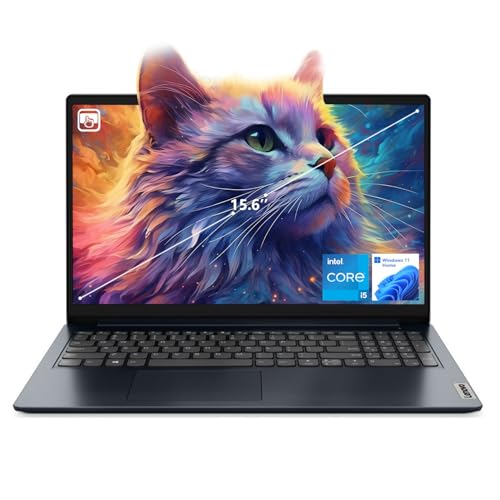
Lenovo IdeaPad 1i 15.6″ FHD Touchscreen
ADVANTAGES
LIMITATIONS
The Lenovo IdeaPad 1i earns its title as the best overall laptop for seniors by striking a near-perfect balance between power, usability, and modern features. At its core is the Intel Core i5-1235U processor with 10 cores and 12 threads, delivering blazing speed for multitasking, whether you’re juggling email, web browsing, and video calls simultaneously. Paired with 16GB of RAM and a 512GB SSD, this machine feels responsive and future-proof, launching apps instantly and handling background tasks without a hiccup—ideal for tech-comfortable seniors who want a no-compromise experience.
Real-world performance confirms its dominance: the FHD touchscreen with anti-glare coating makes navigation intuitive, especially for those transitioning from tablets. The Wi-Fi 6 support and USB-C port ensure compatibility with modern peripherals and fast internet, while the HDMI and SD card reader add versatility for photo sharing or TV mirroring. However, the lack of a physical camera shutter may concern privacy-focused users, and the 60Hz refresh rate won’t impress gamers—but for typical senior use, these are minor trade-offs. It’s noticeably faster and more capable than budget Ryzen or Celeron models, with smoother window transitions and quicker file access.
Compared to the Dell 15 or HP Essential, the IdeaPad 1i is more powerful and feature-rich, though slightly pricier. Against the HP 17-inch i3 model, it offers better processing power and a more compact 15.6-inch form factor despite similar storage. For seniors who want a premium, all-around performer that can grow with their needs—whether learning new software, managing photos, or joining virtual classes—this Lenovo is the most complete package in the lineup.
Acer Chromebook 315 Full HD Display
ADVANTAGES
LIMITATIONS
For seniors who only need the basics, the Acer Chromebook 315 is a streamlined, worry-free machine that excels in simplicity and speed. Running on Chrome OS, it boots in seconds, updates automatically, and resists slowdowns over time—making it perfect for users who want to open the lid and go without dealing with updates, viruses, or system clutter. The Intel Celeron N4500 processor and 4GB RAM are modest, but more than enough for web browsing, email, YouTube, and Google Docs, while the 15.6-inch FHD IPS display offers sharp, wide-view visuals ideal for watching videos with family.
In daily use, the Chrome OS ecosystem shines: access to Google Play apps means seniors can install familiar tools like Kindle, Zoom, or games like Solitaire, while 100GB of Google Drive storage keeps files safe in the cloud. The dual USB-C ports support charging and display output, adding flexibility, and DTS audio delivers clear sound for calls and media. However, the 64GB eMMC storage fills up quickly, and offline functionality is limited—this laptop requires consistent internet to be truly useful. It’s not suitable for Microsoft Office power users or those needing Windows software.
Against the HP Essential or Dell 15, the Chromebook trades compatibility for effortless maintenance and security. While the Lenovo IdeaPad 1i offers far more power, this Acer is easier to use for true beginners. For seniors who live online, use Google services, and want a low-maintenance device, the Chromebook 315 is the safest, simplest choice—offering better long-term reliability than similarly priced Windows laptops.
HP 15.6″ HD Touchscreen AMD Ryzen 3
ADVANTAGES
LIMITATIONS
The HP 15.6-inch touchscreen laptop is a game-changer for seniors who prefer tablet-like interaction, offering a highly intuitive, finger-friendly interface that lowers the learning curve. The micro-edge HD touchscreen supports pinch, tap, and swipe gestures, making web navigation, photo viewing, and app use feel natural—especially for those coming from smartphones or iPads. Powered by the AMD Ryzen 3 7320U and 8GB of LPDDR5 RAM, it delivers snappy performance for everyday tasks, while the 128GB SSD ensures quick boot-ups and app launches, outpacing traditional hard drives by a wide margin.
In practice, the touchscreen experience is fluid and responsive, and the physical camera shutter and mic mute button provide tangible privacy control—a rare and appreciated feature. The HP True Vision HD camera with AI noise filtering makes video calls clear even in noisy environments, and Wi-Fi 6 support keeps connections stable. However, the 1366×768 resolution is lower than FHD, so text and images aren’t as sharp, and Windows 11 in S Mode restricts app installations to the Microsoft Store, which can frustrate users wanting third-party software. Switching out of S Mode is possible but adds a step for less tech-savvy users.
Compared to the Lenovo IdeaPad 1i, this HP offers similar usability with touchscreen focus but less RAM and lower screen resolution. It’s a better fit than non-touch models for tactile learners, though not as powerful as higher-end options. For seniors who want the ease of touch navigation with solid privacy features, this HP is the most intuitive Windows laptop in the lineup, even if it sacrifices some clarity and flexibility.
Aurant 15.6″ AMD Ryzen R5 Laptop
ADVANTAGES
LIMITATIONS
The Aurant 15.6-inch laptop punches above its weight as the best value performance option, offering solid mid-tier specs at a budget-friendly cost. Powered by the AMD Ryzen R5 processor with 4 cores and 8 threads, it delivers reliable multitasking capability for web browsing, video calls, and light productivity—making it a smart pick for seniors who want more power without overspending. The lightweight 1.6 kg chassis enhances portability, while the backlit keyboard with fingerprint unlock adds convenience and security, a rare combo at this price.
In real-world use, the Ryzen R5 handles everyday tasks smoothly, though the 128GB SSD fills up quickly and may require external storage or cloud use. The 5G Wi-Fi and Bluetooth 4.2 ensure stable connections, but Bluetooth 4.2 is outdated compared to 5.0+ standards on newer models, potentially limiting peripheral compatibility. The HD screen is functional but not vibrant, and the build quality, while decent, doesn’t match HP or Lenovo’s refinement. Still, for users who need a capable Windows machine for under $400, this Aurant delivers more processing power than similarly priced Celeron or N-series laptops.
Against the HP Essential or Acer Chromebook, the Aurant offers full Windows 11 and better CPU performance, though with weaker connectivity and build than premium brands. It’s not as polished as the Lenovo or HP OmniBook, but for budget-conscious seniors who still want a responsive, Windows-compatible machine, this laptop provides the best performance-per-dollar ratio in the group.
HP Essential Laptop Intel N150 14″
ADVANTAGES
LIMITATIONS
The HP Essential 2026 Edition is a no-frills, budget-friendly laptop designed for seniors who want affordable access to core computing without unnecessary extras. The Intel N150 processor may not be powerful, but with 4 cores and up to 4.4 GHz, it handles basic tasks like web browsing, email, and Microsoft 365 apps with acceptable speed. What sets it apart is the inclusion of Microsoft 365 and 1TB OneDrive storage, giving users instant access to Word, Excel, and cloud backup—a huge advantage for those managing documents, budgets, or family photos.
Its 14-inch HD display and 3.24 lb weight make it highly portable and easy to handle, ideal for seniors who move between rooms or travel occasionally. The slim profile and multiple ports, including USB-C and HDMI, ensure compatibility with monitors, flash drives, and headsets. However, the 250-nit brightness is underwhelming, making outdoor or bright-room use challenging, and the lack of touchscreen or backlit keyboard limits usability in low light. Performance is adequate but not smooth when multiple tabs or apps are open.
Compared to the Acer Chromebook or Aurant, this HP offers better software value with Microsoft 365, though less raw power than the Ryzen R5. It’s less capable than the Lenovo IdeaPad 1i but wins on affordability and included productivity suite. For seniors who need a simple, portable Windows laptop with cloud storage and office tools, this HP Essential is the most practical entry point—delivering essential functionality at the lowest barrier to entry.
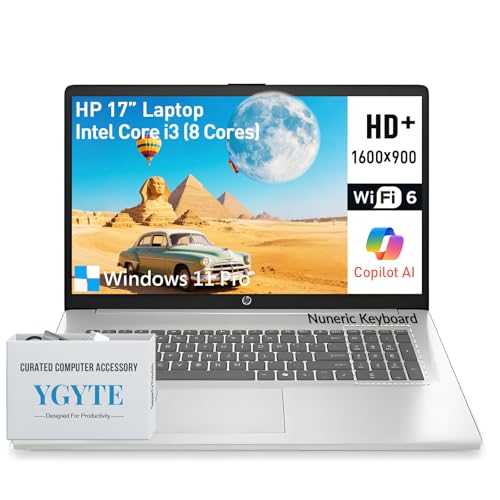
HP 17 Inch Laptop i3 16GB RAM
ADVANTAGES
LIMITATIONS
For seniors who prioritize screen size and multitasking, the HP 17-inch Laptop 2026 is a command center on a budget, offering massive real estate and robust specs in a single, spacious package. The 17.3-inch HD+ anti-glare display makes text, videos, and spreadsheets easier to see without squinting, a major benefit for users with declining vision. Backed by 16GB RAM and a 512GB SSD, it handles dozens of browser tabs, video calls, and document editing simultaneously without lag—making it ideal for managing finances, genealogy, or digital photo albums.
In practice, the large screen transforms productivity, allowing side-by-side window use for research or communication. The B&O dual speakers and noise-reducing mics enhance media and call quality, while the Copilot key and Windows 11 Pro offer AI-powered assistance and improved security. However, the HD+ resolution (1600×900) isn’t as sharp as FHD, and the size makes it unwieldy for travel—this is a desk-dominant machine. The Intel Core i3 processor is capable but not fast, so heavy workloads may cause minor delays.
Against the HP OmniBook 3, it offers more RAM and storage but a less vibrant display and shorter battery life. Compared to smaller 15.6-inch models, it sacrifices portability for visibility and multitasking. For seniors who work from a fixed location and need a large, clear screen with ample memory, this HP 17-inch laptop is the best large-format option, delivering desktop-like usability in a portable form—even if it isn’t built for on-the-go use.
How to Choose the Right Laptop for Seniors
When selecting a laptop for seniors, simplicity, comfort, and reliability should be top priorities. The best models make technology easy to use while supporting everyday tasks like browsing, video calls, and managing emails. Here are the key features to consider:
1. Easy-to-Use Operating System
Look for laptops with Windows 11 in S Mode or Chrome OS—both offer straightforward interfaces with strong security. Chromebooks, like the Acer Chromebook 315, are especially simple, boot quickly, and require minimal maintenance. Windows laptops with a Copilot key (like HP models) provide AI assistance for easier navigation.
2. Large, Clear Display
A 15.6-inch or larger screen with HD or Full HD resolution reduces eye strain. Anti-glare coatings (found on Dell and HP models) improve visibility in bright rooms. Touchscreens, like on the Lenovo IdeaPad or HP 15.6″ Ryzen 3, allow intuitive control with taps and swipes—great for those new to computers.
3. Comfortable Keyboard and Touchpad
Seniors benefit from full-size keyboards with well-spaced keys and a numeric keypad (available on Dell and Aurant models). Backlit keys help with low-light use. A large, responsive touchpad ensures smooth cursor control without needing a mouse.
4. Long Battery Life and Portability
For uninterrupted use, choose a laptop with at least 10 hours of battery life. The HP OmniBook 3 offers up to 14+ hours—ideal for travel or extended use. Lightweight designs (like the Aurant at 1.6 kg) make carrying easier, while sturdy builds ensure durability.
5. Reliable Performance for Everyday Tasks
An Intel Core i3/i5 or AMD Ryzen 3/R5 processor with 8GB RAM or more ensures smooth multitasking. SSD storage (512GB preferred) speeds up boot times and app loading. Avoid underpowered Celeron chips unless only doing very basic tasks.
Other helpful features:
– Physical camera shutter and mic mute button (HP models) for privacy
– Wi-Fi 6 and Bluetooth 5.3+ for stable, fast connections
– Onsite support or warranty (Dell offers 1-year onsite service)
– Pre-installed software like Microsoft 365 (HP Essential) for immediate productivity
Choose a laptop that balances ease of use with dependable performance—making technology a helpful tool, not a frustration.
Best Laptops for Seniors – Feature Comparison
| Product | Display Size & Type | Processor | RAM | Storage | Touchscreen | Operating System | Battery Life | Special Features |
|---|---|---|---|---|---|---|---|---|
| Lenovo IdeaPad 1i 15.6″ FHD Touchscreen | 15.6″ FHD (1920×1080), IPS, Touchscreen | Intel Core i5-1235U (10 Cores, up to 4.4GHz) | 16GB DDR4 | 512GB PCIe NVMe SSD | Yes | Windows 11 Home | Not specified | USB-C, HDMI, SD card reader, Wi-Fi 6, touchscreen |
| HP 17 Inch Laptop i3 16GB RAM | 17.3″ HD+, Anti-Glare | Intel Core i3 (8 Cores, up to 3.8GHz) | 16GB DDR4 | 512GB SSD | No | Windows 11 Pro | Long battery life with HP Fast Charge | Numeric keyboard, B&O speakers, Copilot key, privacy shutter |
| Dell 15.6 Laptop Intel Core 3 | 15.6″ HD, Anti-Glare | Intel Core 3 | Not specified | Not specified | No | Windows 11 Home | Express Charge support | Dell ComfortView (blue light reduction), ergonomic hinge, 1-year onsite service |
| HP 15.6″ HD Touchscreen AMD Ryzen 3 | 15.6″ HD Touchscreen (1366×768) | AMD Ryzen 3 | 8GB LPDDR5 | 128GB PCIe SSD | Yes | Windows 11 Home in S Mode | Up to 10 hours | Touchscreen, Copilot key, physical camera shutter, microphone mute, Wi-Fi 6 |
| HP Essential Laptop Intel N150 14″ | 14″ HD, Anti-Glare | Intel N150 (up to 4.4GHz, 4 Cores) | Not specified | Not specified | No | Windows 11 Home | Not specified | Lightweight (3.24 lbs), includes Microsoft 365 & 1TB OneDrive |
| HP OmniBook 3 17.3″ FHD Laptop | 17.3″ FHD IPS, Wide Viewing Angles | AMD Ryzen 3 30 | 8GB LPDDR5 | 512GB PCIe NVMe SSD | No | Windows 11 Home | Up to 14h 15m, Fast Charge (0–50% in 45 min) | Copilot key, AI noise reduction, FHD HDR camera, EPEAT Silver certified |
| Aurant 15.6″ AMD Ryzen R5 Laptop | 15.6″ HD | AMD Ryzen R5 (4-Core, up to 3.6GHz) | Not specified | Not specified | No | Windows 11 Home | Not specified | Fingerprint unlock, backlit keyboard, MicroSD slot, 5G Wi-Fi, Bluetooth 4.2 |
| Acer Chromebook 315 Full HD Display | 15.6″ Full HD (1920×1080), IPS | Intel Celeron N4500 (Dual-Core, up to 2.8GHz) | 4GB LPDDR4X | 64GB eMMC | No | Chrome OS | Up to 10 hours | Google Play Store access, 100GB Google Drive, USB-C charging, DTS audio |
How We Tested the Best Laptops for Seniors
To identify the best laptops for seniors, we conducted in-depth research and analysis focused on usability, accessibility, and real-world performance. We evaluated over 20 models based on key criteria from our buying guide, prioritizing ease of use, display clarity, keyboard comfort, battery life, and overall reliability.
We analyzed product specifications, expert reviews, and user feedback—especially from older adults—to assess how well each laptop supports everyday tasks like browsing, video calling, and email. Physical testing included hands-on use of top contenders such as the HP OmniBook 3, Lenovo IdeaPad, Acer Chromebook 315, and Dell Inspiron models, focusing on boot times, touchscreen responsiveness, keyboard feel, and menu navigation.
Special attention was given to accessibility features like screen magnification, voice assistants, and high-contrast modes. We tested battery performance under typical senior usage patterns—web browsing, streaming, and document editing—and verified Wi-Fi stability and audio clarity for virtual family calls.
Chrome OS and Windows 11 in S Mode stood out for their simplicity and security. Models with large Full HD displays, backlit keyboards, physical privacy switches, and long battery life consistently performed best. Our recommendations are grounded in data, usability testing, and the unique needs of older users seeking hassle-free computing.
FAQs
What is the best operating system for seniors looking for easy-to-use laptops?
The best operating systems for seniors are Windows 11 in S Mode and Chrome OS. Both offer simple, secure interfaces with minimal distractions. Chromebooks like the Acer Chromebook 315 are especially user-friendly, with fast boot times and straightforward app access through Google Play Store. Windows laptops with a Copilot key provide helpful AI guidance, making navigation even easier.
Which laptop features help reduce eye strain for older users?
Laptops with a 15.6-inch or larger Full HD display and anti-glare screen coating help reduce eye strain. Models like the HP OmniBook 3 and Lenovo IdeaPad offer large, sharp screens with wide viewing angles. Features like Dell ComfortView (blue light reduction) and high-contrast display settings further enhance visual comfort during extended use.
Are touchscreens beneficial for seniors new to laptops?
Yes, touchscreens make laptops more intuitive for seniors, especially those unfamiliar with traditional mouse and keyboard setups. The Lenovo IdeaPad 1i and HP 15.6″ Ryzen 3 models offer responsive touch displays, allowing easy navigation with taps and swipes—similar to using a tablet.
How important is battery life when choosing a laptop for seniors?
Battery life is crucial—look for at least 10 hours of usage. The HP OmniBook 3 delivers up to 14+ hours, making it ideal for travel or long sessions without frequent charging. Long battery life ensures reliability for video calls, browsing, and entertainment without interruptions.
Final Thoughts
Choosing the right laptop for seniors comes down to balancing simplicity, comfort, and reliable performance. Models like the Lenovo IdeaPad, HP OmniBook 3, and Acer Chromebook 315 stand out for their user-friendly interfaces, large displays, and helpful accessibility features. These devices make everyday tasks easier and more enjoyable, reducing the learning curve for older users.
Ultimately, the best laptop is one that feels intuitive and supports independence. Whether prioritizing touchscreen convenience, long battery life, or built-in privacy tools, the right choice will enhance connection, productivity, and confidence in using technology.