
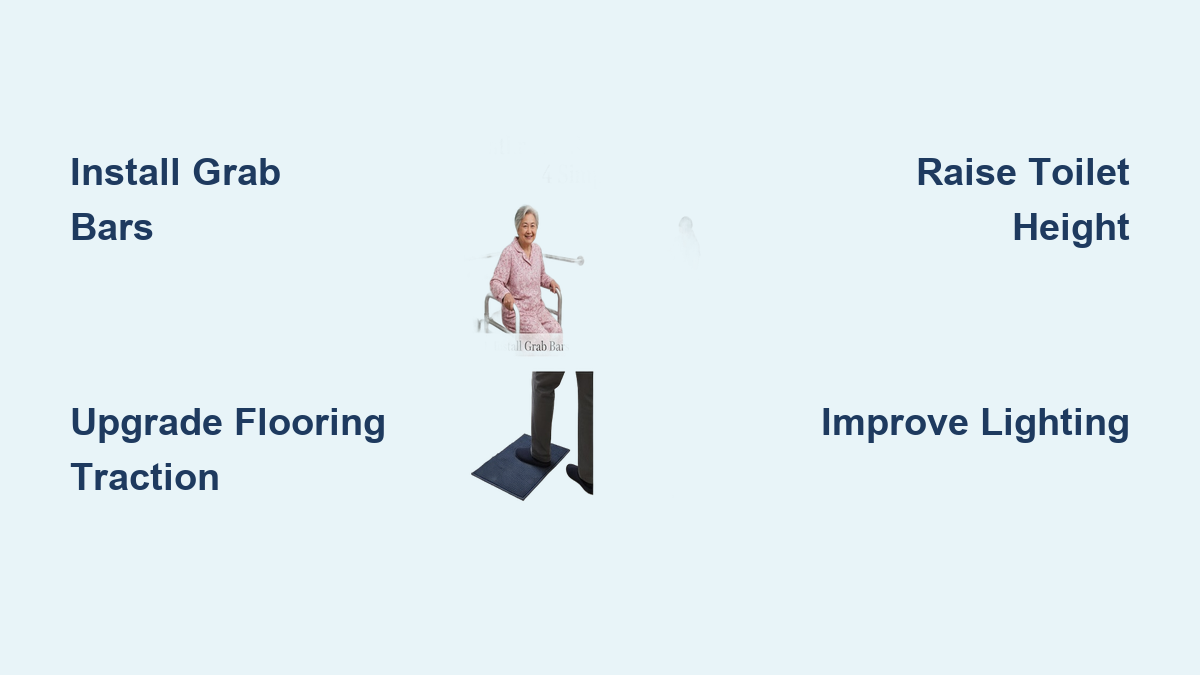
Every year, over 200,000 older adults are treated for bathroom-related injuries, with 80% of senior falls occurring in this small room. Slippery tiles, tight spaces, and physical limitations turn routine tasks like showering or using the toilet into high-risk activities. A fall can lead to fractures, hospitalization, or even long-term loss of independence, yet up to 40% of these incidents are preventable with simple, targeted modifications.
If you’re helping an aging parent, loved one, or client stay safe at home, the bathroom should be your first priority. This guide delivers actionable, research-backed steps to reduce fall risk, support mobility, and preserve dignity. From low-cost fixes like non-slip mats to structural upgrades like walk-in showers, you will learn exactly what works to make a bathroom safe for seniors.
Install Proper Grab Bars for Reliable Support
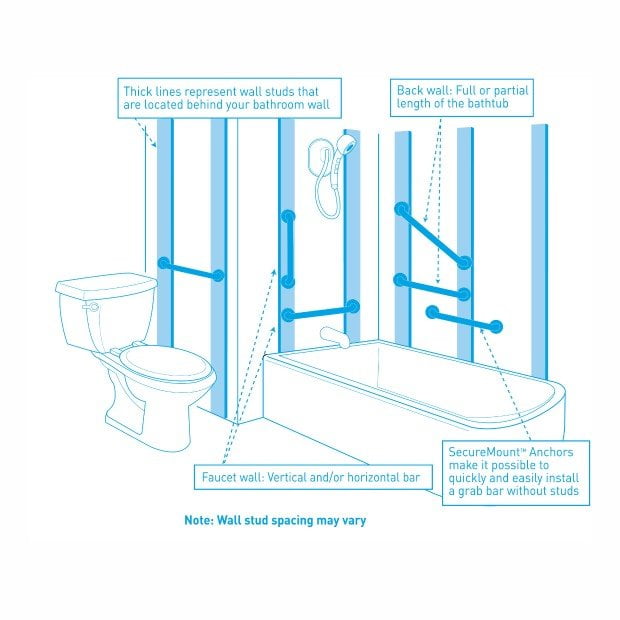
Standard towel bars and toilet paper holders are not designed to bear weight. When a senior leans on these fixtures for balance, they can snap loose, increasing fall risk rather than preventing it. True grab bars are engineered to support 250 to 300 pounds and must be anchored securely into wall studs.
Choose the right type and placement for maximum effectiveness. L-shaped bars work well beside toilets and at tub entries where multi-directional support is needed. Straight bars provide reliable horizontal grip inside showers. U-shaped swing-down bars clamp over tub walls without drilling, making them ideal for renters.
Install at least one grab bar beside the toilet and two in the shower. Position them 33 to 36 inches from the floor, allowing a slight elbow bend when gripping. Hire a professional contractor to anchor bars into studs; hollow-wall anchors often fail under stress.
Upgrade Flooring for Better Traction
Smooth porcelain and ceramic tiles become extremely dangerous when wet. Seniors need flooring that provides grip without sacrificing aesthetics. Textured vinyl plank or sheet flooring offers waterproof durability while mimicking wood or stone. Rubber or cork flooring feels softer underfoot and reduces injury severity if a fall occurs.
If replacement is not possible, apply non-slip coatings or adhesive strips directly to existing tiles. Avoid glossy finishes entirely. Place rubber-backed mats outside the tub and anchor them with double-sided tape. Inside the tub, use suction-cup mats and clean them weekly to maintain grip.
Replace any mat showing curled edges, mildew, or worn backing immediately. Loose or damaged mats create more hazard than having none at all.
Optimize Shower and Tub Safety
Stepping over a high tub wall is a major fall risk for seniors. A barrier-free or zero-threshold shower eliminates this obstacle entirely. Key features include no curb or lip, slip-resistant flooring, a built-in or fold-down bench, efficient linear drainage, and a handheld shower on a slide rail.
For those who prefer bathing, a tub transfer bench lets users sit on the edge and slide into the tub safely. Look for adjustable width, non-slip rubber feet, a backrest, and armrests. Ensure the weight capacity meets or exceeds 300 pounds.
A handheld shower wand with a 60-inch tangle-resistant hose allows seated bathing without standing. Mount it on a vertical slide rail so height can be adjusted easily. Models with pause settings save water and prevent sudden temperature changes.
Prevent Scalding and Temperature Shocks

Seniors often have reduced skin sensitivity, making them vulnerable to burns without realizing danger. Set your water heater to no more than 120 degrees Fahrenheit or 49 degrees Celsius. Test water with a thermometer before bathing each time.
Install thermostatic mixing valves to maintain consistent temperature, even when someone flushes a toilet. Pressure-balancing valves prevent sudden surges of hot water. Anti-scald showerheads offer an affordable rental-friendly option.
Never rely on memory alone. Cognitive changes can cause seniors to forget temperature settings or misinterpret hot and cold.
Raise Toilet Height for Easier Transfers
Standard toilets sit at 14 to 15 inches, forcing seniors to strain their knees and hips when sitting and standing. A raised seat adds 2 to 7 inches, making transfers safer and less painful.
Clamp-on models require no tools and can be removed easily. Permanently mounted seats offer greater stability for daily use. The Carex 3.5-Inch Raised Toilet Seat With Arms includes side handles for support and a non-slip base.
For those with weak leg strength, a freestanding or wall-mounted support frame provides bilateral stability. Ensure it locks securely and supports the user’s weight. Wall-mounted toilets installed at 17 to 19 inches align with ADA standards and reduce joint stress.
Improve Lighting for Night Use
Seniors need gradual light adjustment. Sudden bright lights can cause disorientation and balance loss. Install motion-sensor lights in the hallway and bathroom that turn on automatically when movement is detected. Battery-powered push-lights work well near the floor. Glow-in-the-dark strips on baseboards or toilet edges provide subtle guidance.
Ensure general bathroom lighting delivers 800 to 1,100 lumens. Use warm-white LEDs to reduce glare. Install dimmable switches for adjustable brightness. Place a night light opposite the toilet so shadows do not obscure footing.
Clear Pathways and Widen Access
Keep the path from bedroom to bathroom free of rugs, cords, shoes, and laundry baskets. Even small obstacles trigger falls in low light.
Standard doors measure 24 to 28 inches, blocking wheelchairs and walkers. Expand doorways to at least 32 inches for accessibility. Offset hinges add 2 to 3 inches without wall modification. Pocket doors slide into the wall, saving space. Removing the door entirely and using a curtain works when privacy allows.
Inside the bathroom, maintain a 60-inch diameter clear space for wheelchair users to turn around. Rearrange fixtures if needed to achieve this clearance.
Declutter and Organize for Easy Access
Remove expired toiletries, extra bottles, and unused products. A clutter-free space improves mobility and reduces fall risk.
Use wall-mounted dispensers for soap and shampoo. Adhesive shower caddies keep essentials within arm’s reach. Open shelving below the sink avoids deep cabinets that require bending. Avoid over-the-door organizers that swing open and create obstacles.
Keep toilet paper, wipes, towels, and emergency contact information within easy reach of the toilet and shower. Mount a soap dispenser at counter height to avoid bending.
Add Assistive Devices for Independence
A long-handled sponge or brush helps seniors clean hard-to-reach areas without bending. Choose ergonomic handles with soft bristles.
Bidet attachments improve hygiene and reduce wiping strain. Top-rated models offer warm water spray, adjustable pressure, remote control, and heated seats. These are especially helpful for those with arthritis or limited mobility.
Keep a reacher tool handy in the shower or near the toilet. This allows seniors to pick up dropped items without bending or risking a fall.
Prepare for Emergency Response
Falls in the bathroom often go unnoticed. Install a waterproof wall button near the toilet and shower. Medical alert pendants with fall detection provide 24-hour monitoring. Keep a charged phone in a waterproof case on a nearby shelf.
Two-way intercoms or smart speakers with privacy mode enable hands-free communication if a fall occurs. Test emergency devices monthly and replace batteries regularly. Buttons must remain within reach even if the person falls to the floor.
Implement Changes Strategically
Start with no-cost fixes that deliver immediate impact. Declutter, add night lights, replace bulbs with brighter options, set water heater to 120 degrees, and use suction-cup mats. These changes take under one hour.
Next, invest in mid-range upgrades costing 50 to 300 dollars. Add a raised toilet seat with arms, shower chair or transfer bench, handheld showerhead, grab bars, and a medical alert system. These deliver high safety returns for moderate cost.
Plan high-cost renovations strategically for long-term aging in place. Consider walk-in showers, bathroom widening, universal design fixtures, and professional grab bar installation. Phase these over time based on budget and evolving needs.
Get Professional Assessment When Needed
An occupational therapist observes daily routines, identifies hidden risks, recommends personalized devices, and trains caregivers in safe transfer techniques. They provide especially valuable guidance when family members disagree on care plans.
For structural changes including grab bars, shower installs, and doorway widening, hire a certified contractor experienced in universal design or ADA compliance. DIY mistakes compromise safety.
Maintain and Reassess Safety Annually
Conduct monthly safety checks. Tighten loose grab bars, replace worn mats or seals, clean mold and mildew, and test water temperature and emergency devices.
Mobility, strength, and cognition change over time. Schedule annual check-ins with a therapist or caregiver to update equipment, adjust layouts, and address new challenges. Take yearly photos to visually track changes in usage and wear.
Frequently Asked Questions About Making Bathrooms Safe for Seniors
What is the most important safety upgrade for a senior bathroom?
Grab bars installed beside toilets and inside showers provide the most critical safety improvement. Research shows individuals are 75.8% more likely to regain lost balance when a grab bar is available. These must be anchored into wall studs by a professional.
How much does it cost to make a bathroom safe for seniors?
Costs vary widely. No-cost fixes like decluttering and adding night lights take under one hour. Mid-range upgrades like raised toilet seats and shower chairs cost 50 to 300 dollars. Full renovations like walk-in showers range from several thousand dollars.
What lighting is best for senior bathrooms?
Motion-sensor night lights in the hallway and bathroom provide safe guidance without sudden brightness. General lighting should reach 800 to 1,100 lumens with warm-white LEDs. Dimmable switches allow adjustment.
Should I install a walk-in shower or a walk-in tub?
This depends on user preference and mobility. Walk-in showers offer easier entry and exit, better drainage, and more space. Walk-in tubs allow full submersion bathing but require more time to fill and drain. Many seniors prefer showers for daily use.
How often should safety equipment be checked?
Conduct monthly inspections of grab bars, mats, and emergency devices. Test water temperature before each bath. Reassess the entire bathroom setup annually or whenever mobility changes significantly.
Key Takeaways for Making Your Bathroom Safe for Seniors
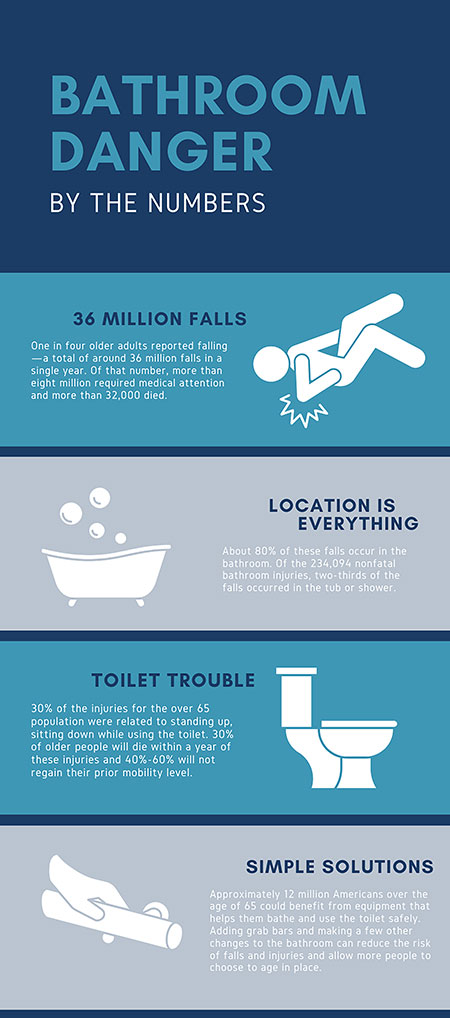
Making a bathroom safe for seniors is about enabling independence, dignity, and peace of mind. The most impactful changes include installing properly anchored grab bars, upgrading flooring for traction, adding a shower seat or transfer bench, and improving lighting throughout.
Start with low-cost fixes like non-slip mats and night lights, then invest strategically in raised toilet seats and handheld showerheads. Consult occupational therapists for personalized recommendations and hire professionals for structural changes.
With the right mix of modifications, you can reduce fall risk by up to 40% and help your loved one live safely at home for years to come. Every step counts.