High blood pressure affects nearly two-thirds of adults aged 65 and older, making it one of the most common and dangerous chronic conditions in the elderly. Left uncontrolled, it significantly raises the risk of stroke, heart attack, kidney disease, and cognitive decline. Yet many seniors either do not know they have hypertension or fail to manage it effectively due to concerns about medication side effects or physical limitations.
The good news is that blood pressure can be lowered safely and effectively at any age, even in the 70s, 80s, and beyond. This guide provides clear, actionable steps backed by medical guidelines to help older adults reduce high blood pressure through lifestyle changes, smart medication use, and daily monitoring.
Set Safe Blood Pressure Targets for Your Age
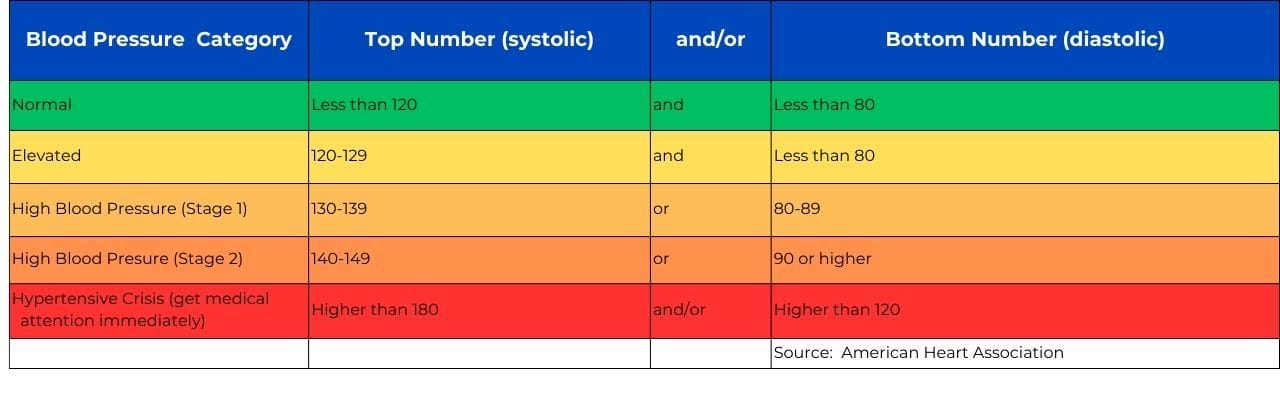
For most healthy older adults, the target is below 130/80 mmHg. This level has been shown to reduce heart attacks, strokes, and death from cardiovascular disease. However, this goal is not one-size-fits-all. If you are frail, have a history of falls, or live with multiple chronic conditions, a more conservative target of below 140/90 mmHg may be safer.
The aim is not perfection, it is protection. Lowering blood pressure too quickly can lead to dizziness, fainting, and falls, especially in seniors with stiff arteries or reduced mobility. Always discuss your personal target with your doctor based on your overall health, not just your numbers.
Watch for Orthostatic Hypotension
Orthostatic hypotension, when blood pressure drops suddenly upon standing, is a real concern in older adults. It is defined as a systolic drop of 20 mmHg or more, or a diastolic drop of 10 mmHg or more, within three minutes of standing.
To check for this condition, sit quietly for 5 minutes and measure your blood pressure. Then stand up slowly and wait 1 to 3 minutes before measuring again. If you feel lightheaded, dizzy, or see stars, report these symptoms to your doctor, especially if you are on blood pressure medication. Adjustments in dose or timing may help.
Optimize Your Diet with the DASH Plan

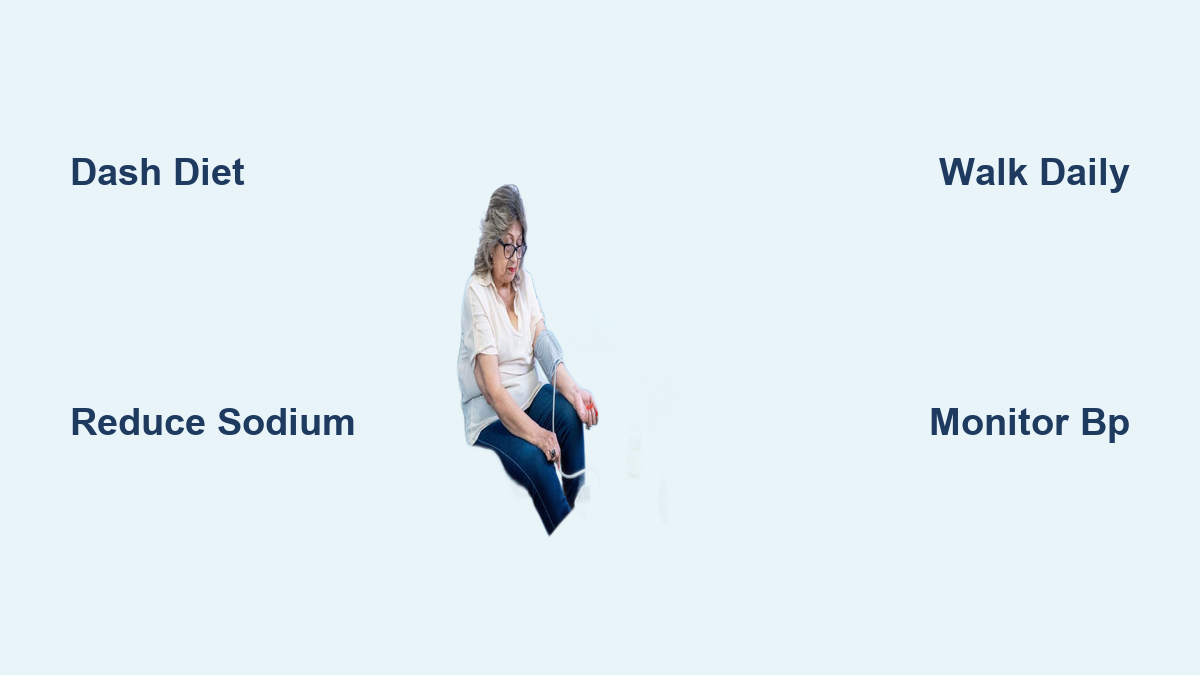
The DASH diet is the gold standard for lowering blood pressure without pills. It emphasizes whole foods rich in potassium, magnesium, calcium, and fiber, all of which help relax blood vessels and counteract sodium.
Key daily servings include 6 to 8 servings of whole grains like oats, brown rice, and quinoa, 4 to 5 servings each of vegetables and fruits such as spinach, carrots, berries, and apples, 2 to 3 servings of low-fat dairy like Greek yogurt and skim milk, and 4 to 5 servings per week of nuts, seeds, or legumes. Limit red meat, sweets, and saturated fats. In studies, DASH has lowered systolic blood pressure by 8 to 14 mmHg, similar to taking a single antihypertensive medication.
Cut Hidden Sodium from Your Diet
Most sodium in the American diet comes from processed and packaged foods, not the salt shaker. A single frozen meal or canned soup can contain over 1,000 mg of sodium, more than half the daily limit.
Aim for no more than 1,500 mg per day, with an upper limit of 2,300 mg. To slash sodium, choose low sodium or no salt added labels, rinse canned beans and vegetables, avoid deli meats, instant noodles, and fast food, and cook at home using herbs, garlic, lemon juice, or vinegar instead of salt. Even a 1,000 mg reduction per day can lower systolic pressure by 5 to 6 mmHg.
Balance Potassium Safely
Potassium helps your body excrete sodium and eases tension in blood vessel walls. Aim for 3,500 to 4,700 mg daily from food sources like bananas which provide about 400 mg each, sweet potatoes which provide 500 mg per half, spinach which provides 800 mg per cooked cup, avocados which provide 700 mg per half, and white beans which provide 1,200 mg per cup.
Caution is essential if you take ACE inhibitors, ARBs, or certain diuretics, because your body may retain potassium. Do not take potassium supplements or salt substitutes like NoSalt without checking with your doctor, because too much potassium can cause dangerous heart rhythms.
Manage Weight and Waist Size Effectively
Excess weight, especially around the abdomen, increases blood pressure by raising insulin resistance and activating stress hormones. The good news is that you do not need to lose 30 pounds to see benefits.
For every 1 kg or 2.2 lbs lost, systolic blood pressure drops by about 1 mmHg. Losing just 5 to 10 percent of your body weight can improve blood pressure, blood sugar, and cholesterol. Focus on small changes such as replacing sugary drinks with water, eating more vegetables at dinner, using smaller plates to reduce portion sizes, and keeping a food diary to track habits.
Measure Your Waist Regularly
Waist circumference is a better predictor of hypertension risk than BMI in older adults. Excess belly fat is linked to inflammation and arterial stiffness.
Men should keep their waist under 40 inches, and women should keep their waist under 35 inches. If your pants feel tighter, it is time to reassess your diet and activity level.
Stay Active with Safe Exercise Routines
Exercise is one of the most powerful tools for lowering blood pressure, as effective as some medications. The best part is that you do not need intense workouts.
One hundred fifty minutes per week of moderate activity like brisk walking can reduce systolic pressure by 5 to 8 mmHg. That is just 30 minutes, 5 days a week. Start with 10-minute sessions and build up, use supportive shoes and walk on even surfaces, hold a cane or walker if needed for balance, and walk indoors during extreme heat or cold. Even short walks after meals help lower blood pressure and blood sugar.
Add Strength and Balance Training
Muscle loss accelerates after 60, making strength training essential. Use light weights, resistance bands, or bodyweight exercises like chair stands 2 to 3 times per week.
Benefits include improved circulation, supported healthy metabolism, and reduced fall risk. Include balance exercises like tai chi or heel-to-toe walking to prevent falls, especially important if you are on blood pressure medication. Avoid heavy lifting or breath-holding, which can spike blood pressure.
Limit Alcohol and Quit Smoking
Alcohol can raise blood pressure and interfere with medications. The safest approach is that less is better.
Limits for seniors are men 65 and older should have no more than 2 drinks per day, and women 65 and older should have no more than 1 drink per day. One drink equals 12 oz of beer, 5 oz of wine, or 1.5 oz of hard liquor. Regular heavy drinking, 3 or more drinks per day, increases hypertension risk by 60 percent. Cutting back can lower systolic pressure by 2 to 4 mmHg. If you do not drink, do not start for heart health because the risks often outweigh the benefits in older adults.
Stop Smoking for Better Vascular Health
Each cigarette causes an immediate spike in blood pressure and heart rate. Over time, nicotine damages artery walls and speeds up hardening of the arteries.
Quitting smoking lowers blood pressure within weeks and reduces stroke risk by 50 percent within 1 year. It also improves oxygen delivery and energy levels. Help is available through nicotine patches, gum, or lozenges, prescription medications like varenicline or bupropion, free quitlines such as 1-800-QUIT-NOW, and counseling or support groups. Ask your doctor for a personalized quit plan.
Practice Daily Stress Reduction Techniques
Chronic stress keeps the body in fight-or-flight mode, raising cortisol and constricting blood vessels. Simple techniques can calm the nervous system in minutes.
Try slow, deep breathing by inhaling slowly for 5 seconds and exhaling for 5 to 6 seconds, repeating for 5 to 10 minutes, 1 to 2 times daily. This can lower systolic pressure by 4 to 5 mmHg. Mindfulness meditation apps guide you through relaxation exercises, and just 10 minutes a day reduces anxiety and improves blood pressure control.
Try Yoga or Tai Chi for Mind-Body Benefits
Gentle movement practices combine physical activity, breath control, and mental focus. Studies show yoga and tai chi lower systolic pressure by 5 to 10 mmHg.
Benefits for seniors include improved balance and flexibility, reduced fall risk, and enhanced mood and sleep. Look for senior-friendly classes at community centers or online. Avoid hot yoga or advanced poses.
Use Blood Pressure Medications Wisely
Most older adults need medication to reach blood pressure goals. The rule of thumb is start low, go slow.
Seniors are more sensitive to side effects, blood vessels are stiffer and less responsive, and multiple health conditions increase risks. Begin with a low dose and increase gradually over 8 to 12 weeks. This prevents sudden drops that cause dizziness or falls.
Choose the Right First Medication
Four drug classes are preferred for older adults.
Thiazide-type diuretics like chlorthalidone and HCTZ reduce fluid and relax blood vessels, lowering systolic BP by 10 to 15 mmHg. Monitor potassium and kidney function.
Calcium channel blockers like amlodipine dilate arteries and are especially effective for isolated systolic hypertension. Watch for ankle swelling or constipation.
ACE inhibitors like lisinopril protect kidneys and heart but may cause a dry cough or high potassium.
ARBs like losartan offer similar benefits to ACE inhibitors without the cough.
Your doctor will choose based on your health history, such as diabetes, kidney disease, or heart failure.
Avoid High-Risk Medications
Some blood pressure drugs are not recommended as first-line for seniors.
Alpha blockers like doxazosin carry high fall risk due to sudden drops. Beta blockers like atenolol are less effective unless you have heart disease. Clonidine or methyldopa cause drowsiness, dry mouth, and rebound spikes. Never stop or change medications without talking to your doctor.
Prevent Falls from Low Blood Pressure
Medications can cause orthostatic hypotension, especially when standing up quickly. This raises fall risk, leading to fractures or loss of independence.
Prevention tips include sitting on the edge of the bed for 30 seconds before standing, holding onto a wall or furniture when getting up, avoiding standing still for long periods, and staying hydrated because dehydration worsens drops. If you feel faint, sit or lie down immediately.
Monitor at Home with Proper Technique
Home blood pressure monitoring is more accurate than clinic visits and helps avoid white coat hypertension.
Use an upper-arm automatic monitor, not wrist devices. Follow these steps. Sit quietly for 5 minutes with back supported and feet flat. Place your arm at heart level on a table. Take 2 to 3 readings 1 minute apart and record all numbers. Check both morning before meds and evening readings. Share logs with your doctor. Avoid measuring right after eating, exercising, or using the bathroom.
Recognize and Manage Medication Side Effects
Thiazide diuretics can cause hypokalemia, low potassium, leading to muscle cramps, weakness, or irregular heartbeat.
Prevent it by eating potassium-rich foods like bananas and potatoes, getting regular blood tests, and taking supplements only if prescribed. Your doctor may switch you to a potassium-sparing diuretic if levels stay low.
Track Common Drug Reactions
Know what to expect from your medications. For diuretics, expect frequent urination and low potassium. Take in the morning and eat bananas. For calcium channel blockers, expect swollen ankles and constipation. Elevate your legs and increase fiber. For ACE inhibitors, expect dry cough and high potassium. Switch to ARB if cough persists. For ARBs, expect dizziness and high potassium. Check standing BP and monitor labs. For beta blockers, expect fatigue and cold hands. Report to your doctor and do not stop suddenly.
Engage in Shared Decision-Making with Your Doctor
Treatment should match your lifestyle and values. Ask your doctor what your personal blood pressure goal is, whether your meds are working and if you can reduce the dose, if any pills are causing dizziness or fatigue, and if lifestyle changes can help you take fewer medications. Bring your home blood pressure log to every visit.
Review Medications Annually
Taking 5 or more medications increases side effects and fall risk. Once a year, ask for a medication review. Are all drugs still needed? Can any be stopped or reduced? Are there interactions? Sometimes simplifying the regimen improves both safety and adherence.
Frequently Asked Questions About Reducing High Blood Pressure in Elderly
What is a safe blood pressure target for seniors?
For most healthy older adults, the target is below 130/80 mmHg. However, frail elderly patients or those at high risk of falls may benefit from a more conservative target of below 140/90 mmHg. Always discuss your personal target with your doctor based on your overall health.
How quickly can lifestyle changes lower blood pressure?
The DASH diet can lower systolic blood pressure by 8 to 14 mmHg within a few weeks. Reducing sodium by 1,000 mg per day can lower systolic pressure by 5 to 6 mmHg. Regular exercise can reduce systolic pressure by 5 to 8 mmHg. These changes often work as effectively as taking one blood pressure medication.
Can elderly patients safely take blood pressure medications?
Yes, but the approach should be start low, go slow. Begin with low doses and increase gradually over 8 to 12 weeks. Monitor for side effects like dizziness, especially when standing up. Most older adults tolerate medications well when started cautiously and adjusted carefully.
What should I do if blood pressure medication makes me dizzy?
Dizziness often signals orthostatic hypotension, a sudden drop in blood pressure when standing. Sit or lie down immediately if you feel faint. Rise slowly from sitting or lying positions, wait 30 seconds before standing, and stay hydrated. Report symptoms to your doctor who may adjust your dose or timing.
Are there foods that interact with blood pressure medications?
Yes, certain foods can interact with medications. Grapefruit interferes with some calcium channel blockers. High-potassium foods can be dangerous if you take ACE inhibitors, ARBs, or potassium-sparing diuretics. Always ask your doctor or pharmacist about food interactions with your specific medications.
Key Takeaways for Lowering Blood Pressure in Seniors
Reducing high blood pressure in the elderly is not about chasing perfect numbers. It is about living longer, stronger, and safer. Start with one change, like walking 10 minutes a day or cutting out canned soup, and build from there. Small steps lead to big results.
The most effective approach combines dietary changes including the DASH diet and sodium reduction, regular physical activity including walking and strength training, appropriate medication use starting low and going slow, and consistent monitoring at home. With the right mix of these strategies, most seniors can achieve meaningful blood pressure control without sacrificing quality of life.