
Leukemia in older adults presents unique challenges that demand a nuanced, individualized approach. As the most common blood cancer diagnosed after age 60, leukemia in the elderly often carries a poorer prognosis due to aggressive disease biology, reduced tolerance for intensive therapies, and high rates of comorbidities. The two most prevalent types, acute myeloid leukemia (AML) and chronic lymphocytic leukemia (CLL), require vastly different management strategies, yet both hinge on a careful balance between treatment efficacy and quality of life. This guide outlines the modern approach to treating leukemia in seniors, emphasizing personalized decision-making, supportive care, and emerging therapies that offer new hope.
Evaluate Patient Fitness Before Treatment Decisions
Before selecting a treatment approach, assessing the patient’s overall health is critical. Chronological age alone should not dictate therapy, as functional status matters more than the number of years lived.
Conduct Comprehensive Geriatric Assessment
A formal geriatric evaluation helps predict treatment tolerance and survival. This assessment includes evaluating functional status to determine if the patient can perform daily activities independently. Cognitive function should be screened using tools like the Mini-Mental State Exam to identify dementia or delirium. Nutritional status requires looking for weight loss, low albumin, or muscle wasting. Comorbidities such as heart disease, diabetes, or kidney dysfunction significantly increase treatment risks. Social support is also critical, as living alone or lacking caregivers can limit outpatient therapy options.
Patients with poor functional status or multiple comorbidities are often classified as unfit for intensive chemotherapy, even if they are under 75 years old.
Use Performance Status Scales to Guide Therapy
The Eastern Cooperative Oncology Group scale is widely used to determine treatment appropriateness. ECOG 0-1 indicates the patient is fully active and able to carry all self-care, meaning they may tolerate intensive therapy. ECOG 2-4 indicates the patient is bedridden or requires assistance, making them better suited for low-intensity regimens.
Diagnose Leukemia Accurately and Quickly
Timely and precise diagnosis sets the foundation for effective treatment planning. Delays in diagnosis can allow disease progression and reduce treatment options.
Start with Blood Tests
A complete blood count reveals abnormal white cell counts, anemia, or low platelets. A peripheral smear identifies blast cells in AML or smudge cells in CLL. These tests are often the first clue, especially since symptoms like fatigue or bruising mimic normal aging.
Confirm with Bone Marrow Biopsy
Bone marrow aspiration and biopsy are essential for definitive diagnosis. This procedure determines leukemia type, blast percentage, and cell morphology.
Perform Molecular and Genetic Testing
Cytogenetics detects chromosomal abnormalities such as monosomy 7 in AML. Molecular profiling identifies mutations such as FLT3, NPM1, and IDH1/2 in AML, or TP53 and del(17p) in CLL. These markers guide targeted therapy choices and predict prognosis.
Treat AML Based on Fitness Level
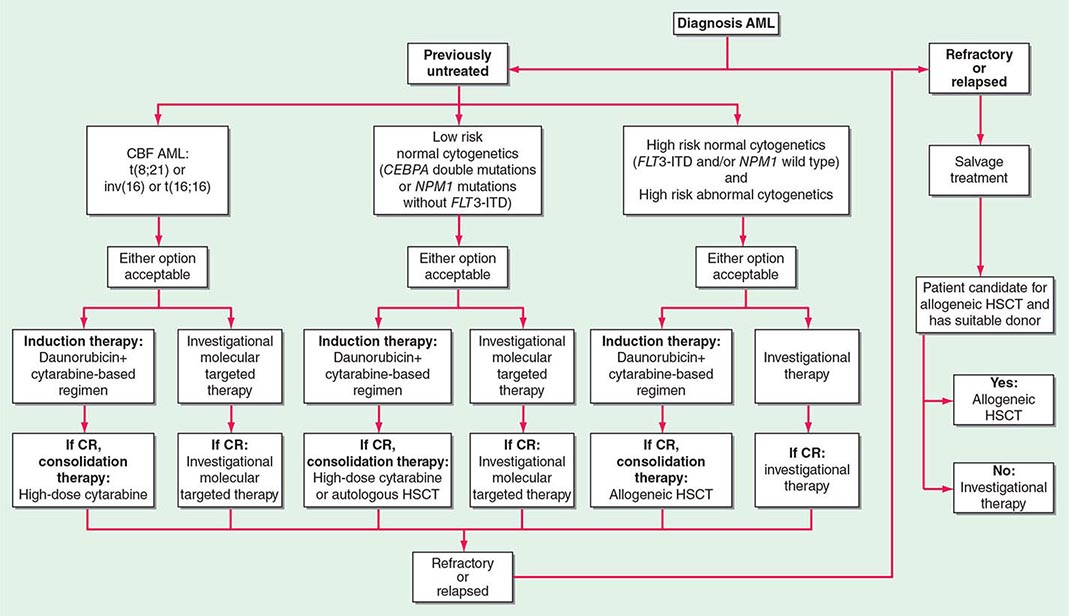
Acute myeloid leukemia progresses rapidly and requires prompt intervention. Treatment depends heavily on whether the patient is fit for intensive therapy.
Offer Intensive Chemotherapy to Fit Patients
For those with good performance status and minimal comorbidities, the standard 7 + 3 regimen is used. This involves cytarabine given as a 7-day continuous infusion combined with daunorubicin or idarubicin for 3 days. The goal is to achieve complete remission and prepare for consolidation therapy.
Outcomes in elderly patients show CR rates of 30-50%, which is lower than in younger adults. Median survival ranges from 6-12 months. Only about 30% of patients over 60 receive this therapy, often due to concerns about toxicity.
Avoid underdosing anthracyclines, as reducing daunorubicin below 60 mg/m² can compromise outcomes. Higher cumulative doses of 90 mg/m² or greater improve survival. Cardiac function should be monitored with echocardiograms to manage cardiotoxicity risk.
Use Low-Intensity Therapies for Unfit Patients
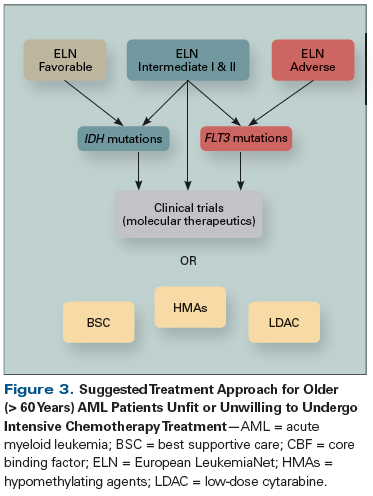
Most elderly AML patients cannot tolerate standard chemotherapy. The preferred options now include venetoclax-based regimens.
Choose venetoclax plus hypomethylating agent as first-line therapy. Based on the VIALE-A trial, this combination shows a median overall survival of 14.7 months compared to 9.6 months with azacitidine alone. The CR rate is 36.7% versus 17.9%. This regimen is administered outpatient and is effective even in poor-risk genetics.
Add monitoring for tumor lysis syndrome, as venetoclax can cause this complication during initiation. Precautions include starting with ramp-up dosing over 4 weeks, hydrating well, correcting electrolytes, and using allopurinol or rasburicase if risk is high.
Consider alternatives when hypomethylating agents are not suitable. Venetoclax plus low-dose cytarabine shows a median OS of 7.2 months versus 4.1 months with LDAC alone. This is especially effective in IDH-mutated AML. Glasdegib plus LDAC is another option, with a median OS of 8.8 months versus 4.9 months.
Target Specific Mutations in AML
Precision medicine has transformed outcomes for certain genetic subtypes. Identifying mutations guides targeted therapy selection.
Treat IDH-Mutated AML with Inhibitors
Ivosidenib as monotherapy shows an ORR of 41.6%. Combined with azacitidine in frontline treatment, median OS reaches 24 months compared to 7.9 months with azacitidine alone. Olutasidenib shows an ORR of 48%, with 34% achieving transfusion independence. Watch for differentiation syndrome presenting as fever, dyspnea, and pulmonary infiltrates.
Combine with venetoclax for enhanced effect. IDH2-mutated AML shows up to 86% CR rate when treated with venetoclax plus hypomethylating agent. This combination is increasingly used upfront.
Manage FLT3-Mutated AML Aggressively
FLT3 mutations confer resistance to venetoclax and higher relapse risk. Gilteritinib is standard for relapsed or refractory disease, showing a median OS of 9.3 months versus 5.6 months with chemotherapy. For newly diagnosed patients, consider clinical trials combining FLT3 inhibitors with hypomethylating agents or venetoclax.
Limit use of midostaurin in elderly patients, as it is approved with intensive chemotherapy but data in patients over 60 are limited. It is not recommended outside of fit candidates.
Consider Stem Cell Transplant in Select Cases
Allogeneic transplant offers potential cure but carries high risks in elderly patients.
Use Reduced-Intensity Conditioning
Reduced-intensity conditioning regimens reduce toxicity and allow transplant in patients up to age 75. Non-myeloablative protocols enable engraftment without destroying all bone marrow.
Weigh risks and benefits carefully. One-year survival is approximately 68%. Non-relapse mortality is around 22%. Relapse remains high, and graft-versus-host disease is a major concern.
Reserve transplant for fit patients who achieve remission. Best candidates include those who achieved CR after induction, have good organ function, and have an available matched donor. Discuss within multidisciplinary teams and ideally enroll in clinical trials.
Manage Relapsed or Refractory Disease
Options are limited when leukemia returns or does not respond to initial treatment, but some therapies offer meaningful benefit.
Use Gilteritinib for FLT3-Positive Relapse
Gilteritinib is the standard of care and is superior to salvage chemotherapy. It can be combined with venetoclax in trials.
Rechallenge with Gemtuzumab Ozogamicin
This anti-CD33 antibody-drug conjugate achieves a CR rate of approximately 26% in relapsed AML. Avoid if stem cell transplant is planned within 3 months due to liver toxicity risk.
Prioritize Clinical Trials
Most salvage regimens have low response rates and short durability. Emerging therapies such as menin inhibitors and anti-CD47 antibodies show promise in early studies.
Handle Chronic Leukemias Differently
Chronic forms progress slowly and may not require immediate treatment. Management differs significantly from acute leukemias.
Delay Treatment in Asymptomatic CLL
Watchful waiting is standard for early-stage, asymptomatic CLL. No survival benefit comes from early intervention.
Initiate therapy when disease progresses. Start treatment if hemoglobin drops below 10 g/dL or platelets fall below 100,000/μL. Also begin treatment for symptomatic lymphadenopathy or splenomegaly, lymphocyte doubling time under 6 months, or constitutional symptoms including weight loss, night sweats, or fatigue.
Choose Targeted Agents Over Chemo
BTK inhibitors such as ibrutinib or acalabrutinib are highly effective, oral, continuous therapy. Avoid in patients with atrial fibrillation or bleeding risk. BCL2 inhibitors such as venetoclax plus obinutuzumab offer fixed-duration therapy lasting 12 cycles. This is preferred in patients wanting time-limited treatment.
Avoid chemoimmunotherapy in frail patients. Regimens like bendamustine plus rituximab increase infection and cytopenia risk. Reserve these for fit patients under age 75 with limited comorbidities.
Control CML with Tyrosine Kinase Inhibitors
Tyrosine kinase inhibitors are first-line treatment for CML. Options include imatinib, dasatinib, nilotinib, bosutinib, and ponatinib. Most patients achieve deep molecular responses and long-term control. Monitor for side effects, as imatinib causes fluid retention and muscle cramps, dasatinib can cause pleural effusion, and ponatinib carries vascular event risk.
Adjust doses for kidney or liver impairment, which is common in elderly patients. Switch tyrosine kinase inhibitors if intolerable toxicity develops.
Support Quality of Life Throughout Care
Symptom management and psychosocial support are essential components of treatment, not optional add-ons.
Prevent and Treat Infections
Neutropenia from chemotherapy increases infection risk. Prophylaxis includes antibacterial medications such as fluoroquinolones, antifungal medications such as posaconazole, and antiviral medications such as acyclovir.
Use growth factors wisely. G-CSF or GM-CSF can shorten neutropenia duration by 2-6 days. Use selectively and avoid in AML with monocytic differentiation due to risk of differentiation syndrome.
Provide Transfusion Support
Red blood cells treat symptomatic anemia. Platelets are given when count falls below 10,000/μL or below 20,000/μL with bleeding present.
Monitor for iron overload. Chronic transfusions lead to organ damage. Consider chelation therapy if ferritin exceeds 1,000 ng/mL.
Integrate Palliative and Hospice Care Early
Palliative care is not just for end-of-life. It improves symptom control and satisfaction. Discuss goals of care early, including whether the aim is curative, disease control, or comfort. Understand what trade-offs the patient is willing to accept.
Understand Prognosis Realistically
Survival varies widely by leukemia type and treatment response. Being realistic helps in making informed decisions.
AML Survival Remains Poor
Median survival for patients aged 70 and older is 6-12 months. With venetoclax plus hypomethylating agent, this extends to 14.7 months. Five-year survival remains below 15%.
ALL Has Worst Outlook
Median survival for patients aged 70 and older is only 4 months. New immunotherapies such as blinatumomab and inotuzumab show promise but have limited elderly data.
Chronic Leukemias Are More Manageable
Many CLL patients live 10 or more years, especially with targeted therapies. CML is now considered a chronic condition. Five-year survival for patients aged 65 and older is approximately 50%.
Address Barriers to Optimal Care
Several systemic and personal factors hinder effective treatment. Understanding these barriers helps in overcoming them.
Combat Underrepresentation in Clinical Trials
Despite being the majority of AML cases, elderly patients make up less than 10% of trial participants. Trials often exclude those with comorbidities or poor performance status. Advocate for inclusion, as newer trials are expanding eligibility.
Counter Physician Bias
Up to 50% of oncologists avoid offering intensive therapy based on age alone. Challenge assumptions, as a fit 75-year-old may tolerate treatment better than a frail 65-year-old.
Respect Patient Preferences
Many patients prioritize quality over quantity of life. Some decline aggressive therapy due to fear of hospitalization or side effects. Shared decision-making ensures care aligns with values and goals.
Explore Emerging Therapies
Innovations on the horizon may further improve outcomes for elderly leukemia patients.
Test Anti-CD47 Inhibitors
Magrolimab blocks the don’t eat me signal on leukemia cells. Early data with azacitidine shows an ORR of 65% and CR of 44%. It is being compared to venetoclax plus hypomethylating agent in the ENHANCE trial.
Study Menin Inhibitors
Revumenib and ziftomenib target NPM1-mutated or KMT2A-rearranged AML. These show high response rates in relapsed disease and are now being tested in frontline combinations.
Evaluate Triplet Regimens
Venetoclax plus cladribine plus low-dose cytarabine with or without azacitidine shows a composite CR of 93% and MRD-negative rate of 84%. Febrile neutropenia rate is high at 55%. Median OS has not been reached at 22 months, which is promising but toxic.
Follow a Clear Treatment Algorithm
Use this decision framework to guide therapy selection.
• AML, fit for intensive therapy: 7 + 3 induction followed by consolidation, consider RIC transplant
• AML, unfit for intensive therapy: Venetoclax plus HMA is preferred, or venetoclax plus LDAC
• IDH-mutated AML: Ivosidenib plus/minus HMA, or venetoclax plus HMA
• FLT3-mutated AML, relapsed: Gilteritinib
• CLL, asymptomatic: Watchful waiting
• CLL, symptomatic: Ibrutinib or acalabrutinib, or venetoclax plus obinutuzumab
• CML: TKI such as imatinib or dasatinib
• ALL: Clinical trials, consider blinatumomab or inotuzumab
Frequently Asked Questions About Treating Leukemia in Elderly
What is the life expectancy for an elderly person with leukemia?
Life expectancy varies significantly by leukemia type. For AML in patients over 70, median survival is 6-12 months with standard therapy, extending to 14.7 months with modern venetoclax-based regimens. CLL patients often live 10 or more years with appropriate treatment. CML is now manageable long-term with tyrosine kinase inhibitors.
Can elderly patients with leukemia undergo chemotherapy?
Yes, but fitness determines the approach. Medically fit patients may tolerate intensive 7 + 3 chemotherapy. Unfit patients with comorbidities typically receive low-intensity therapies such as venetoclax combinations or hypomethylating agents. A geriatric assessment helps determine suitability.
What is the newest treatment for AML in elderly patients?
Venetoclax plus hypomethylating agent is the modern standard for unfit AML. This combination significantly improves survival compared to hypomethylating agents alone. Targeted inhibitors for IDH mutations (ivosidenib, olutasidenib) and FLT3 mutations (gilteritinib) also offer new options.
Is stem cell transplant safe for elderly leukemia patients?
Reduced-intensity conditioning transplant is now possible for selected patients up to age 75. About 68% survive one year, but non-relapse mortality is approximately 22%. It is reserved for fit patients who achieve remission and have a matched donor.
How is chronic leukemia managed in elderly patients?
Chronic leukemias often start with watchful waiting if asymptomatic. When treatment is needed, targeted agents like BTK inhibitors or venetoclax are preferred over chemotherapy due to better tolerability. These oral therapies provide effective disease control with manageable side effects.
Key Takeaways for Treating Leukemia in Elderly
Treating leukemia in elderly patients requires balancing disease biology with patient fitness and personal values. Intensive chemotherapy remains an option for medically fit patients, but most older adults benefit from low-intensity regimens such as venetoclax plus hypomethylating agents, which have become the standard of care for unfit AML. Targeted therapies for specific mutations, including IDH and FLT3 inhibitors, offer personalized treatment options. Chronic leukemias are managed differently, with watchful waiting for asymptomatic cases and targeted agents when symptoms appear. Geriatric assessments are essential for determining appropriate treatment intensity, and supportive care should be integrated early to maintain quality of life. Clinical trial enrollment should be prioritized to advance evidence-based care for this underserved population.