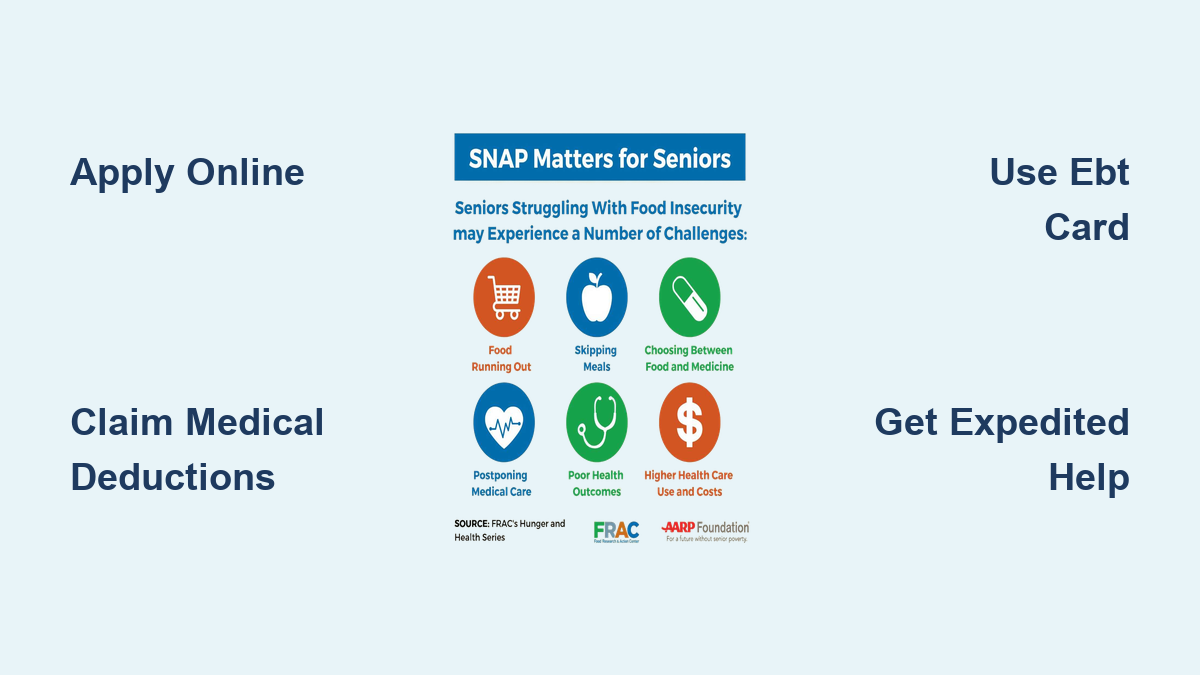
Millions of seniors in the U.S. struggle to afford groceries each month, yet many who qualify for food stamps—officially known as the Supplemental Nutrition Assistance Program (SNAP)—never apply. Despite being a lifeline for older adults on fixed incomes, only about half of eligible seniors receive SNAP benefits. The program provides an average of $158 per month in food assistance, with some receiving as little as $23—often because they don’t claim all available deductions.
The good news? Seniors face easier eligibility rules, fewer requirements, and simplified applications compared to other groups. If you’re 60 or older and living on Social Security, a pension, or limited savings, you may qualify even if you own a home or car. This guide walks you through everything you need to know about how to get food stamps for seniors.
SNAP Eligibility for Seniors
Seniors aged 60 and older get special consideration under federal SNAP rules. You don’t need to be disabled or homeless to qualify. Simply meet basic income and asset guidelines, and you could receive monthly benefits to help with groceries.
Age-Based Advantages
Seniors enjoy several special provisions that make qualifying easier.
• No gross income test if your household includes only people 60+ or with disabilities
• No work requirements, unlike younger adults
• Can apply individually even if living with family, as long as you buy and prepare food separately
• Exempt from time limits that affect other applicants
These breaks make it easier for retirees and fixed-income seniors to qualify for food stamps for seniors.
Household Rules That Matter
Your SNAP household includes everyone who lives with you and shares meals. But there are exceptions worth knowing.
• If someone else cooks for you regularly, you may apply alone
• Married couples are usually one household, even if eating separately
• Seniors in assisted living may still qualify if they manage their own food budget
When in doubt, use BenefitsCheckUp.org or call your state’s SNAP office to confirm your household size.
Income Limits for Senior SNAP Applicants
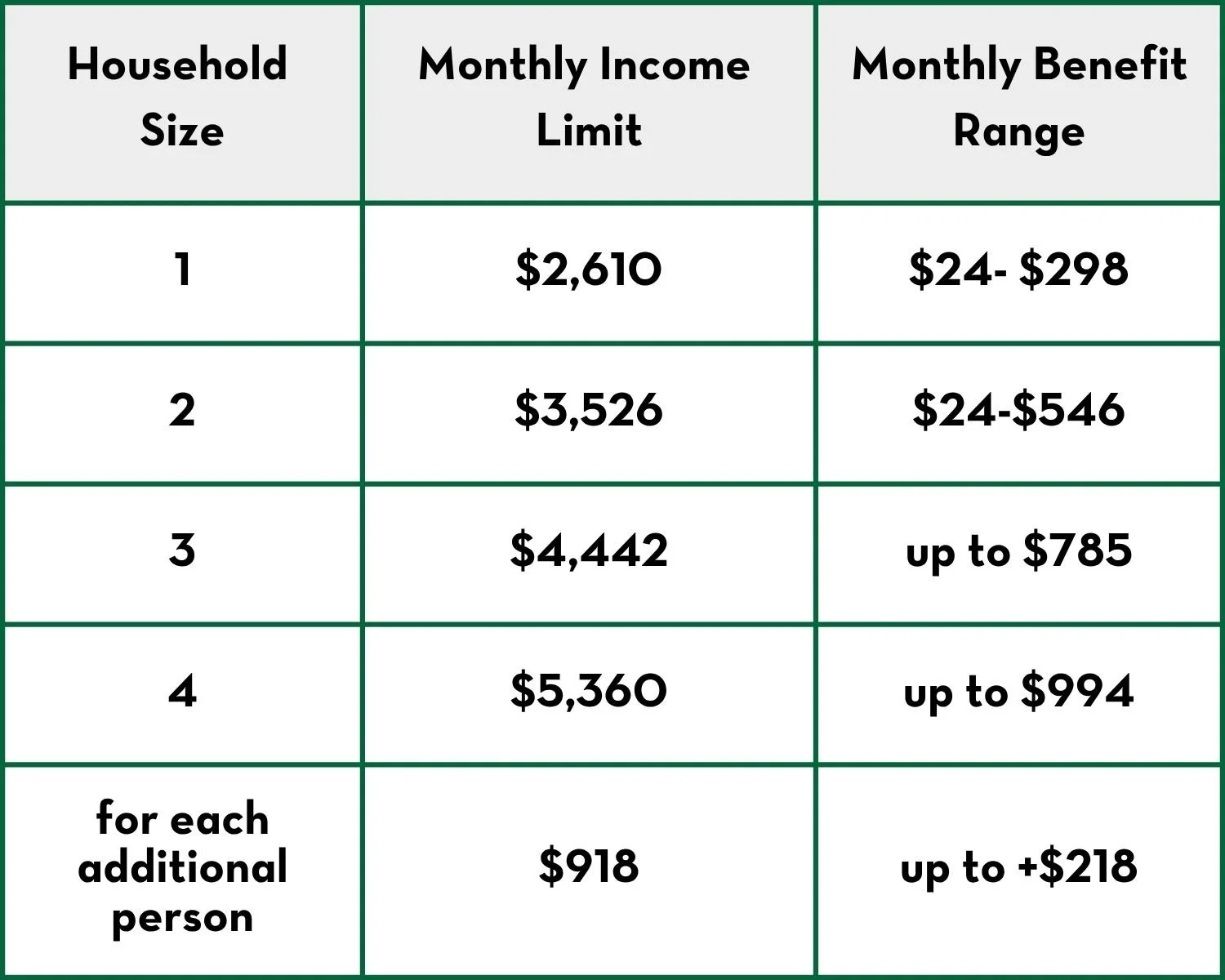
SNAP uses two income thresholds: gross (before deductions) and net (after). Most seniors only need to meet the net income limit, which is 100% of the federal poverty level.
2025–2026 Net Income Limits
The following table shows maximum net monthly income by household size.
| Household Size | Max Net Income |
|---|---|
| 1 | $1,305 |
| 2 | $1,763 |
| 3 | $2,221 |
| 4 | $2,680 |
| Each extra person | +$459 |
A single senior earning $1,300 per month from Social Security qualifies based on net income. The key point is that net income means your income after deductions like housing, medical bills, and dependent care.
Asset Limits and What Counts
Most states allow $4,500 in countable assets for senior-headed households. However, many assets don’t count at all, which could work in your favor.
Assets That Don’t Count
• Your primary home
• One working vehicle
• Retirement accounts (401(k), IRA, pension)
• Life insurance policies
• Personal belongings
States With No Asset Test
Several states have eliminated asset limits entirely for seniors and people with disabilities. These include California, New York, Washington, Minnesota, and Oregon. If you live in one of these states, your savings won’t disqualify you, no matter how much you have.
Always check your state’s rules via Benefits.gov or your local SNAP office before assuming you don’t qualify.
Increase Benefits With Senior Deductions

Seniors can lower their countable income using special deductions, which means higher SNAP benefits. Two key deductions often go unclaimed and can dramatically increase your monthly benefit.
Medical Expense Deduction
Seniors 60 and older can deduct medical costs over $35 per month. This is one of the most powerful tools for increasing SNAP benefits.
Eligible expenses include:
• Doctor visits and hospital care
• Prescription drugs
• Medicare premiums (Part B, Medigap)
• Insulin, glucose monitors, hearing aids
• Over-the-counter items with a doctor’s note
How it works: If you spend $150 per month on medical bills, subtract $35 (non-deductible base) to get a $115 deduction. That reduces your net income and increases your SNAP benefit.
Pro tip: Keep all receipts. Submitting proof of medical expenses can boost benefits from $23 to over $200 per month.
Housing Cost Deduction
If your shelter costs exceed 50% of your income, the excess is fully deductible. This applies to rent or mortgage, property taxes, home insurance, and utilities.
Example: Income of $1,200 per month with housing and utilities of $800 per month. Fifty percent of income equals $600, so the excess of $200 becomes your shelter deduction. This can significantly increase your benefit, especially in high-cost areas.
How to Apply for SNAP as a Senior
Applying for SNAP has never been easier. Most seniors can complete the process from home without visiting an office.
Apply Online, By Phone, or In Person
Options vary by state, but most offer online applications (like Compass in Pennsylvania or CalFresh in California), phone interviews, mail-in forms, and in-person help at senior centers or food banks.
Use the USDA SNAP State Directory to find your state’s portal.
Simplified Application for Seniors (ESAP)
Many states offer the Elderly Simplified Application Project (ESAP), designed to make SNAP easier for older adults.
ESAP benefits include:
• Shorter application (2–4 pages)
• No in-person interview
• Fewer documents required
• Recertification every 3 years instead of annually
Check if your state offers ESAP through FRAC.org or AARP Foundation.
Documents You’ll Need
Gather these before applying:
• Photo ID (driver’s license, Medicare card)
• Proof of income (Social Security statement, pension letter)
• Rent or mortgage and utility bills
• Medical expense records
• Bank statements (only if required)
• Citizenship or immigration documents
No documents? No problem. You can still apply, and caseworkers can verify information over the phone.
What Happens After You Apply
Once you submit your application, the next steps are fast and straightforward.
Phone Interview Required
• Automatic for seniors with no earned income
• Lasts 5–15 minutes
• You can have an authorized representative attend with you or answer on your behalf
Tip: Answer calls from unknown numbers. The caseworker may call from a private line.
Receive Benefits Within 30 Days
Most seniors get a decision within 7–10 days. If approved, benefits start within 30 days of application. You’ll receive an EBT card in the mail, like a debit card. First-month benefits may arrive as a paper check or direct deposit in some states.
Get Food Stamps Fast: Expedited SNAP
If you’re out of food and need help now, apply for expedited SNAP. You qualify if your gross monthly income is less than $150 and liquid resources are $100 or less, or if your total income plus resources is less than your monthly rent plus utilities.
Benefits are issued within 7 calendar days. Some states, like Massachusetts, provide multiple months of expedited benefits.
Use an Authorized Representative
Seniors who need help can appoint a trusted friend, family member, or case manager as an Authorized Representative (AR).
An AR can:
• Fill out your application
• Attend interviews
• Pick up your EBT card
• Shop for you (with your permission)
• Report changes to your case
To add or remove an AR, contact your state SNAP office. Many allow updates by phone or online.
Recertify Every 6–36 Months
To keep receiving benefits, you must recertify your eligibility periodically.
Recertification Frequency
| State Type | Recertification Interval |
|---|---|
| Standard states | Every 6–12 months |
| ESAP states | Every 36 months (3 years) |
You’ll receive a renewal notice by mail. Set a calendar reminder. Missing the deadline ends your benefits.
Reporting Changes
In ESAP states, you don’t need to report income changes between recertifications. In other states, report major changes like moving out, death in household, or large income increase. Failure to report can lead to overpayments or disqualification.
Where to Use Your SNAP Benefits
Your EBT card works at thousands of locations across the country.
Accepted Retailers
• Grocery stores (Walmart, Kroger, ALDI)
• Supermarkets (Safeway, Publix)
• Farmers markets (many double SNAP for produce)
• Online: Amazon, Walmart, ShopRite (use EBT for delivery)
What You Can Buy
• Fruits and vegetables
• Meat, poultry, fish
• Dairy, bread, cereal
• Seeds and plants that grow food
What You Can’t Buy
• Alcohol and tobacco
• Vitamins and supplements
• Hot prepared foods
• Soap, pet food, paper products
Some states allow restaurants to accept SNAP for homeless, disabled, or elderly individuals. Check your local rules.
Other Food Programs for Seniors
SNAP isn’t the only help available. Many seniors qualify for additional nutrition support.
Senior Farmers Market Nutrition Program
Get $20 to $50 in coupons for fresh produce. Use at farmers markets, roadside stands, and CSAs. Must be 60 or older with income at or below 185% of FPL. Not available in all states. Ask your local Area Agency on Aging.
Commodity Supplemental Food Program
Receive a free monthly box of food including canned fruits and vegetables, cheese, oatmeal, and juice. Distributed at senior centers or via home delivery. Income must be at or below 185% FPL, and you must be 60 or older. Find locations via USDA website or local food bank.
Medicare Advantage Flex Cards
Some private Medicare plans offer grocery cards (like $50 per month). Funds load onto a debit card for food, OTC items, and utilities. Not all plans offer this. Contact your insurer to ask.
Co-Benefits of Receiving SNAP
Getting SNAP opens doors to dozens of other assistance programs that many seniors don’t know about.
Automatic Qualification for Extra Help
SNAP recipients automatically qualify for Extra Help (Low-Income Subsidy) with Medicare Part D. You’ll get $0 or low prescription drug premiums, no or low deductibles, and reduced copays. This can save hundreds per year on medications.
Other Benefits You May Qualify For
• LIHEAP: Up to $1,000 for heating and cooling bills
• Lifeline: $9.25 per month phone or internet
• Fresh Fruit and Vegetable Programs: Double SNAP at farmers markets
• Property tax relief, transit discounts, and Rx assistance
Use BenefitsCheckUp.org to find all programs you qualify for.
Debunking Common SNAP Myths
Myth: SNAP Is Only for Families With Kids
Fact: Seniors, disabled adults, and single individuals can all qualify.
Myth: Applying Takes Too Long and Is Complicated
Fact: Many seniors apply online in under 30 minutes with phone interviews and no office visit.
Myth: Benefits Are Too Small to Matter
Fact: Average senior gets $158 per month, over $1,800 per year. With medical deductions, many receive much more.
Myth: SNAP Affects Social Security or Medicare
Fact: No impact on Social Security, Medicare, SSI, or VA benefits.
Myth: Using SNAP Is Shameful
Fact: SNAP is a smart financial tool, like a grocery discount. Over 4.8 million seniors use it. You’re not alone.
Protect Yourself From SNAP Scams
SNAP fraud is rare, but scams targeting seniors are rising.
Red Flags to Watch For
• Calls asking for your EBT card number or PIN
• Texts claiming your benefits will be suspended
• Websites that charge to help you apply
Remember: SNAP never calls to ask for your PIN. Never share your EBT details. Report scams to USDA OIG Hotline at 1-800-424-9121.
Your benefits are safe and cannot be garnished for debt (except child support in some states).
Real Help: A Senior’s Success Story
A 70-year-old widow in Ohio was living on $1,250 per month from Social Security. She thought she didn’t qualify for SNAP until a community worker helped her apply.
After submitting $400 per month in medical bills and $750 per month in rent and utilities, her SNAP benefit jumped from $23 to $210 per month. She also qualified for LIHEAP ($500 heating credit), Extra Help ($0 drug premiums), and Senior Farmers Market coupons ($30 per season).
Total annual value: over $7,000 in benefits. This is not unusual. It’s what happens when seniors claim what they’re entitled to.
Free Tools and Support for Seniors
You don’t have to navigate this alone. Free resources are available.
Online Screening Tools
• BenefitsCheckUp.org: Scan for 2,500+ programs
• NCOA.org/SNAP: Quick eligibility check
• Propel App: Track EBT, apply, prepare for interviews
Phone Help
• USAGov Helpline: 1-844-622-4224 (free government benefits assistance)
• AARP Foundation: 1-888-204-5389 (SNAP enrollment help in 22 states)
Local Support
• Area Agency on Aging: Find services near you
• Food banks and senior centers: Many offer SNAP application help
Key Takeaways for Getting Food Stamps for Seniors
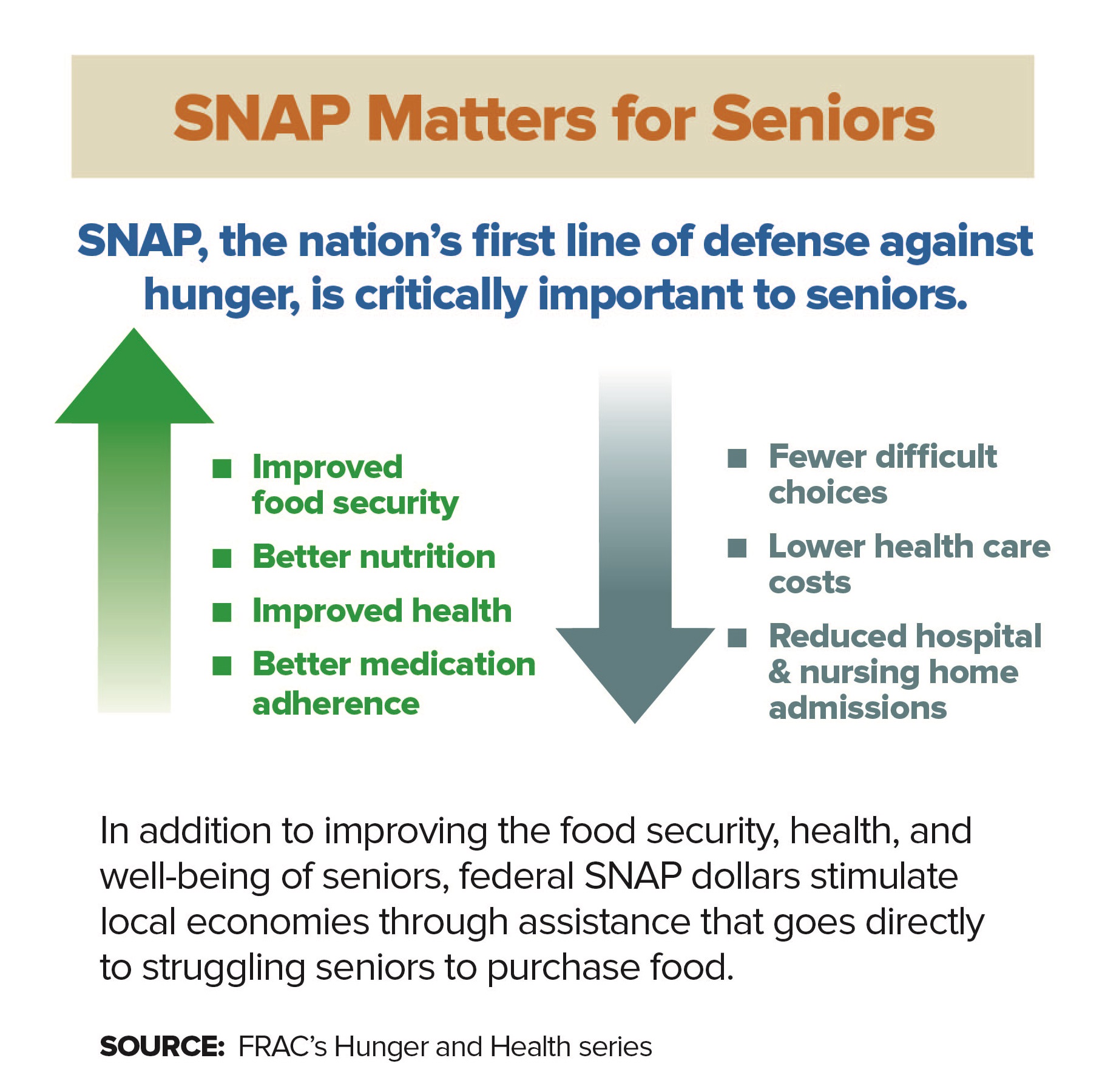
SNAP is not charity. It’s a benefit you’ve earned through years of work and contribution. For seniors on tight budgets, it’s a practical way to eat healthier, save money, and stay independent. With simplified rules, medical deductions, and co-benefits, the program is designed to support dignified aging.
Millions of eligible seniors miss out every year. Don’t let fear, stigma, or misinformation keep you from getting help. If you’re 60 or older and worry about paying for groceries, apply now. Benefits can start in days, and the process is easier than you think.
Frequently Asked Questions About SNAP for Seniors
Can seniors on Social Security qualify for SNAP?
Yes. Many seniors on Social Security qualify for food stamps for seniors. If your net monthly income is below $1,305 for a single person, you likely qualify. Deductions for medical expenses and housing costs can further reduce your countable income.
What is the minimum SNAP benefit for seniors?
The minimum benefit is $23 per month, received by about 20% of eligible seniors. However, claiming medical expense deductions can increase your benefit significantly, often to over $200 per month.
Do seniors need to report income changes to SNAP?
In ESAP states (36-month certification), you don’t need to report income changes between recertifications. In standard states, report major changes like moving, death in household, or significant income increases.
Can seniors use SNAP at farmers markets?
Yes. Most farmers markets accept EBT cards, and many programs double your SNAP benefits for fresh fruits and vegetables. This helps seniors access healthier food options.
Does SNAP affect Medicare or Social Security benefits?
No. SNAP has no impact on Social Security, Medicare, SSI, or VA benefits. Receiving SNAP is separate and does not count as income for other programs.
How long does it take to get SNAP benefits after applying?
Most seniors receive a decision within 7–10 days. If approved, benefits are typically available within 30 days. Expedited SNAP can provide benefits within 7 calendar days for those in urgent need.