
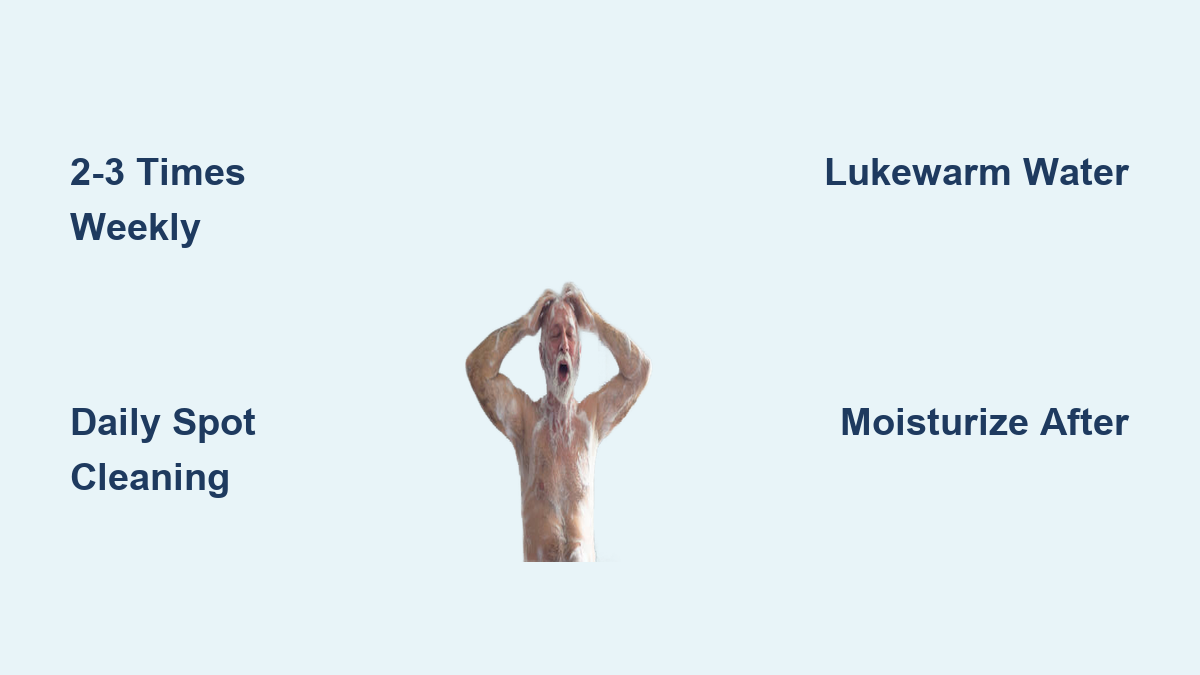
Showering is a basic part of daily life, but as we age, the answer to “how often do seniors need to shower?” becomes more nuanced. For older adults, frequent showers are not always better, and in many cases, bathing too often can do more harm than good. Age-related changes in skin, mobility, and health mean that showering two to three times per week is often sufficient for most seniors to stay clean and healthy.
This guide breaks down the real-world factors that determine bathing frequency for seniors, including skin health, mobility, dementia, incontinence, and climate. You will learn how to keep skin healthy, prevent infections, and support dignity, whether you are caring for a loved one or managing your own routine.
Optimal Bathing Frequency for Most Seniors
Most seniors do not need daily showers to stay clean. In fact, washing too often can damage aging skin. Bathing two to three times per week strikes the right balance between hygiene and skin preservation for the average older adult.
Individual needs vary widely based on activity level, health conditions, and personal comfort. For many, less frequent full showers supplemented with daily spot cleaning are safer and more effective.
When Less Frequent Bathing Works Best
Certain seniors benefit from reducing full shower frequency:
- Sedentary or homebound seniors may only need one to two full showers per week
- Seniors with dry, fragile skin should limit bathing to preserve natural oils
- Winter months often require reducing frequency to once weekly due to dry indoor heating
- Seniors with limited mobility can use sponge baths between full showers
The goal is not to eliminate bathing but to adapt it. Even with infrequent full showers, daily attention to key areas like the face, underarms, groin, and feet prevents odor and infection.
When More Frequent Showering Is Acceptable
Daily showers are not necessary for most seniors, but they are not harmful if done correctly. If a senior prefers daily bathing, ensure:
- Showers last five to ten minutes
- Water is lukewarm (95 to 105°F), never hot
- A gentle, moisturizing cleanser is used
- Skin is patted dry and moisturized immediately after
One 75-year-old diabetic reported excellent health with daily showers as part of a disciplined routine, showing that personal habits can support well-being when tailored to individual needs.
Key Factors That Affect Shower Frequency

No single rule applies to all seniors. Several health and lifestyle factors must be considered when determining how often an older adult should shower.
Aging Skin Needs Protection
As skin ages, it becomes thinner, drier, and more fragile. Natural oil production drops, leaving skin prone to itching, flaking, cracks, and slow healing. Frequent exposure to hot water and harsh soaps strips away essential lipids, worsening dryness.
Dermatologists recommend limiting full baths to one to three times per week. Use fragrance-free, hypoallergenic cleansers. Apply thick moisturizers right after bathing. Avoid alcohol-based or antibacterial soaps unless prescribed.
One caregiver reported their 92-year-old mother had the best skin they had seen on a 92-year-old thanks to weekly showers and daily moisturizing, proving that less can be more.
Mobility Challenges Increase Fall Risk
Bathing is a leading cause of falls among seniors. Stepping into a tub, standing for long periods, or losing balance on a wet surface can result in serious injury. Common barriers include arthritis, joint pain, weakness after stroke or surgery, and fear of falling.
For those with limited mobility, weekly full baths with caregiver support or use of adaptive tools are safer than daily independent showers. Consider grab bars, non-slip mats, shower chairs, and handheld showerheads.
Dementia Changes Bathing Needs
Seniors with Alzheimer or dementia often resist bathing due to confusion, fear, or sensory overload. For them, bathing once or twice per week is usually enough, especially when combined with daily spot cleaning.
Some caregivers find that daily sponge baths reduce resistance because consistency creates routine and reduces anxiety. Tips to improve cooperation include calling it spa time, using calm simple instructions, playing soft music, warming the room, and allowing choices in timing or products.
Medical Conditions That Demand Special Care

Certain health issues directly impact hygiene needs and require adjusted bathing routines.
Incontinence Requires Frequent Cleansing
While full bathing may stay weekly, perineal care should happen daily or after each episode. Failure to clean can lead to skin breakdown, fungal infections, and urinary tract infections.
Caregivers should clean genital and anal areas with warm cloths or quality wipes. Change briefs every two hours. Use barrier creams like zinc oxide to protect sensitive skin.
Diabetes Increases Foot Care Needs
Seniors with diabetes must inspect and wash their feet daily to prevent ulcers. Neuropathy and poor circulation mean small cuts can become serious. Daily foot hygiene includes gentle washing with mild soap, drying thoroughly especially between toes, and checking for blisters, redness, or swelling.
Wounds and Skin Infections Limit Bathing
Seniors with leg ulcers, bandages, or open sores may avoid full showers. Instead, use no-rinse cleansers or sponge baths. Clean around dressings during changes. Monitor for redness, swelling, or discharge.
Safer Alternatives to Full Showers
For many seniors, full-body showers are not practical or safe. Fortunately, alternatives can maintain hygiene without risking falls or skin damage.
Sponge Baths Keep Seniors Clean
Sponge baths are just as effective as full showers for maintaining cleanliness, especially for bedridden or immobile seniors. They involve using warm washcloths, no-rinse cleansers, or bathing wipes to clean high-risk areas.
How to give a sponge bath:
- Warm the room and keep the senior covered
- Gather supplies: washcloths, no-rinse cleanser, towel, moisturizer
- Expose only one area at a time
- Clean high-risk zones: face, underarms, groin, feet, skin folds
- Use no-rinse products, wipe residue if needed
- Apply moisturizer after drying
No-Rinse Cleansers Save Time and Reduce Risk
No-rinse products are ideal for seniors who cannot stand or fear water. Recommended options include no-rinse body wash, dry or no-rinse shampoo, and fragrance-free wipes for underarms, groin, and skin folds.
These allow for quick, dignified hygiene without exposure to water, temperature changes, or fall risks.
Daily Hygiene Zones Everyone Must Clean
Even with infrequent full baths, daily cleaning of key areas is non-negotiable for health and social comfort.
Must-Clean Areas
- Face and hands to remove oils and bacteria
- Underarms as sweat and odor hotspots
- Groin and genitals to prevent urinary tract infections
- Feet, critical for diabetics, check daily
- Skin folds under breasts, abdomen, behind ears that trap moisture and fungi
Cleaning methods include warm washcloths, gentle wipes, and moisturizing cleanser. Additional habits include changing underwear and socks daily, using gentle body lotions or powders to stay fresh, and wiping front to back to prevent urinary tract infections.
Risks of Bathing Too Often
More showers do not mean better hygiene for seniors. Over-bathing causes real harm.
Skin Damage from Over-Cleansing
Frequent bathing strips natural oils, leading to dry, itchy skin. It causes micro-tears that let in bacteria. It disrupts skin pH and microbiome. It increases risk of eczema, dermatitis, and infections.
Hot water and long showers make it worse. Seniors with thin skin can burn at temperatures others find comfortable.
Chills and Fatigue
Prolonged exposure to cool air or water can lower body temperature. Seniors may not feel cold until they are already chilled, leading to fatigue, shivering, or even hypothermia in extreme cases.
Risks of Bathing Too Infrequently
On the flip side, skipping hygiene leads to serious consequences.
Infections and Skin Breakdown
Bacteria and fungi thrive in unwashed skin folds. Incontinence without cleaning causes rashes and sores. Diabetics risk foot ulcers from unclean, unexamined feet. Pressure sores develop faster without daily inspection.
Social and Emotional Impact
Body odor leads to isolation. Unkempt appearance lowers self-esteem. Family or caregivers may feel distressed.
Even with weekly full baths, daily spot cleaning prevents these issues.
Signs a Senior Needs Bathing Help
Watch for early warning signs that hygiene is slipping.
Physical Red Flags
Persistent body odor or greasy hair, stained or unchanged clothes, sores, rashes, or redness in skin folds, and soiled incontinence products indicate hygiene problems.
Functional Warning Signs
Difficulty getting in or out of the tub, near-falls during bathing, forgetting to wash face or brush teeth, and using water that is too hot or cold are all concerns.
Broader signs of decline include trouble with meals or medications, confusion or memory loss, and reduced mobility or frequent falls.
Making Bathing Safer and More Comfortable
A safe, respectful environment encourages seniors to bathe regularly.
Upgrade Bathroom Safety
Install grab bars near toilet and shower. Use non-slip mats inside and outside tub. Add a shower chair or bath bench. Use a handheld showerhead. Consider a raised toilet seat. Ensure first-floor access if possible.
Control Water Temperature
Safe range is 95 to 105°F. Scald risk above 105.8°F. Set home heater to 120°F or lower. Use anti-scald devices. Test water with wrist or elbow.
Choose the Right Products
Use fragrance-free, moisturizing cleansers. Choose creams with ceramides, glycerin, or petrolatum. Use soft, fast-drying robes.
Support Emotional Well-Being
Respect privacy and choices. Use empathy, not force. Create a calming routine. Offer gentle touch. Bathing can be a moment of connection, not conflict.
When to Call for Professional Help
Many families turn to in-home care services when bathing becomes unsafe or overwhelming. Trained caregivers can assist with full or sponge baths, ensure safety with proper tools, monitor skin health, and support independence while preserving dignity.
Home care reduces caregiver burnout and ensures consistent hygiene, especially for those with dementia, mobility issues, or complex medical needs.
Frequently Asked Questions About Senior Showering Frequency
How many times a week should a senior shower?
Most seniors should shower two to three times per week. This balances hygiene with skin preservation. Seniors with dry skin or limited mobility may only need once or twice weekly, supplemented with daily spot cleaning.
Is it okay for seniors to shower every day?
Daily showers are not necessary for most seniors and can damage aging skin by stripping natural oils. If a senior prefers daily bathing, keep showers short (five to ten minutes), use lukewarm water, and apply moisturizer immediately after.
What happens if seniors shower too often?
Over-bathing causes dry, itchy skin and increases risk of skin tears, eczema, and infections. Hot water and harsh soaps worsen these effects. Seniors may also experience chills or fatigue from prolonged exposure to water and cool air.
Do seniors with dementia need to shower every day?
Seniors with dementia typically only need to bathe once or twice per week, with daily spot cleaning of key areas. Some caregivers find that daily sponge baths reduce resistance because routine creates familiarity and reduces anxiety.
How often should a bedridden senior be bathed?
Bedridden seniors require daily sponge baths or partial cleansing to prevent pressure ulcers, fungal infections, and incontinence-associated dermatitis. Focus on high-risk areas like underarms, groin, feet, and skin folds.
What are signs a senior needs help with bathing?
Signs include persistent body odor, stained clothes, skin rashes, difficulty entering or exiting the tub, near-falls during bathing, and forgetting basic hygiene tasks. Early intervention with adaptive equipment or caregiver support can prevent injury.
Key Takeaways for Senior Showering Routines
The best bathing routine for a senior balances cleanliness, safety, and comfort. Showering two to three times per week is usually enough, supplemented with daily cleaning of key areas including the face, underarms, groin, feet, and skin folds. Adjust based on health, mobility, and personal preference.
Skin protection is critical for older adults. Use lukewarm water, gentle cleansers, and moisturizers immediately after bathing. Watch for signs of over-drying or skin damage, especially in seniors with thin or fragile skin.
Safety should always come first. Install grab bars, use non-slip mats, and consider shower chairs. For seniors with mobility issues or dementia, professional caregivers can provide safe, dignified assistance while preserving independence.
With the right tools, products, and support, seniors can maintain hygiene, protect their skin, and preserve their dignity at every stage of aging.