
Every year, 1 in 4 adults over 65 experiences a fall, making walking steadiness a critical factor in maintaining independence and quality of life. As we age, natural declines in muscle strength, joint flexibility, vision, and sensory feedback can disrupt balance and lead to unsteady gait. But the good news is this: poor balance isn’t inevitable. With targeted strategies, seniors can significantly improve walking stability, reduce fall risk by up to 42%, and regain confidence in daily movement.
This guide delivers actionable, research-backed methods to enhance walking steadiness, covering proper gait mechanics, balance and strength exercises, assistive tools, footwear choices, environmental safety, and professional support. Whether you are a senior looking to stay mobile or a caregiver supporting a loved one, these techniques offer a clear path to safer, more stable walking at any age.
Master Proper Walking Mechanics
Improving steadiness starts with how you walk. Small adjustments in gait and posture can dramatically enhance balance and reduce trip risks.
Practice Heel-to-Toe Walking
Heel-to-toe walking trains precise foot placement and challenges dynamic balance. It mimics the natural rolling motion of a healthy gait cycle.
How to practice:
- Stand with right heel touching left toe.
- Step forward so left heel touches right toe.
- Continue for 10 to 20 steps along a straight line.
- Keep eyes forward and never look down.
- Use fingertip support on a wall if needed.
Practice this daily. Over time, it improves coordination and helps prevent shuffling, a common cause of falls.
Eliminate Shuffling Gait
Shuffling involves dragging feet or lifting them too little, which increases fall risk due to poor obstacle clearance and delayed balance reactions.
Fix shuffling with these exercises:
- Marching in place: Lift knees high to train step height.
- Toe raises: Strengthen the tibialis anterior muscle to improve foot lift.
- Visual cues: Use floor strips or laser-equipped canes for those with Parkinson’s.
Shuffling often stems from weakness or fear of falling. Addressing both through exercise and confidence-building breaks the cycle.
Turn Safely Without Crossing Legs
Over 80% of nursing home falls occur when someone crosses one leg over the other while turning.
Safe turning technique:
- When turning left, lead with the left foot.
- When turning right, lead with the right foot.
- Keep feet shoulder-width apart.
- Avoid twisting sharply or pivoting on one foot.
Apply this rule at doorways, hallways, and tight corners. Practice slow, controlled turns during daily routines.
Maintain Slight Knee Bend at Heel Strike
A stiff, locked-knee gait increases joint stress and reduces shock absorption.
Optimal alignment:
- Maintain a 5 to 15 degree knee bend when the heel hits the ground.
- Imagine softening the knee with each step.
- Use a mirror or video to correct your form.
This small bend allows faster micro-adjustments for balance and protects hips and knees from unnecessary strain.
Optimize Your Walking Posture
Good posture aligns your center of gravity over your base of support.
Key posture cues:
- Lift your sternum upward.
- Keep head up, chin parallel to the floor.
- Relax shoulders and let arms swing naturally at 90 degrees.
- Engage core muscles lightly.
- Roll feet from heel to toe with each step.
Proper posture reduces strain, improves breathing, and supports faster balance reactions.
Build Balance with Targeted Exercises

Balance is not fixed. It is trainable. Just 2 to 3 sessions per week of specific exercises can yield noticeable improvements in stability.
Practice Single-Leg Stands
This foundational exercise boosts ankle control and weight-shifting ability.
How to do it:
- Hold a counter or chair with one hand.
- Lift one foot slightly behind you.
- Keep hips level, gaze forward.
- Hold for 5 to 30 seconds, then switch legs.
- Repeat 3 sets per side.
Progress by:
- Reducing hand support.
- Closing your eyes (advanced level).
- Standing on a folded towel or foam pad.
Being able to stand on one leg for 10 or more seconds correlates with better neurological health and longevity.
Try Feet-Together and Wall Leans
Feet-together stance:
- Stand with heels and toes touching.
- Hold for 30 seconds.
- Progress by closing eyes or standing on soft surfaces.
Wall leans (forward weight shift):
- Stand 4 to 18 inches from a wall, back straight.
- Cross arms over chest.
- Lean forward using shin muscles, not hips.
- Return to start and repeat 5 to 10 times.
These drills train controlled movement of your center of gravity, which is critical for recovering from stumbles.
Strengthen Legs and Core
Strong muscles support steady walking. Focus on exercises that build power in the hips, thighs, and calves.
Master Chair Rises (Sit-to-Stand)
This functional move mimics daily actions like standing from a sofa.
Technique:
- Sit on a firm chair, feet shoulder-width apart.
- Lean chest slightly forward.
- Squeeze glutes and stand up slowly.
- Lower with control.
- Repeat 8 to 15 times for 3 sets.
Progress by:
- Crossing arms over chest.
- Using a lower chair.
- Removing cushions.
This exercise improves quadriceps strength and prevents stuck starts when rising from seating.
Perform Step-Ups
Step-ups build strength and coordination for stairs and curbs.
How to do it:
- Use a 4 to 8 inch step with a handrail or wall nearby.
- Step up with right foot, bring left foot up.
- Step down with right foot, then left.
- Complete 5 to 10 reps per leg.
Progress by:
- Increasing step height gradually.
- Removing hand support.
- Adding arm swings.
This strengthens quads, glutes, and calves while improving joint stability.
Add Heel and Toe Raises
Heel raises (calf strength):
- Rise onto the ball of your feet.
- Hold 3 to 10 seconds, lower slowly.
- Complete 5 to 20 reps and progress to single-leg raises.
Toe raises (shin strength):
- Hold a counter and lift toes while keeping heels down.
- Hold 5 to 10 seconds.
- Complete 8 to 15 reps.
Strong calves improve push-off power while strong shins prevent toe drag during walking.
Include Side and Back Leg Lifts
Side leg lifts (hip abductors):
- Hold a counter and lift one leg out to the side (no more than 30 degrees).
- Keep hips level and do not lean.
- Complete 8 to 15 reps per leg.
Back leg raises (glutes):
- Lift one leg straight back while keeping your torso upright.
- Avoid arching your lower back.
- Complete 5 to 15 reps per leg.
These muscles stabilize your pelvis during walking and prevent wobbling.
Improve Dynamic Stability
Static balance is just the start. Real-world walking requires movement through space and quick adjustments.
Walk Backward and Sideways
Backward walking:
- Strengthens hamstrings and glutes.
- Enhances spatial awareness.
- Walk 10 to 20 feet in clear space and use wall support if needed.
Side-step walking:
- Step sideways one foot at a time.
- Keep knees bent and hips level.
- Complete 10 steps in each direction.
Both challenge balance in new ways and improve reaction time.
Try the Simple Grapevine
Cross one foot over the other while moving sideways.
How to do it:
- Right foot crosses over left, then left foot follows.
- Keep steps small to increase difficulty.
- Use wall contact for safety.
This builds coordination and prepares you for complex navigation.
Practice Stepping Over Objects
This simulates real-life obstacles like curbs or rugs.
How to do it:
- Place rolled towels or foam blocks 12 to 18 inches apart.
- Step over each with control, lifting your foot high.
- Practice forward and sideways movement.
- Complete 5 to 10 passes.
This improves step height, spatial awareness, and confidence.
Use Mind-Body Techniques
Balance is not just physical. It involves focus, coordination, and body awareness.
Try Tree Pose
A yoga-inspired balance builder that enhances focus and ankle stability.
Steps:
- Stand on one leg.
- Place opposite foot on inner calf or thigh (never on the knee).
- Bring hands to chest or overhead.
- Hold for 20 to 30 seconds.
Modify with wall support or keep eyes open if needed.
Practice Weight Shifts Side to Side
This trains safe weight transfer, which is essential for walking and recovery.
How to do it:
- Stand hip-width apart.
- Shift full weight to one leg and lift the other slightly.
- Hold for 2 to 3 seconds, then switch.
- Repeat 20 times per side.
Keep hips over your supporting leg and avoid swaying.
Optimize Outdoor and Indoor Walking
Where and how you walk matters as much as the mechanics.
Choose Safe Walking Paths
Best options include:
- Paved parks or quiet neighborhoods.
- Malls or community centers, especially in winter.
- Avoid gravel, wet leaves, icy patches, or dimly lit areas.
Stick to even, well-maintained surfaces for maximum safety.
Use Walking Poles
Poles increase stability and engage upper body muscles.
Benefits include:
- Wider base of support.
- Better balance on slopes.
- Full-body workout.
They are ideal for those with mild imbalance or vestibular issues.
Try Interval Walking
Alternate between slow walking and brisk walking.
How to structure it:
- Slow walking (2 to 3 minutes): Focus on form.
- Brisk walking (1 to 2 minutes): Challenge balance and heart health.
This builds endurance and trains rapid gait adjustments.
Walk with a Buddy or a Pet
Social walks boost motivation and safety.
- A pet often matches your pace better than a human partner.
- Dog walking increases daily steps and emotional well-being.
Avoid walking with someone who unintentionally slows you down.
Select the Right Footwear
Shoes make or break walking steadiness.
Wear Supportive Walking Shoes
Look for these features:
- Snug but not tight fit.
- Non-slip, flexible soles.
- Arch support and cushioning.
- Low heel (under 1 inch).
- Lightweight and breathable construction.
Replace every 300 to 500 miles of walking. Visible wear is not always obvious.
Avoid slippers, backless shoes, or thick-soled sneakers that can trip you.
Adapt to Weather Conditions
In sun: Wear a hat, sunglasses, and sunscreen.
In cold or wet weather: Use layers and waterproof outerwear.
On ice: Attach traction devices (ice grips) to your shoes.
Proper clothing prevents slips and keeps you comfortable.
Use Assistive Devices When Needed
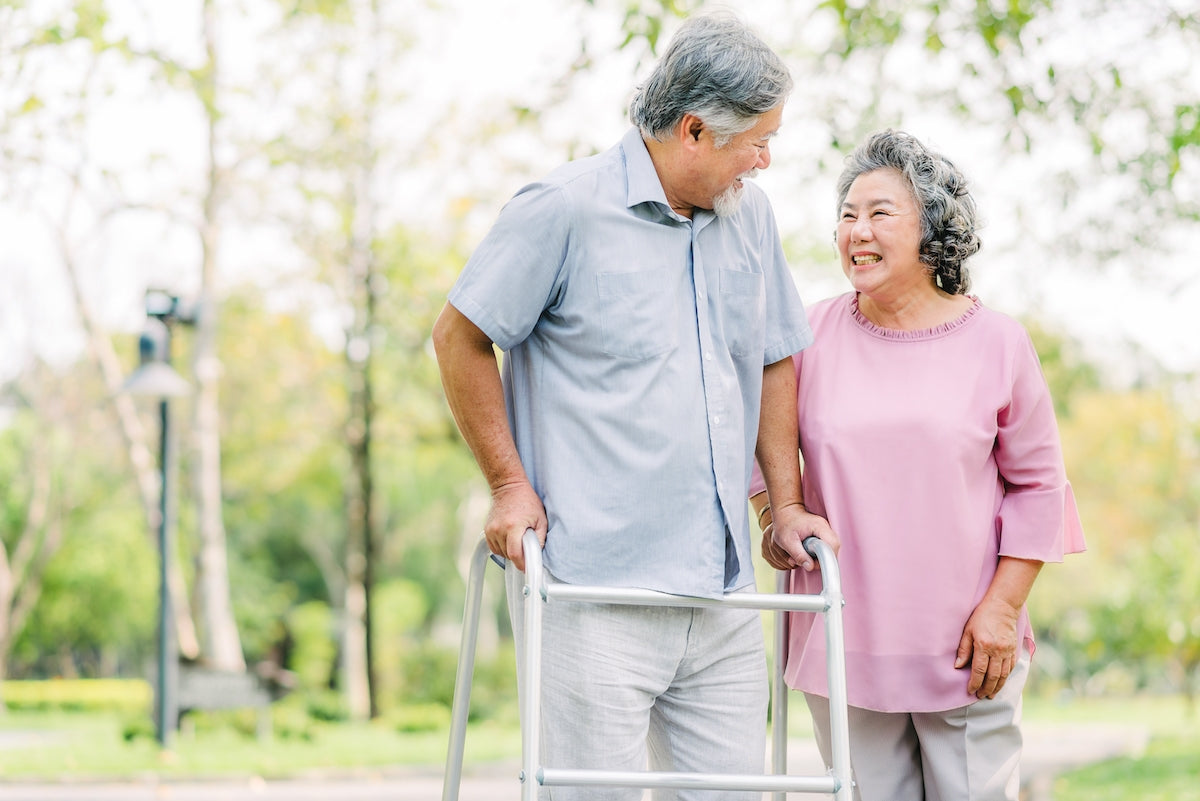
Aid tools are not a sign of weakness. They are enablers of independence.
Know When to Use a Cane or Walker
Red flag warning: If pushing a shopping cart feels more stable than walking alone, it is time to consider a device.
Benefits include:
- Increased base of support.
- Reduced fall risk.
- Ability to walk longer distances safely.
Delaying use due to pride accelerates deconditioning.
Choose the Right Device
Rolling walker (rollator):
- Four wheels, seat, and brakes.
- Best for longer walks or fatigue.
- Allows upright posture.
Cane:
- For mild imbalance or one-sided weakness.
- Must be fitted to wrist height when your arm hangs naturally.
Front-wheeled walker:
- Easier movement than standard walkers.
- Less upper body strain.
Debunk Common Myths
Myth: Walkers make you weaker.
Truth: They encourage more walking, which builds strength.
Myth: Canes mean you are dependent.
Truth: They increase independence by making movement safer.
Many users eventually transition from walker to cane to no device with improved strength.
Seek Professional Support
Expert guidance ensures safe, effective progress.
Get a Physical Therapy Assessment
A physical therapist can:
- Identify specific balance or gait deficits.
- Design a personalized exercise plan.
- Teach correct technique to prevent injury.
This is especially helpful after stroke, hip fracture, Parkinson’s, or joint replacement. Some programs include treadmill training with harness support or real-time movement feedback.
Consult Your Doctor First
Always get medical clearance before starting a new exercise routine, especially if you have:
- Heart conditions.
- Diabetes with neuropathy.
- Neurological disorders.
- Recent surgery.
Your doctor can also review medications that may affect balance, such as sedatives or blood pressure drugs.
Consider In-Home Care
For high-risk seniors, in-home support helps maintain consistency.
Caregivers can:
- Supervise walks and exercises.
- Assist with footwear and clothing.
- Encourage daily activity.
Services like Comfort Keepers or First State Rehab at Home provide tailored support for safe mobility.
Address Fear of Falling
Psychological barriers can be as limiting as physical ones.
Break the Fear-Deconditioning Cycle
Fear leads to less walking, which leads to weaker muscles, which leads to poorer balance, which leads to more fear.
Solution:
- Start small with supported exercises.
- Gradually increase difficulty.
- Celebrate small wins like standing on one leg for 10 seconds.
Confidence grows with competence.
Stay Socially Engaged
Loneliness and isolation worsen mobility decline.
- Join a walking group.
- Volunteer in your community.
- Walk with neighbors or friends.
Social interaction improves mood, motivation, and adherence to exercise routines.
Boost Cognitive Health
Balance training is brain training.
Studies link better balance with:
- Improved cognitive function.
- Lower dementia risk.
- Longer life expectancy.
Moving well supports thinking well.
Frequently Asked Questions About Improving Walking Steadiness for Seniors
Can seniors really improve their balance at any age?
Yes. Research shows that balance and gait stability are trainable at any age. Consistent balance and strength training can reduce fall risk by 24 to 42 percent. The key is starting with appropriate exercises and progressing gradually.
How often should seniors practice balance exercises?
Aim for 2 to 3 balance sessions per week, though daily practice is even better. Each session should include a variety of static and dynamic exercises targeting different aspects of stability, strength, and coordination.
What is the most effective exercise for improving walking steadiness?
Single-leg stance (standing on one leg) is one of the most effective exercises. It builds ankle stability, improves weight-shifting ability, and correlates with better neurological health and longevity. Aim to hold for 10 or more seconds per leg.
When should a senior start using a cane or walker?
Consider a cane or walker if pushing a shopping cart feels significantly more stable than walking unaided. These devices enhance independence by enabling safer movement. Using them early prevents the deconditioning that comes from fear-based inactivity.
Does fear of falling actually make falls more likely?
Yes. Fear of falling leads to reduced activity, which causes muscle deconditioning, which worsens balance, which increases fall risk. Breaking this cycle requires gradual exposure to balance challenges alongside confidence-building strategies.
Can improving walking steadiness help cognitive health?
Yes. Studies link better balance with improved cognitive function, lower dementia risk, and longer life expectancy. Balance training engages the brain’s proprioceptive and vestibular systems, which may support overall cognitive health.
Key Takeaways for Improving Walking Steadiness in Seniors
Improving walking steadiness requires a multi-faceted approach combining proper gait mechanics, targeted exercises, appropriate footwear, environmental modifications, and when needed, assistive devices. The most effective strategy combines static and dynamic balance training with leg and core strengthening exercises, practiced consistently at least 2 to 3 times per week.
Small adjustments to walking technique, such as maintaining slight knee bend at heel strike, avoiding shuffling, and turning safely without crossing legs, can dramatically reduce fall risk. These changes are most effective when paired with environmental improvements like choosing safe walking paths, wearing supportive shoes, and using walking poles or other aids when appropriate.
Professional support through physical therapy provides personalized guidance and ensures safe progression. Whether you are a senior looking to maintain independence or a caregiver supporting a loved one, the path to steadier walking begins with a single step. Start with supported exercises, progress gradually, and stay consistent. Walking steadiness can be regained, maintained, and enhanced at any age.