
Transferring an elderly person from a wheelchair to a bed is one of the most common yet high-risk caregiving tasks. Done incorrectly, it can lead to serious injuries including falls, fractures, or back strain for the caregiver. But with the right technique, equipment, and preparation, this daily activity can be safe, efficient, and respectful of the individual’s dignity.
If you’re helping an aging parent, spouse, or patient, knowing how to transfer elderly from wheelchair to bed properly is essential. Whether the person can bear some weight or needs full assistance, there’s a safe method tailored to their mobility level. This guide covers assessment, step-by-step techniques, equipment options, and expert tips to protect both you and your loved one.
Assess Mobility Before Choosing a Transfer Method
Before any transfer, you must determine the person’s physical ability. This decides which method is safe and appropriate.
Can They Bear Weight
Check the person’s weight-bearing capacity first, as this determines the transfer approach.
Full weight-bearing means they can stand with minimal help and pivot their body. A manual pivot transfer using a gait belt works well for these individuals.
Partial weight-bearing indicates they can push up slightly but need support. A sit-to-stand lift device helps them rise safely without straining your back.
No weight-bearing means legs are weak or paralyzed. A Hoyer lift or ceiling lift is required in these cases. Never attempt manual lifting with someone who cannot bear weight, as this risks shoulder dislocation, falls, and caregiver injury.
Check Key Abilities
Ask yourself these questions before proceeding:
Can they follow instructions clearly? Do they have arm strength to push up from a surface? Are they alert and cooperative? Do they experience pain, dizziness, or balance issues?
If you’re unsure about any of these factors, consult a physical therapist. A professional assessment ensures safety and prevents long-term harm.
Prepare the Room for Safe Wheelchair to Bed Transfer
A cluttered or poorly arranged space increases fall risk dramatically. Set up the environment for success before attempting any transfer.
Position Wheelchair and Bed Correctly
Wheelchair positioning matters enormously for safe transfers. Position the wheelchair at a 30° to 45° angle to the bed, near the person’s stronger side. Lock both wheelchair brakes and bed brakes before proceeding. Adjust bed height to hip level (greater trochanter) when seated, or slightly lower than the wheelchair seat.
Use an adjustable hospital bed for precise height control. This feature is critical for safe transfers and reduces strain on both parties.
Clear the Transfer Area
Remove all hazards within a 36-inch radius around the transfer space. This includes rugs, cords, furniture, and clutter. Ensure good lighting, especially for nighttime transfers. Keep the floor dry and non-slip at all times.
Remove Wheelchair Obstacles
Swing away or remove leg rests to free up space. If possible, fold back or detach the near-side armrest to allow closer access to the person’s body.
Use Proper Body Mechanics to Prevent Injury
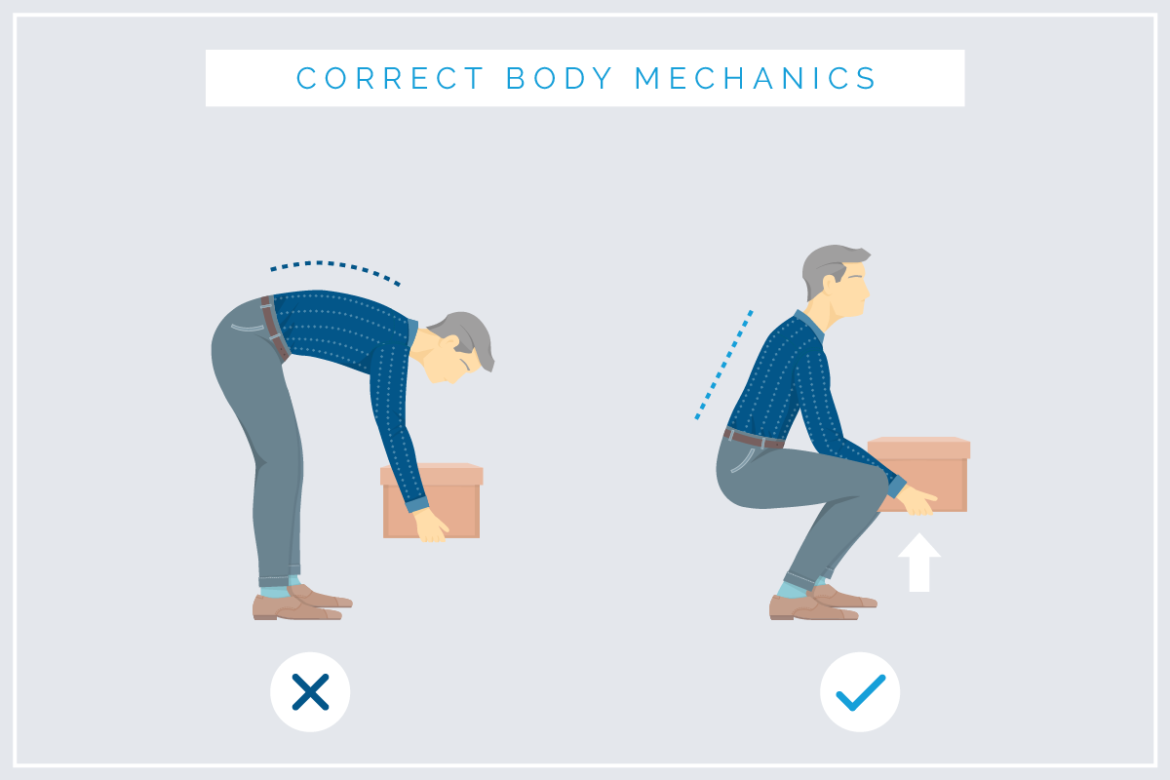
Your body is your most important tool as a caregiver. Protect it by using correct lifting technique.
Safe Lifting Principles
Always bend your knees, not your back, when lifting. Keep your back straight and chest up while using your leg muscles to power the lift. Stand as close to the person as possible to minimize reaching. Keep your feet shoulder-width apart for stability and pivot with your feet rather than twisting your torso.
Over 40% of nursing staff report back pain from improper lifting. Use technique and leverage, not raw strength.
Always Use a Gait Belt
Place the gait belt snugly around the person’s waist over clothing, never directly on skin. Hold the belt firmly during standing, pivoting, and lowering. Never grab someone under the arms, as this can injure the brachial plexus nerve group.
The belt should allow two fingers underneath. Tight enough to provide a secure grip, loose enough to allow comfortable breathing.
Execute a Safe Pivot Transfer Step by Step
The pivot transfer works for individuals who can stand and pivot with help. Follow these steps carefully.
Wheelchair to Bed Transfer
First, lock the wheelchair and remove the leg rests. Help the person scoot forward to the front edge of the seat. Instruct them to lean forward with hands on armrests or the bed surface. Apply the gait belt and stand close with knees bent. Count “1-2-3” and rise together using your leg muscles. Pivot smoothly toward the bed and lower gently into a seated position. Help adjust their legs and recline comfortably.
Bed to Wheelchair Transfer
Start by assisting the person to sit on the bed edge with feet flat on the floor. Position the wheelchair at 30° to 45° angle, locked, with leg rests removed. Apply the gait belt. Instruct them to lean forward and push up with their arms. Assist with the lift and pivot motion. Lower them into the wheelchair, reattach leg rests, and position their feet properly.
Common mistake alert: Rushing the pivot. Move slowly and keep your center of gravity low throughout the entire process.
Transfer with a Slide Board When Standing Isn’t Possible
Slide board transfers suit individuals with strong arms but who cannot stand. This technique requires good upper body strength and trunk control.
When to Use a Transfer Board
Use a slide board when the person has good upper body strength, maintains trunk control, and can actively assist by pulling across the board. This method is not appropriate for individuals who are limp or completely unable to assist.
How to Execute the Transfer
Place the wheelchair and bed side-by-side at the same height, with both locked. Slide one end of the board under the person’s buttocks. Bridge the gap to the bed, ensuring secure contact between board and both surfaces. Stabilize the board with one hand while guiding the person to use their hands to slide across. Once fully transferred, remove the board carefully.
Safety checks before proceeding: Confirm the board supports the person’s full weight. Ensure no wrinkles exist in clothing or on the board surface. Verify the person is alert and can follow directions.
Use a Mechanical Lift for Full Dependence Transfers
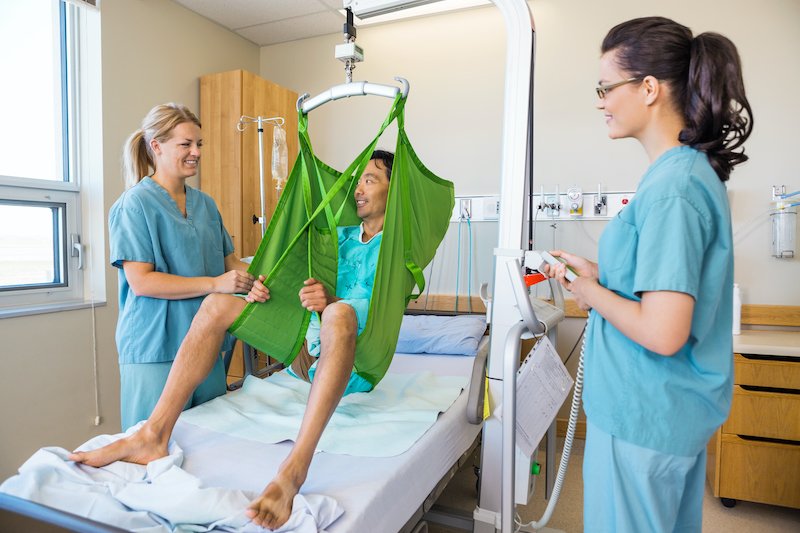
When the person cannot help at all, mechanical lifts become non-negotiable for safety.
Hoyer Lift for Home Use
The Hoyer lift is the most common portable floor lift for home use. Position the lift beside the wheelchair. Attach the proper sling type (full-body, split-leg, or solid based on needs). Raise the person gently using the hydraulic or electric pump. Roll the lift to the bed and lower slowly onto the mattress. Remove the sling carefully after positioning.
Sling safety matters enormously. The sling must be properly fitted. Ill-fitting slings cause skin tears and discomfort. Inspect slings regularly for wear, tears, or weak stitching. Clean according to manufacturer instructions.
Sit-to-Stand Lift for Partial Weight-Bearing
For individuals who can partially bear weight, a sit-to-stand lift encourages muscle use while providing support. Wrap the padded belt around the waist. Attach to lift arms. The person leans forward and holds the handles. Activate the lift to raise to standing. Roll to the bed and reverse the process to lower.
This option reduces deconditioning because it allows the person to use remaining muscle strength. However, it is not suitable for non-weight-bearing individuals.
Ceiling-Mounted Lifts for Tight Spaces
Ceiling-mounted lifts work идеально in tight spaces or for frequent transfers. They offer smooth, motorized operation with no floor clutter. The track runs from bed to bathroom or other areas.
Drawbacks include higher upfront cost and the need for professional installation. However, many families find the investment worthwhile for daily use.
Communicate Clearly During Every Transfer
Clear, calm communication prevents fear, anxiety, and resistance during transfers.
Use Simple, Direct Cues
Speak in short, clear sentences. Say “I’m going to help you stand now” before beginning. Use commands like “When I say ‘up,’ push with your arms” to coordinate efforts. Tell them to “Hold my arms, don’t grab my neck” to prevent injury.
Check for Discomfort Continuously
Ask before, during, and after the transfer. “Are you in pain?” “Do you feel dizzy?” “Should we stop and rest?” These questions catch problems early.
Encourage Participation
Even small efforts like leaning forward or pushing with hands build strength and confidence over time. Allow the person to do what they can independently.
Transfers can feel degrading. Speak respectfully, maintain privacy, and offer choices when possible.
Protect Fragile Skin During Transfers
Elderly skin tears and bruises easily. Take precautions to prevent injury.
Protective Measures
Use wrinkle-free slings and clothing during all transfers. Never drag or pull limbs roughly. Ensure transfer surfaces are smooth and clean. Use padded supports and non-slip mats beneath the person.
Make sure the sling is perfectly aligned with no wrinkles in fabric. The same applies to sheets and clothing. Any bunching or ridging can cause skin damage during movement.
Know When to Seek Professional Help
Solo caregiving is common but risky without proper training and equipment.
When Professional Assessment Is Essential
Get expert help after any surgery, stroke, or injury. Seek assistance if the person shows pain, weakness, or balance problems. Consult a professional if you experience back pain while caregiving. Professional help is also crucial if the person shows fear or resistance during transfers.
Who Can Help
A physical therapist assesses strength and teaches proper technique. An occupational therapist recommends equipment and home modifications. A home health aide provides hands-on support. Medical equipment suppliers train you on lift operation.
Medicare Part B may cover durable medical equipment including Hoyer lifts and gait belts. Requirements include a doctor’s prescription, face-to-face evaluation, and PT or OT recommendation.
Choose the Right Equipment for Your Situation
Selecting appropriate equipment prevents injury and makes transfers smoother.
Equipment Options Summary
Gait belts work well for partial assist transfers where the person can bear some weight. Transfer boards suit individuals with strong upper body strength. Sit-to-stand lifts encourage muscle use for partial weight-bearers. Hoyer lifts handle full dependence situations. Ceiling lifts work best in tight spaces with frequent daily transfers.
Mobility often declines over time. Reassess the situation every few months and upgrade equipment proactively. Signs it’s time for a lift include struggling to lift manually, the person becoming unable to stand, frequent near-misses or falls, and pain or fatigue after transfers.
Frequently Asked Questions About Transferring Elderly from Wheelchair to Bed
What is the safest way to transfer an elderly person from wheelchair to bed
The safest method depends on the individual’s mobility. For those who can stand and pivot, a pivot transfer with a gait belt is safest. For those who cannot stand, a mechanical lift (Hoyer or ceiling) is required. Always assess mobility first and choose the appropriate method.
Do I need special equipment to transfer someone from a wheelchair to a bed
At minimum, a gait belt is recommended for any transfer. Additional equipment includes transfer boards for upper body strong individuals, sit-to-stand lifts for partial weight-bearers, and Hoyer lifts for full dependence. An adjustable hospital bed greatly improves safety.
How do I prevent back injuries when transferring someone
Use proper body mechanics: bend your knees, keep your back straight, and use leg muscles to lift. Never twist your torso while lifting. Use a gait belt for better grip. Consider using mechanical lifts when the person cannot assist. Get professional training before attempting transfers.
Can I transfer someone from wheelchair to bed by myself
Yes, for pivot transfers and slide board transfers where the person can assist. However, mechanical lifts are recommended for solo caregivers when the person is fully dependent. Never attempt manual lifts alone if the person cannot bear weight.
What angle should a wheelchair be positioned for transfer
Position the wheelchair at a 30° to 45° angle to the bed, near the person’s stronger side. This angle allows for a smooth pivot motion and provides optimal positioning for both parties.
Key Takeaways for Safe Wheelchair to Bed Transfers
Safe wheelchair to bed transfers require three things: knowing the person’s mobility level, using proper technique, and having the right equipment. Always assess whether they can bear weight before choosing a transfer method. Use a gait belt for every transfer and follow proper body mechanics to protect your back.
For those who cannot stand, mechanical lifts are essential and worth the investment. Protect fragile elderly skin during transfers and communicate clearly throughout the process. When in doubt, consult a physical or occupational therapist for assessment and training.
Your health and the person’s safety depend on using the right approach. Don’t attempt high-risk manual lifts. Get professional guidance, invest in proper equipment, and reassess regularly as mobility needs change.