If you’re a senior homeowner worried about rising property taxes, you’ve likely heard of the Senior Freeze program. The name is misleading, though. The Senior Freeze doesn’t actually stop your taxes from increasing in most cases. Instead, it describes two distinct property tax relief programs operating in different states: one in New Jersey that reimburses you for tax increases, and another in Cook County, Illinois that freezes your home’s assessed value. Understanding which program applies to you is critical to claiming the benefits you’re entitled to.
This guide explains exactly how the Senior Freeze works in both jurisdictions, who qualifies, how to apply, and what changes are coming in 2025. Whether you’re looking to lower your tax bill or get money back after paying higher taxes, you’ll find the step-by-step details you need to protect your savings.
New Jersey Senior Freeze: Reimbursement-Based Program
New Jersey operates the Senior Freeze as a reimbursement program officially called the Property Tax Reimbursement Program. Rather than preventing taxes from rising, this program pays you back for the difference between your current property taxes and a base year amount. Over 165,000 New Jersey residents use this program to stay in their homes despite growing local tax burdens.
Calculating Your Reimbursement Benefit

Your reimbursement is based on how much your property taxes have increased since your base year. The base year is the first full tax year when you met all eligibility requirements: age, residency, ownership, and income limits. This becomes your benchmark amount, and future reimbursements are calculated against this number.
If your current year taxes exceed your base year amount, you receive a reimbursement for the difference. If taxes stay the same or go down, no payment is issued. You can claim reimbursements every year as long as taxes remain above your base year and you maintain eligibility.
Example calculation:
– Base Year Taxes (2019): $8,767
– Current Year Taxes (2020): $9,582
– Increase: $815
– Your Reimbursement: $815
Payments are issued via check or direct deposit after your application is processed. Keep in mind that if your taxes ever fall below the base year amount, you lose your base year and must reapply as a new applicant when taxes rise again.
Mobile Home Owner Special Rules
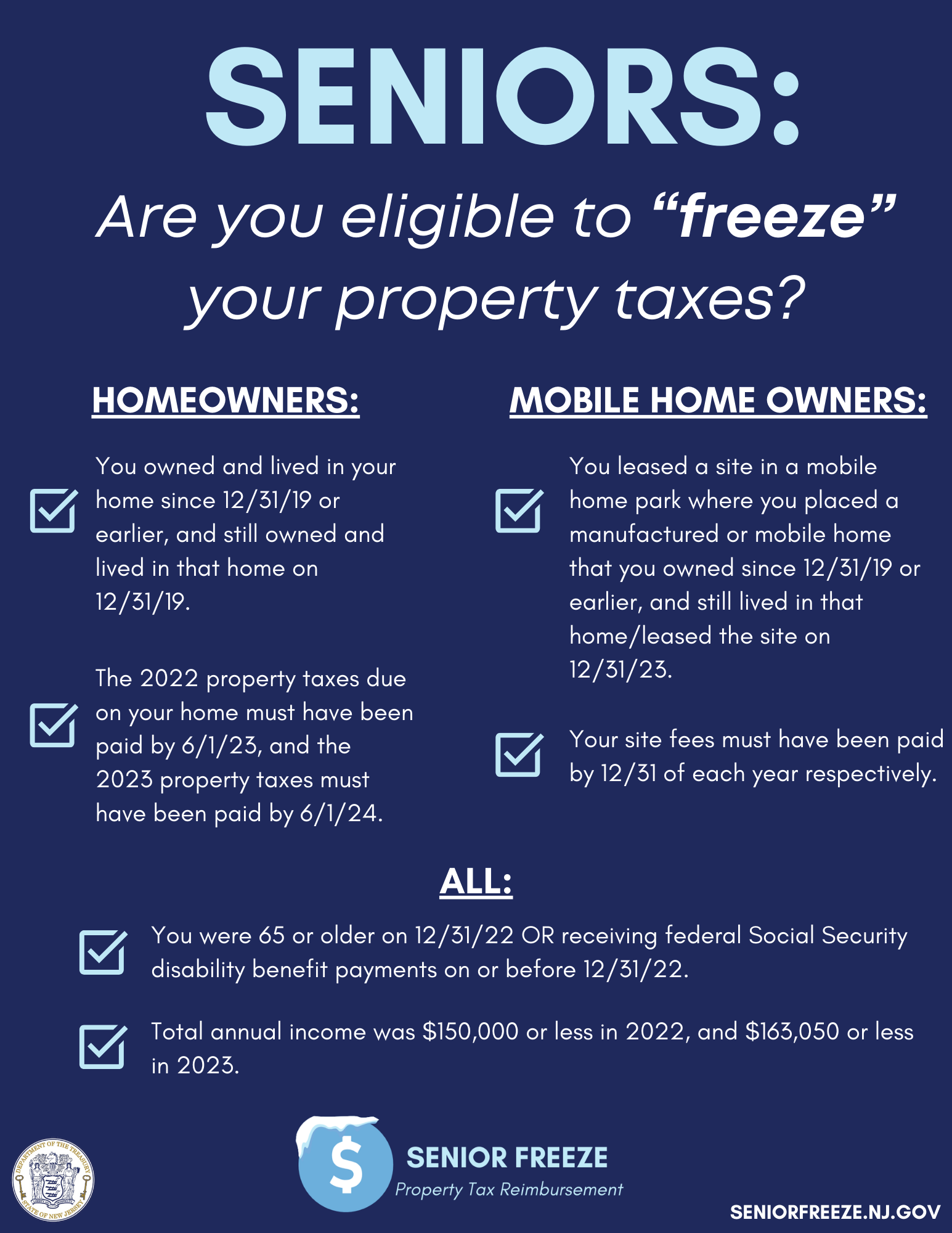
If you own a mobile home in a manufactured home park, you can qualify based on site fee increases even if you don’t pay traditional property taxes. Only 18% of the site fee counts toward your reimbursement.
Example calculation:
– Base Year Site Fee: $4,000 → 18% equals $720
– Current Year Site Fee: $4,500 → 18% equals $810
– Increase: $90
– Your Reimbursement: $90
This reflects the partial ownership nature of mobile homes where you own the structure but lease the land.
Who Qualifies for the New Jersey Senior Freeze
Meeting all eligibility requirements every year from your base year through the current tax year is mandatory. Here are the key qualification criteria you must satisfy.
Age or Disability Requirements
You must be 65 years or older, or be permanently and totally disabled and receiving federal SSDI benefits as of December 31 of the tax year. Both pathways provide access to the program, so disability status matters if you receive Social Security Disability Insurance.
Ownership and Residency Rules
You must own and occupy the property as your principal residence in New Jersey. This applies to houses, condos, co-ops, and mobile homes on leased land. The property must be your primary home, not a rental or second home.
Income Limits for 2023
Your adjusted gross income must not exceed $150,000 for the 2023 tax year. This limit is based on your federal tax return from two years prior, meaning your 2021 return determines your 2023 eligibility. All income sources count: wages, Social Security, pensions, investments, and rental income.
The income limit increased significantly from the previous threshold of $99,735 and may change with future legislation.
Residency and Trust Ownership
The 10-year New Jersey residency requirement has been eliminated. You only need to be a current legal resident and live in the home as your primary residence. If your property is owned by a trust, you can still qualify as a beneficiary, but you must submit a copy of the trust agreement with your initial application.
Applying for the New Jersey Senior Freeze
You must file annually using the correct form. Understanding which form to use and what documentation to gather makes the process smoother.
Choosing the Right Form
Use PTR-1 if you’re a first-time applicant or need to re-establish your base year after a break in eligibility. Use PTR-2 if you’re a returning applicant with an established base year. PTR-2 forms are automatically mailed to continuing recipients.
Required Documentation
First-time PTR-1 filers must provide proof of age or disability, New Jersey residency proof, property tax bills, proof of taxes paid, your federal tax return for income verification, and a trust agreement if applicable. Returning PTR-2 filers no longer need to submit proof of taxes paid as of the 2023 filing season.
Filing Methods and Deadlines
You can file online through the NJ Taxation Portal at njportal.com/taxation/ptr for faster processing, or download and mail a paper form. The deadline for the 2024 tax year is October 31, 2025. Late applications are not accepted under any circumstances.
Even if you receive a PTR-2 form automatically, filing every year is mandatory. Skipping a year means losing your benefits.
Cook County Illinois: Assessment Freeze Model
Cook County, Illinois operates the Senior Freeze differently. Officially called the Senior Citizens Assessment Freeze Homestead Exemption, this program locks in your home’s Equalized Assessed Value to prevent tax growth due to rising market values. It’s a preventive program aimed at stopping tax increases before they happen.
How the Assessment Freeze Works
Your Equalized Assessed Value is frozen at the level from the year before you apply. For example, if you apply for 2019 taxes billed in 2020, your 2018 EAV becomes your frozen value. Even if your home’s market value increases, your taxable value stays locked at that frozen amount.
Example:
– 2018 EAV: $100,000
– 2019 Market EAV: $110,000
– With Freeze: Tax calculated on $100,000
Important Limitation
The tax bill is not frozen. While your assessed value is locked, tax rates set by local governments like schools, cities, and park districts can still increase. This means your tax bill may rise even with the exemption, though typically by less than it would without the freeze.
Additional $2,000 Deduction
All qualifying seniors receive an extra $2,000 reduction on their frozen EAV. This ensures even seniors in stable markets still see some savings.
Example:
– Frozen EAV: $100,000
– Deduction: $2,000
– Taxable EAV: $98,000
Cook County Eligibility and Application
To qualify for the Cook County Senior Freeze, you must be 65 or older during the tax year, own and occupy the home as your principal residence, meet annual income eligibility requirements, and apply by the annual deadline. You must requalify every year since there’s no automatic continuation.
Renewal forms are mailed to prior recipients, but you must still submit them annually to keep the exemption active. Forms are available on the Cook County Assessor’s website or at Assessor Office locations.
New Jersey vs. Cook County: Key Differences
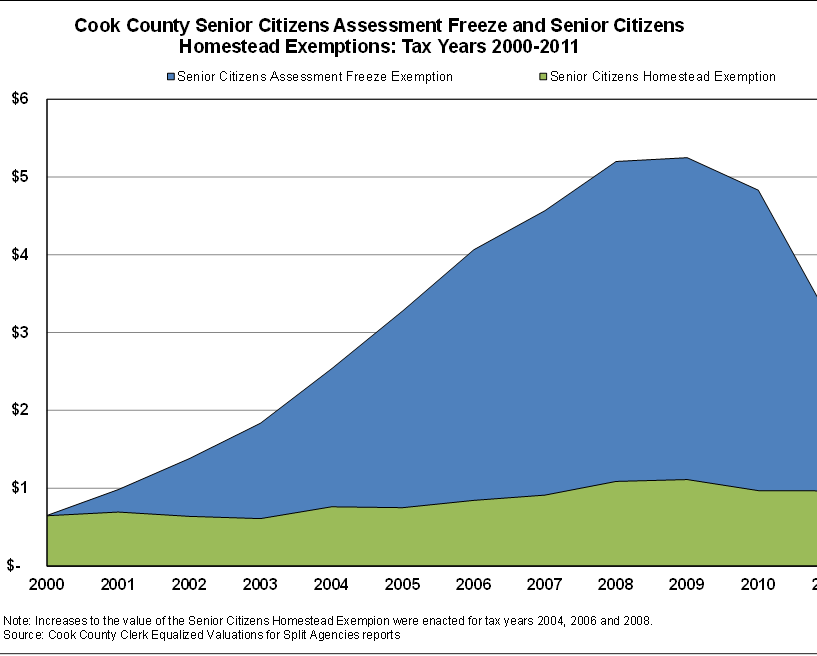
Understanding the differences between these programs helps you know what to expect.
| Feature | New Jersey | Cook County, IL |
|---|---|---|
| Program Type | Reimbursement for tax increases | Freeze on assessed value |
| Payment Form | Direct deposit or check | No cash payment |
| Base Year | First year all rules met | EAV from year before application |
| Eligibility Age | 65+ or disabled (SSDI) | 65+ |
| Income Limit (2023) | $150,000 AGI | Yes, verified annually |
| Mobile Home Coverage | Yes, 18% of site fees | Not specified |
| Tax Bill Guarantee | No, taxes rise but you’re reimbursed | No, levies can still increase |
Common Myths About the Senior Freeze
Several misconceptions can lead to missed benefits or incorrect expectations.
Myth: It Freezes Your Property Taxes
This is false in both states. In New Jersey, municipal tax rate hikes increase what you pay, and you get reimbursed later. In Cook County, local levies can rise, increasing your final bill despite a frozen assessed value.
Myth: You Only Apply Once
Annual filing is required in both programs. Skipping a year means losing your benefits completely. Even returning recipients must submit forms.
Myth: Income Verification Isn’t Necessary Every Year
Income is checked each year, and limits can change. The $150,000 cap in New Jersey is not permanent and may increase or decrease with legislation.
2025 Changes: Combined Benefits in New Jersey
Starting in 2025, New Jersey is simplifying access with a single application for three programs: Senior Freeze, ANCHOR Program, and the new Stay NJ Program. You’ll receive the higher of two benefit calculations: the Stay NJ benefit alone, or the combined ANCHOR plus Senior Freeze benefit.
The maximum combined benefit is capped at $6,500. Your Senior Freeze base year is preserved unless a municipal reassessment resets your property’s value.
Final Thoughts on Protecting Your Senior Freeze Benefits
The Senior Freeze is a powerful tool, but it’s not automatic or permanent. Whether you’re in New Jersey or Cook County, staying informed, filing on time, and understanding how your benefits work is the key to keeping more of your money.
Three things matter most. First, preserve your base year in New Jersey by ensuring your taxes never drop below that benchmark amount. Second, file every single year without exception, even if you receive automatic renewal forms. Third, watch for reassessments that could reset your property value and affect your benefits.
Don’t assume you’re enrolled. Apply every year, verify your eligibility, and take full advantage of all available tax relief programs.
Frequently Asked Questions About the Senior Freeze
Does the Senior Freeze actually freeze my property taxes?
No. The Senior Freeze doesn’t freeze your tax bill in either state. In New Jersey, taxes continue to rise and you’re reimbursed later for increases above your base year. In Cook County, your assessed value is frozen, but local tax levies can still increase, raising your bill.
How do I know if I qualify for the Senior Freeze?
You must be 65 or older (or permanently disabled with SSDI in New Jersey), own and occupy the property as your principal residence, and meet annual income limits. In New Jersey, the 2023 income limit is $150,000 AGI. Cook County has income limits but specific thresholds aren’t published.
Can I apply once and get benefits every year?
No. Both programs require annual reapplication. In New Jersey, returning applicants use PTR-2 forms automatically mailed each year. In Cook County, you must file a renewal form each year. Missing a year means losing your benefits.
What happens if my property taxes go down?
In New Jersey, if your taxes drop below your base year amount, you lose your base year and must reapply as a new applicant when taxes rise again. In Cook County, your frozen EAV remains in place, but you won’t receive additional benefit from the freeze if values decline.
Are mobile home owners eligible for the Senior Freeze?
Yes, in New Jersey. Mobile home owners can qualify based on increases in park site fees, but only 18% of the site fee counts toward the reimbursement calculation.
What new changes are coming in 2025?
New Jersey is introducing a combined application for Senior Freeze, ANCHOR, and the new Stay NJ program. The maximum combined benefit is capped at $6,500. Applicants will receive whichever calculation provides the higher payment.