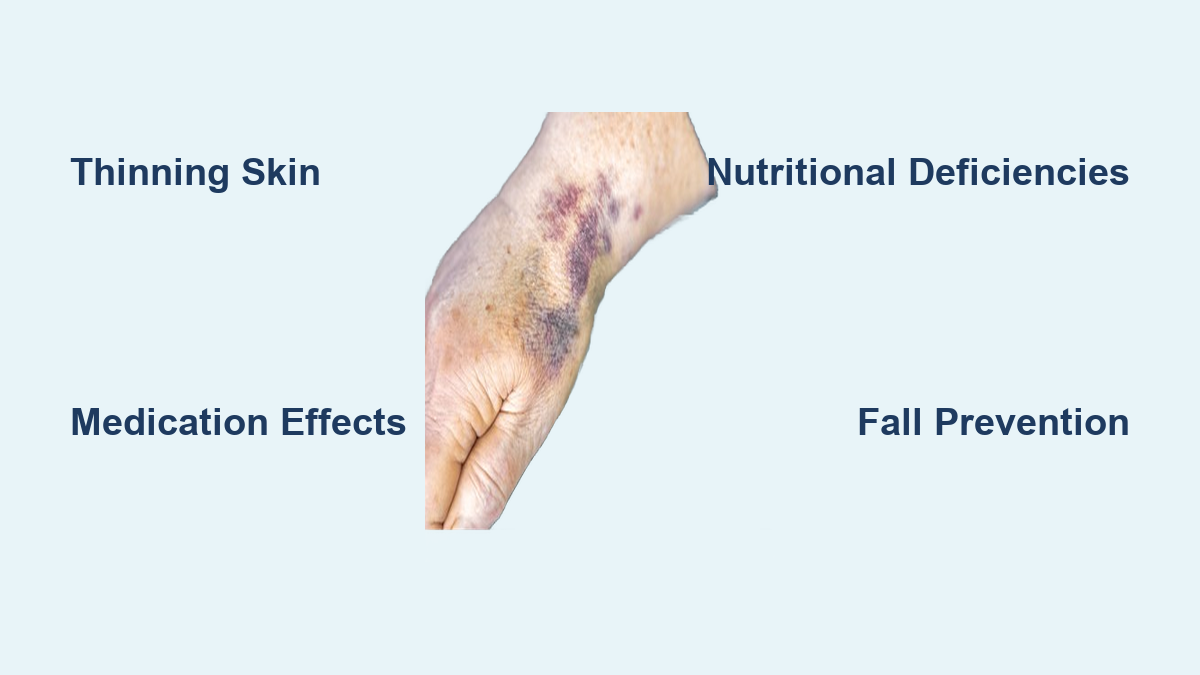
If you’ve noticed that older adults seem to bruise at the slightest bump, or even for no clear reason at all, there’s a medical explanation for this common现象. Easy bruising in the elderly is incredibly prevalent, often resulting from natural aging processes that weaken skin and blood vessels. But while most bruises are harmless, frequent or unexplained ones can signal medication side effects, nutritional deficiencies, or serious health conditions.
This guide breaks down exactly why seniors bruise so easily, covering the key biological changes, common medications, and underlying diseases that contribute. You’ll also learn how to distinguish normal aging from warning signs that need medical attention, plus practical steps to prevent bruises and support skin health in older age.
How Aging Changes Skin and Blood Vessels

As people age, their skin becomes significantly more vulnerable to damage, making bruising far more likely even from minor pressure or friction. These changes happen gradually but have a major impact on how easily bruises form and how long they take to heal.
Thinning Skin and Collagen Loss
The skin’s structure weakens over time due to reduced collagen production. Collagen gives skin its strength and elasticity, but levels decline with age, leading to fragile, paper-thin skin. The dermis, which accounts for about 90% of skin thickness, shrinks substantially, and the epidermis becomes less effective as a protective barrier. This thinning means even light contact can cause capillaries beneath the surface to rupture and leak blood.
The subcutaneous fat layer beneath the skin also diminishes with age. This layer acts as a natural cushion that protects blood vessels from external pressure and trauma. When this padding shrinks, capillaries sit much closer to the skin’s surface and become far more vulnerable to breaking from minor bumps or even simple friction like pulling on a shirt.
Small capillaries in the skin become increasingly brittle and less flexible with age. These fragile vessels are far more prone to breaking spontaneously or from minimal trauma. Once they leak, blood pools under the skin, forming the visible bruise that can linger for weeks.
Healing slows considerably in older adults due to reduced circulation, fewer regenerating cells, and lower nutrient delivery to tissues. Bruises on the legs, where blood flow is poorest, can take up to four weeks or longer to fully fade. Older bruises may leave behind dark spots known as hyperpigmentation, especially after repeated episodes in the same area.
Senile Purpura: The Most Common Cause of Unexplained Bruising
One of the most frequent causes of unexplained bruising in seniors is senile purpura, a harmless but highly visible condition tied to long-term sun damage.
What Exactly Is Senile Purpura
Also known as actinic purpura, this condition causes irregular, dark purple or red patches that typically appear on the backs of hands and forearms. It results from years of UV exposure gradually breaking down collagen and weakening blood vessel walls in the dermis. This condition affects up to 10% of people over age 50, with prevalence increasing substantially with advancing age and cumulative sun exposure.
Unlike typical bruises, senile purpura often appears without any identifiable injury. Simply pulling on a shirt, resting an arm on a table surface, or even gentle pressure can trigger it. The lesions typically last up to three weeks and frequently leave behind brown discoloration that persists long after the bruise itself fades.
While senile purpura is not dangerous, it serves as a clear visible marker of skin fragility and significant photoaging. It indicates that the skin in those areas has become extremely thin and that blood vessels have been substantially weakened by years of sun exposure.
Medications That Increase Bruising Risk

Many drugs commonly prescribed to seniors interfere with clotting or directly weaken skin structure, making bruising significantly more likely even at standard doses.
Blood Thinners and Antiplatelet Drugs
Aspirin and clopidogrel reduce platelet function, significantly slowing clot formation. Warfarin, apixaban, rivaroxaban, and similar anticoagulants inhibit specific clotting factors, raising bleeding risk across the board. Even the low-dose aspirin many older adults take for heart protection can substantially increase bruising frequency and severity.
NSAIDs like ibuprofen and naproxen impair platelet activity and may irritate the stomach lining, increasing both internal and external bleeding risk. These effects are compounded with regular or long-term use.
Corticosteroids and Antidepressants
Prednisone and long-term topical steroids cause skin atrophy by accelerating collagen degradation and reducing dermal thickness. This makes blood vessel walls far more fragile and skin far more prone to bruising from even light pressure.
SSRIs such as sertraline and fluoxetine reduce serotonin in platelets, which is needed for proper clotting function. Research shows these medications are linked to a 20 to 50% higher bleeding risk in older adults, manifesting as easy bruising, nosebleeds, or prolonged bleeding from minor cuts.
Herbal Supplements and Over-the-Counter Products
Ginkgo biloba, fish oil, garlic, ginger, and high-dose vitamin E all have mild blood-thinning effects that can increase bruising. The real danger lies in combining these with prescription anticoagulants, which can amplify bleeding risk significantly. Always review all supplements with a doctor or pharmacist.
Medical Conditions Linked to Easy Bruising
While aging and medications are the top causes, certain serious health conditions must be ruled out when bruising is frequent or unexplained.
Blood Clotting Disorders
Thrombocytopenia, or low platelet count, can result from leukemia, immune thrombocytopenic purpura, medication side effects, or bone marrow disorders. Von Willebrand disease is an inherited disorder affecting clot stability that may persist into older age. Myelodysplastic syndromes disrupt normal blood cell production and can lead to abnormal bleeding tendencies.
Liver and Kidney Disease
The liver produces most clotting factors, so conditions like cirrhosis or chronic hepatitis impair this function, leading to coagulopathy. Additional signs include jaundice, swollen abdomen, and easy bleeding from minor wounds. In advanced renal failure, uremia interferes with platelet function, increasing bleeding tendency substantially.
Nutritional Deficiencies
Vitamin C deficiency, though rare, can cause weakened capillaries, bleeding gums, and poor healing in malnourished seniors. Vitamin K deficiency impairs clotting and can stem from poor diet, malabsorption, or long-term antibiotic use. Zinc, iron, B12, and folate all support skin repair and blood health, so deficiencies in these nutrients slow healing and weaken vessels throughout the body.
Blood Cancers
Leukemia, lymphoma, and myeloma can cause low platelets or abnormal bleeding. Warning signs include unexplained weight loss, fatigue, frequent infections, bone pain, and tiny red dots called petechiae. Any combination of these symptoms with easy bruising warrants prompt medical evaluation.
External Factors That Increase Bruising Risk
Beyond biology, daily habits and environmental factors play a major role in how easily seniors bruise.
Sun Damage and Photoaging
UV radiation accelerates skin aging by destroying collagen and elastin fibers. This directly increases vulnerability to senile purpura and general bruising across the body. Daily use of SPF 30+ broad-spectrum sunscreen, wearing long sleeves, and avoiding sun between 10 a.m. and 4 p.m. provide essential protection.
Smoking, Alcohol, and Falls
Nicotine and chemicals in tobacco reduce collagen production, impair circulation, and delay healing, all of which speed up skin aging. Chronic alcohol abuse damages the liver, interferes with clotting, and often leads to dangerous nutritional deficiencies. Age-related muscle loss, balance problems, and conditions like Parkinson’s or neuropathy dramatically raise fall risk, and bruises commonly appear on shins, hips, and arms after falls.
Caregiver Handling
Even gentle assistance like helping someone stand, walk, or dress can cause bruising in frail skin. Common sites include underarms, arms, and torso. While not always abusive, this highlights the need for soft, supportive techniques when assisting elderly individuals.
Different Types of Bruising in Seniors
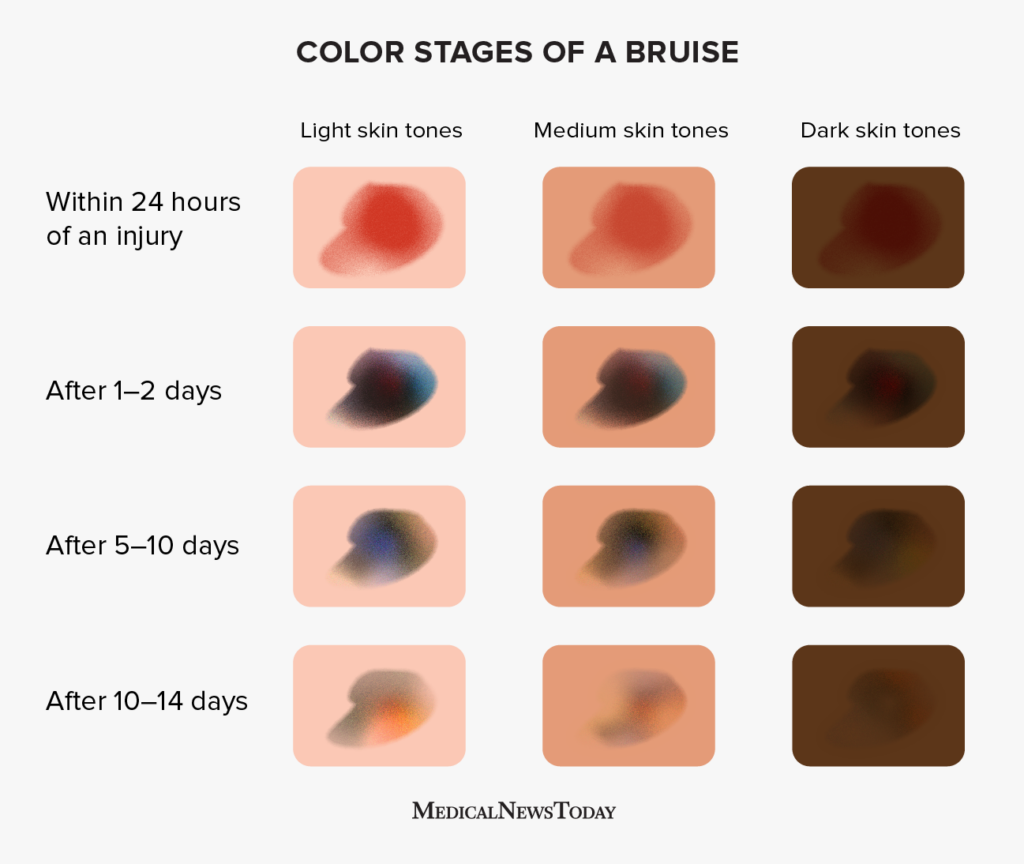
Recognizing the type of bruise helps determine its cause and whether medical attention is needed.
Senile purpura appears as large, irregular purple patches on hands and forearms, requires no trauma, and often leaves brown spots after healing. Petechiae are tiny red or purple dots, usually 1 to 2 millimeters, that don’t blanch when pressed. They often appear on legs and can signal platelet issues, infection, or vasculitis, requiring doctor evaluation if sudden or widespread. Hematomas appear as raised, painful lumps under the skin from significant vessel rupture and carry infection risk, especially in immobile seniors.
When Bruising Signals Something Serious
Most bruising is normal with age, but certain signs demand prompt medical evaluation.
Red Flags Requiring Doctor Visits
Bruises appearing without any injury, frequent large bruises, bruising in unusual areas like chest or back, petechiae or purpura on non-extremities, prolonged bleeding from cuts, and nosebleeds or gum bleeding all warrant immediate attention. Systemic symptoms like fatigue, weight loss, fever, and bone pain combined with bruising need urgent evaluation.
Tests Your Doctor May Order
A complete blood count checks platelets and looks for anemia. Coagulation studies like PT, INR, and aPTT measure clotting time. Liver and kidney function tests assess organ health. Vitamin level testing checks B12, folate, C, K, and iron status. A peripheral smear or bone marrow biopsy may be ordered if blood cancer is suspected.
Preventing Bruises in Older Adults
While aging cannot be stopped, many bruising risks can be substantially reduced through practical measures.
Fall Prevention at Home
Improving lighting in hallways, stairs, and bathrooms removes tripping hazards like loose rugs and clutter. Installing grab bars in showers, non-slip mats in bathrooms, and handrails on stairs provides critical support. Wearing supportive, non-slip shoes and using canes or walkers when needed prevents countless falls.
Nutrition for Stronger Skin and Blood
Vitamin C from citrus, peppers, and broccoli supports collagen production. Vitamin K from leafy greens like kale and spinach is vital for proper clotting. Zinc from meat and legumes aids healing. Iron and B12 from lean meats and fortified foods prevent anemia. Protein from eggs and lean meat provides essential building blocks for tissue repair. Adequate hydration keeps skin supple and resilient.
Skin Care and Medication Review
Moisturizing daily with products containing ceramides, hyaluronic acid, or glycerin maintains skin barrier function. Avoiding hot showers and harsh soaps prevents further drying. Using sunscreen every day, even in winter, protects against photoaging.
Scheduling annual medication reviews with a doctor or pharmacist helps identify alternatives to high-risk drugs. Watching for over-the-counter products that increase bleeding risk prevents dangerous interactions.
Treating Existing Bruises
Once a bruise forms, proper care reduces swelling and speeds healing.
First 24 to 48 Hours: R.I.C.E. Method
Rest the affected area and avoid putting pressure on it. Apply a cold pack wrapped in cloth for 10 to 20 minutes every hour to constrict blood vessels and reduce bleeding. Use a soft bandage for compression only if swelling occurs, keeping it loose enough to maintain circulation. Elevate the limb above heart level when possible to reduce blood pooling in the bruise.
After 48 Hours: Promoting Healing
Switch to warm compresses to increase blood flow and help the body reabsorb pooled blood. Apply for 10 to 20 minutes several times daily. Gentle massage may aid reabsorption, but only if the area is not painful. Avoid NSAIDs like ibuprofen, which can worsen bleeding by interfering with platelet function.
Topical Treatments That Help
Arnica gel has anti-inflammatory properties that may reduce bruise duration and severity. Dermaka Cream contains arnica plus bromelain and vitamins A and E, showing greater effectiveness than arnica alone in clinical studies. Vitamin K cream may help reduce discoloration, particularly on the face, though effectiveness varies by individual.
Healing timelines vary by location: face bruises heal in about one week, arms and trunk in 2 to 3 weeks, and legs can take up to four weeks. Seniors should expect healing to be slower than younger adults due to reduced metabolic activity and circulation.
Final Thoughts on Managing Easy Bruising in Seniors
Easy bruising in the elderly is usually a normal part of aging driven by thinning skin, lost subcutaneous fat, fragile blood vessels, and medication effects. While most bruises are harmless, unexplained or frequent bruising can signal serious conditions like blood disorders, liver disease, or nutritional deficiencies that require medical attention.
The most important steps are reviewing all medications and supplements with a healthcare provider, implementing fall prevention strategies at home, ensuring adequate nutrition with focus on vitamins C and K and zinc, protecting skin from sun damage, and seeking medical evaluation for any unexplained or concerning bruises. With the right care and vigilance, older adults can maintain healthier skin and better quality of life while reducing unnecessary bruising.
Frequently Asked Questions About Why Elderly Bruise So Easily
What causes easy bruising in elderly individuals?
Easy bruising in elderly individuals results primarily from age-related skin thinning, loss of subcutaneous fat cushioning, and weakened blood vessel walls. Collagen production decreases with age, making skin fragile and less able to absorb impact. The blood vessels themselves become brittle and more prone to rupturing from minor pressure or trauma.
Are frequent bruises in seniors always a sign of a serious condition?
Not always. Most bruising in seniors is a normal consequence of aging skin and commonly used medications like blood thinners. However, frequent unexplained bruises, bruises appearing without any injury, or bruises accompanied by other symptoms like fatigue, weight loss, or bleeding gums should be evaluated by a doctor to rule out underlying conditions.
Which medications increase bruising risk in older adults?
Several medications increase bruising risk, including blood thinners like warfarin and aspirin, NSAIDs like ibuprofen, corticosteroids like prednisone, and antidepressants like SSRIs. Herbal supplements including ginkgo biloba, fish oil, and high-dose vitamin E can also increase bleeding risk, especially when combined with prescription anticoagulants.
How can I help prevent bruises in an elderly person?
Prevent bruises by improving home safety with better lighting, removing tripping hazards, and installing grab bars. Ensure adequate nutrition with vitamins C and K, zinc, and protein. Apply sunscreen daily and moisturize skin regularly. Review all medications with a doctor to identify alternatives to high-risk drugs. Use mobility aids as needed to prevent falls.
When should I take an elderly person to the doctor for bruising?
Seek medical attention if bruises appear without any injury, if bruising is frequent and large, if bruises occur in unusual locations like chest or back, if petechiae or tiny red dots appear suddenly, if bleeding from cuts or gums is prolonged, or if bruising is accompanied by fatigue, weight loss, fever, or bone pain.
How long does it take for bruises to heal in elderly adults?
Healing time varies by location: face bruises take about one week, arms and trunk take 2 to 3 weeks, and leg bruises can take up to four weeks or longer. Elderly adults heal more slowly than younger people due to reduced circulation and cellular regeneration, so patience is essential.