
Leg swelling in older adults is more than just a cosmetic concern. Known medically as peripheral edema, this condition affects millions of seniors, particularly those over 65. Fluid builds up in the legs, ankles, and feet due to poor circulation, chronic illness, or lifestyle factors. While mild puffiness might seem harmless, persistent swelling can lead to discomfort, skin breakdown, and serious complications like deep vein thrombosis or heart failure. The good news is that most cases can be improved with simple daily strategies. This guide covers practical, science-backed ways to reduce leg swelling in the elderly, from exercises and diet to compression and elevation techniques.
Identify Common Causes First
Understanding what triggers leg swelling is essential for finding the right solution. Not all edema is the same, and addressing the root cause matters more than just managing symptoms.
Rule Out Serious Medical Conditions
Certain diseases disrupt the body’s fluid balance and require professional diagnosis. Heart failure causes fluid to back up in the legs and lungs. Kidney disease reduces sodium and water excretion, leading to generalized swelling. Liver cirrhosis lowers albumin levels, allowing fluid to leak into tissues. Venous insufficiency means damaged leg veins cannot return blood efficiently. Lymphedema results from blocked lymphatic drainage, often after cancer treatment. Deep vein thrombosis causes sudden, painful one-sided swelling and represents a medical emergency.
Check Medication Side Effects
Many common drugs contribute to fluid retention. Amlodipine and other calcium channel blockers frequently cause swelling. NSAIDs like ibuprofen or naproxen can trigger fluid buildup. Steroids such as prednisone are known culprits. Pioglitazone, a diabetes medication, may also contribute. If swelling began after a new prescription, consult a doctor before stopping any medication.
Recognize Lifestyle Triggers
Daily habits play a significant role in leg swelling. Sitting or standing too long without movement reduces circulation. Eating high-sodium meals including processed foods and canned soups worsens fluid retention. Not drinking enough water paradoxically makes swelling worse, as dehydration causes the body to hold onto fluid. Wearing tight socks or restrictive clothing impedes blood flow. Being overweight increases pressure on leg veins.
Spot Warning Signs Early
Catching problems early prevents complications. Knowing what to look for helps you act before minor swelling becomes major.
Watch for Pitting Edema
Press a finger into the swollen area for about 5 seconds. If an indentation remains, it is pitting edema, a clear sign of fluid buildup. The deeper and longer the dent, the more severe the swelling tends to be.
Monitor for Danger Symptoms
Seek immediate medical care if you notice sudden swelling in one leg with pain or warmth, which could indicate deep vein thrombosis. Shortness of breath or chest tightness may signal heart or lung involvement. Red, hot skin with fever suggests infection like cellulitis. Open sores, ulcers, or skin discoloration require prompt attention. Swelling that does not improve with rest or elevation warrants a doctor visit.
Tip: Use a tape measure weekly to track calf or ankle circumference. A steady increase means it is time to see a doctor.
Activate the Calf Muscle Pump
Movement ranks among the most effective ways to fight leg swelling. The calf muscles act like a secondary heart, pushing blood and fluid upward through the veins.
Try These Daily Exercises
Perform these movements gently. Consistency matters far more than intensity.
Ankle Pumps: The Number One Move
Sit or lie down with legs relaxed. Point your toes up toward your head, then push them down toward the floor.
- Reps: 10 to 30 times
- Frequency: 3 to 4 times daily
- Why it works: This mimics walking and boosts circulation even when sedentary
Ankle Circles for Mobility
Lift one foot slightly off the ground. Rotate your ankle clockwise 10 times, then reverse direction for 10 more circles.
- Switch sides and repeat
- Best for: Seniors who sit for long periods
Foot Rocker for Balance
Stand barefoot, holding a wall for support. Rock forward onto your toes, then back onto your heels.
- Reps: 10 per session
- Bonus: Improves stability and helps prevent falls
Calf Raises If Able
Hold a chair for balance. Rise onto your toes slowly, then lower back down.
- Reps: 15, 2 to 3 times daily
- Modify: Do seated calf presses if standing is difficult
Walking in Place
Even 5 minutes every hour makes a difference.
- Goal: 10 to 20 minutes of walking daily
- Try: Marching while watching television or using a treadmill
Pro tip: For bedbound seniors, caregivers can assist with passive ankle movements by gently flexing and rotating feet to keep fluid moving.
Elevate Legs Above Heart Level

Gravity works both ways. It causes fluid to pool in the lower body, but it also helps drain that fluid when legs are raised properly.
How to Elevate Correctly
- Position: Lie down and raise legs higher than your heart
- Support: Use pillows or a leg wedge under your calves, not behind your knees
- Duration: 15 to 30 minutes, 3 to 4 times daily
- Best time: Early afternoon, before swelling peaks
Avoid: Elevating legs if you have severe heart failure or low blood pressure without checking with your doctor first.
Make It a Daily Habit
Pair leg elevation with relaxing activities. Read a book, listen to music, or do ankle pumps while elevated. This turns treatment into downtime rather than a chore.
Use Compression Stockings Wisely

Compression socks are medical tools, not just comfort wear. They help veins push blood upward against gravity.
Choose the Right Type
- Graduated compression: Tightest at the ankle, progressively looser up the leg
- Knee-high: Most common and effective for most seniors
- Compression levels: 15 to 20 mmHg for mild swelling, 20 to 30 mmHg for moderate cases, 30 to 40 mmHg for medical-grade needs
Prescription needed? Yes, if you have arterial disease, diabetes, or severe edema. Always consult a doctor first.
Wear Them the Right Way
- Put them on first thing in the morning, before swelling develops
- Remove at night. Do not sleep in compression garments
- Replace every 3 to 6 months, as they lose elasticity over time
Struggling to put them on? Use rubber gloves for better grip or try a donning aid tool designed for this purpose.
Cut Sodium, Not Water
Many seniors mistakenly cut fluids when they should be cutting salt instead. The body holds onto water when it senses salt overload.
Slash Hidden Sodium
- Avoid: Processed meats, canned soups, frozen dinners, fast food
- Read labels: Aim for less than 1,500 to 2,300 mg sodium per day
- Cook smart: Use herbs, lemon, garlic, and vinegar instead of salt
Stay Hydrated
Dehydration makes the body hold onto water, worsening swelling.
- Drink: 6 to 8 glasses, or 1.5 to 2 liters, of water daily
- Include: Herbal teas, broths, water-rich fruits like watermelon and oranges
Exception: If you have heart or kidney disease, your doctor may limit fluids. Follow their guidance specifically.
Eat Swelling-Fighting Foods
Food can be medicine. Choose nutrients that help your body balance fluids naturally.
Add Natural Diuretics
These foods help the kidneys flush excess fluid.
- Asparagus
- Celery
- Pineapple, which contains bromelain
- Parsley
- Green beans
- Cucumber
Boost Magnesium Intake
Low magnesium links to fluid retention and muscle cramps.
Best sources include:
- Spinach and kale
- Almonds and cashews
- Pumpkin and chia seeds
- Bananas and avocados
- Salmon and mackerel
Tip: Blend a spinach-banana-almond smoothie for an easy, nutrient-packed snack that seniors can enjoy.
Do Not Skip Protein
Low protein, known as hypoalbuminemia, causes fluid to leak into tissues.
Include daily:
- Eggs
- Lean chicken or turkey
- Greek yogurt
- Lentils and beans
- Tofu or fish
Caregiver help: Prepare small, frequent protein-rich meals for seniors with poor appetites.
Choose Supportive Footwear
Shoes and socks can either help or hurt circulation. Making the right choices matters.
Pick the Right Shoes
Look for these features:
- Wide toe box
- Adjustable closures like Velcro or laces
- Cushioned soles
- Arch support
- Lightweight materials
Avoid high heels or stiff shoes that restrict movement.
Avoid Tight Socks
No elastic bands or socks that leave marks on your skin. These can trap fluid and worsen swelling.
Opt for:
- Seamless diabetic socks
- Non-binding knee-highs if prescribed
- Moisture-wicking fabric
Try Gentle Massage and Soaks
Touch can stimulate fluid movement, but only when done safely and appropriately.
Perform Lymphatic Drainage
Use light, upward strokes from feet toward thighs. Always move toward the heart, never the opposite direction.
- Duration: 5 to 10 minutes daily
- Timing: With doctor’s approval
- Best for: Chronic lymphedema, not acute deep vein thrombosis or infection
Soak in Epsom Salt
Add 1 to 2 cups of Epsom salt to warm, not hot, water. Soak feet for 15 to 20 minutes, then pat dry and moisturize.
Benefits include: Magnesium absorption through the skin, muscle relaxation, and stress relief.
Do not soak if: You have open wounds, numbness, or poor circulation without medical approval.
Manage Weight and Mobility
Extra weight increases pressure on veins and lymphatic vessels, making swelling worse.
Aim for Modest Weight Loss
Even 5 to 10 percent of body weight can significantly reduce swelling.
Safe ways to start:
- Walk 10 minutes after meals
- Swap sugary drinks for water
- Replace chips with raw vegetables
- Use a food journal or involve caregiver support
Stay Active Safely
Low-impact options work best for seniors.
- Chair yoga
- Water aerobics
- Stationary cycling
- Gentle stretching routines
Need help? Physical therapists can design personalized plans based on individual abilities and limitations.
Know When to See a Doctor
Home care helps many cases, but some situations require professional medical treatment.
Get Diagnosed Early
Tests may include blood work checking kidney, liver, and albumin function. Urinalysis assesses kidney performance. An echocardiogram evaluates heart function. Leg ultrasound checks for deep vein thrombosis or vein issues.
Consider Medical Treatments
- Diuretics, commonly called water pills like furosemide, must be monitored for potassium loss
- Medication changes, such as switching from amlodipine to another blood pressure drug
- Anticoagulants if deep vein thrombosis is confirmed
- Lymphedema therapy including manual drainage and specialized bandaging
Never self-prescribe diuretics. They can cause dangerous electrolyte imbalances that require medical supervision.
Build a Daily Anti-Swelling Routine
Consistency beats intensity. Small habits add up over time to make a meaningful difference.
Sample Daily Schedule
| Time | Action |
|---|---|
| Morning | Put on compression socks before getting out of bed |
| Every 1 to 2 hours | Stand, stretch, or walk for 5 minutes |
| Afternoon | Elevate legs for 20 minutes |
| Evening | Do ankle pumps in bed, soak feet if allowed |
| Night | Remove compression, check skin for redness or sores |
Prevent Long-Term Complications
Left untreated, swelling can lead to skin ulcers, infections, reduced mobility, and increased fall risk.
Protect the Skin
- Moisturize daily, but avoid areas between toes
- Inspect feet every day for cuts, blisters, or discoloration
- Treat any cuts or blisters immediately
- Wear clean, dry socks
Stay on Track with Check-Ups
Review these areas every 6 months:
- Current medications and possible adjustments
- Compression garment fit and condition
- Kidney and heart health through appropriate testing
- Nutrition and hydration status
Key Takeaways for Reducing Leg Swelling in Elderly
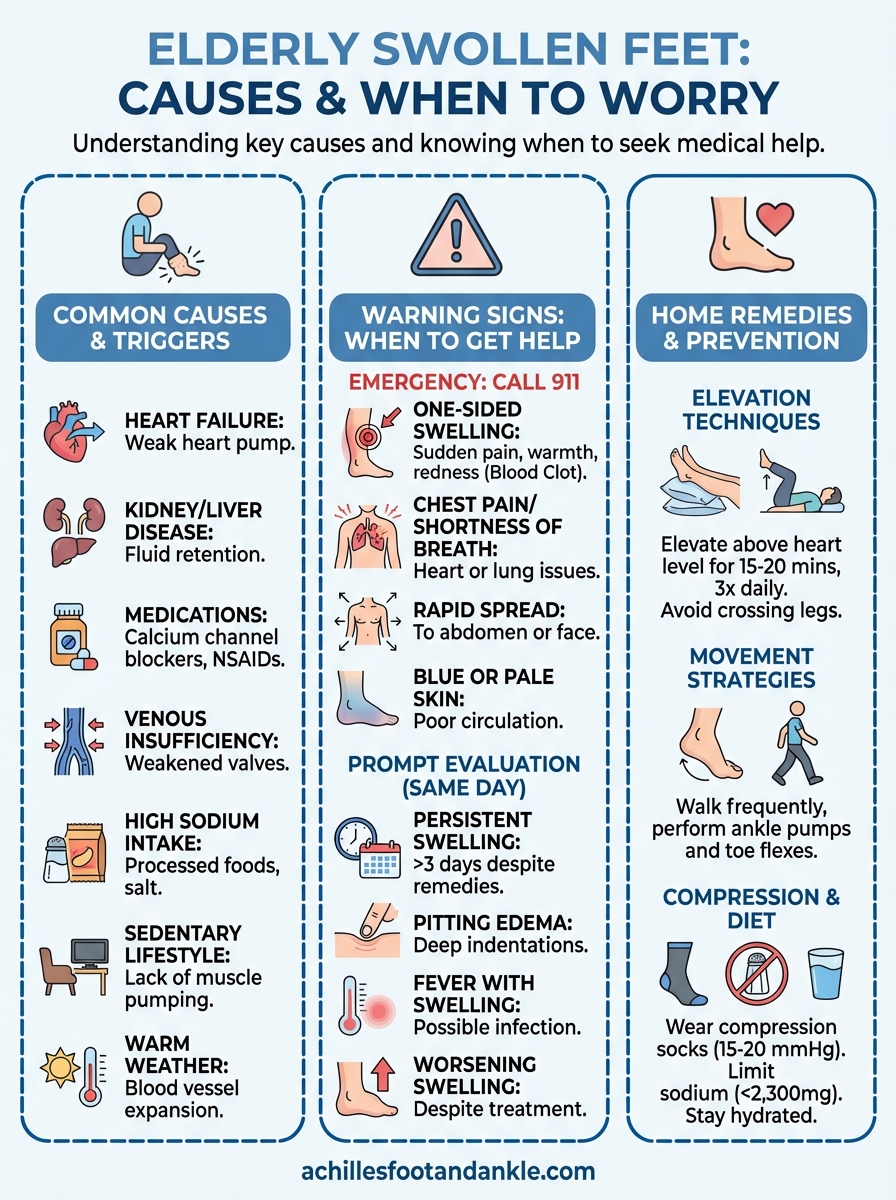
Reducing leg swelling in the elderly is not about finding one magic solution. It requires combining smart daily habits with appropriate medical oversight. The most effective strategies include moving regularly through ankle pumps and walking, eating a balanced diet low in sodium but rich in magnesium and protein, using compression stockings correctly, and elevating legs above heart level throughout the day. Caregivers play a vital role in monitoring symptoms, encouraging consistent habits, and seeking medical attention when needed. Start implementing these approaches early, stay consistent with daily routines, and never ignore sudden or severe swelling. With the right combination of lifestyle changes and professional guidance, most seniors can achieve meaningful relief from leg swelling and maintain their comfort and independence.
Frequently Asked Questions About Reducing Leg Swelling in Elderly
What causes leg swelling in seniors?
Leg swelling in seniors stems from multiple factors including poor circulation, heart failure, kidney disease, venous insufficiency, medication side effects, and lifestyle habits like excessive sodium intake or prolonged sitting. Identifying the underlying cause helps determine the most effective treatment approach.
Does drinking more water help reduce leg swelling?
Yes, staying hydrated actually helps reduce leg swelling. When the body senses dehydration, it conserves fluid, worsening edema. Drinking 6 to 8 glasses of water daily supports kidney function and helps flush excess sodium from the body.
How long should I elevate my legs to reduce swelling?
Elevate legs for 15 to 30 minutes, 3 to 4 times daily. The best time is early afternoon before swelling peaks. Use pillows or a leg wedge to raise legs above heart level while lying down.
Are compression socks safe for all elderly individuals?
Compression socks are not safe for everyone. Those with arterial disease, diabetes with circulation problems, or severe edema should consult a doctor first. Proper fitting and the correct compression level are essential for safety and effectiveness.
When should I see a doctor about leg swelling?
See a doctor if swelling is sudden and affects only one leg with pain or warmth, if you experience shortness of breath or chest tightness, if skin becomes red and hot with fever, if open sores or ulcers develop, or if swelling does not improve with home care measures.