For older adults with swallowing difficulties, a simple sip of water can pose a life-threatening risk. Dysphagia, or trouble swallowing, affects up to 68% of nursing home residents and is common among seniors with stroke, Parkinson’s disease, dementia, or age-related muscle decline. When thin liquids slip into the airway, they can lead to pneumonia, choking, or malnutrition. That is where thickened liquids come in.
Thickening drinks changes their viscosity, slowing down how fast they move through the mouth and throat. This gives weakened muscles more time to protect the airway during swallowing. This guide covers everything caregivers need to know about choosing the right thickness, picking the best thickener, preparing drinks safely, and keeping seniors hydrated without sacrificing dignity.
Identify Swallowing Risk Early
Watch for Signs of Dysphagia
Swallowing issues often go unnoticed until a choking incident or pneumonia diagnosis. Early warning signs include coughing or throat clearing during or after drinking, a wet or gurgly voice after swallowing, taking longer to finish drinks, holding food or liquid in the mouth, and frequent throat infections or chest congestion. If any of these occur, do not self-prescribe thickened liquids. Instead, refer to a speech-language pathologist for a formal swallowing assessment.
SLPs Determine Safe Consistency
Physicians rarely make decisions about liquid thickness. Speech-language pathologists conduct clinical evaluations like the videofluoroscopic swallow study or fiberoptic endoscopic evaluation to identify which phase of swallowing is impaired, measure aspiration risk, and prescribe the correct IDDSI level. Never assume a loved one needs thickened liquids without professional evaluation. Over-thickening can lead to dehydration while under-thickening risks aspiration.
Use the IDDSI Framework for Consistency
Match Thickness to Dysphagia Severity
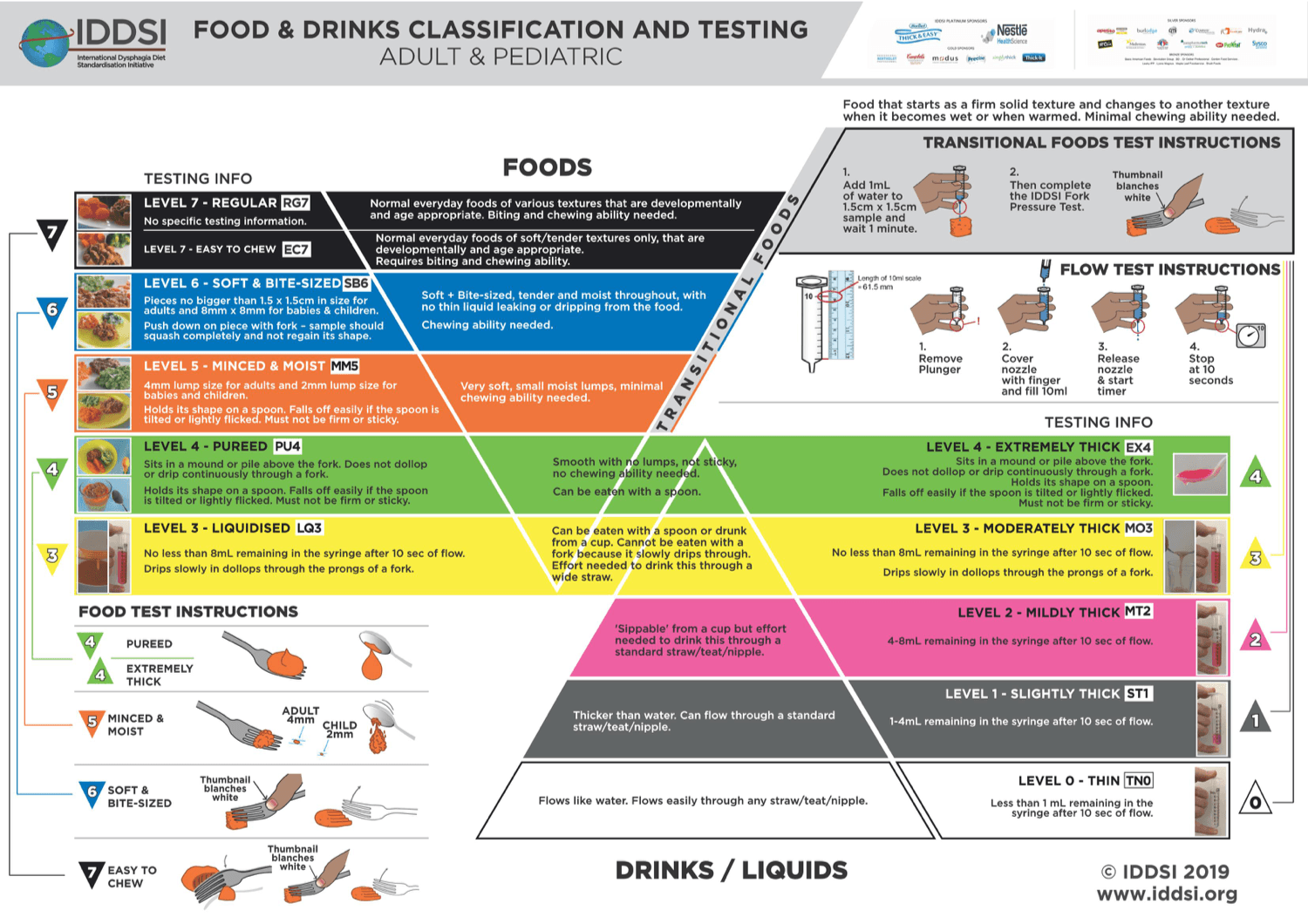
The International Dysphagia Diet Standardisation Initiative replaced outdated terms like honey-thick with a five-level system based on measurable flow. Every caregiver should know these levels.
The IDDSI levels include Level 0 as Thin for no dysphagia, Level 1 as Slightly Thick for mild delay, Level 2 as Mildly Thick for mild dysphagia, Level 3 as Moderately Thick for moderate risk, and Level 4 as Extremely Thick for severe impairment. A 2008 study found Level 3 honey-thick was most effective at reducing aspiration in older adults with Parkinson’s or dementia.
Choose Based on Individual Need
For mild dysphagia, start with Level 1 or 2. For moderate to severe cases, use Level 3. For profound impairment, Level 4 may be required and is eaten with a spoon. Always follow the SLP’s prescribed level. One size does not fit all.
Select the Right Thickener Type

Commercial Thickeners Provide Reliability
Homemade methods are inconsistent. Commercial thickeners ensure precise, safe results. They come in two main types.
Starch-based thickeners use corn, tapioca, or potato as their base. Examples include Thick-It and Thick & Easy. The pros are that they are inexpensive and widely available. The cons are that they continue to thicken over time especially when chilled and may separate or clump in acidic drinks like orange juice or protein-rich supplements like Ensure.
Gum-based thickeners use xanthan, cellulose, or guar gum. Examples include Resource ThickenUp Clear and SimplyThick EasyMix. The pros are stable viscosity over time and temperature, clear appearance, and they work well in acidic and protein-rich liquids. The cons are that they are more expensive.
Gum-based thickeners are preferred for long drinking periods or batch preparation.
Pre-Thickened Beverages Offer Convenience
Pre-thickened drinks are available in single-serve cups or bottles in flavors like apple juice, cranberry, water, and tea. They are shelf-stable for up to 6 months and ideal for travel or independent use. However, they may be thicker than prescribed, so always check consistency before serving.
Avoid Unsafe Homemade Substitutes
Never Use Melting Desserts
Despite their appearance, ice cream, gelatin, popsicles, and sherbet are not safe for dysphagia. They melt quickly into thin liquids, bypassing airway protection. The myth that ice cream is thick so it is safe is false. Once melted in the mouth, it flows like water and creates high aspiration risk.
Natural Thickeners Require Caution
Only use natural thickeners for Level 2 nectar-thick and under SLP guidance. Baby rice cereal may clump, blended banana or avocado is inconsistent, and cornstarch slurry requires cooking and is still unstable. If it was not tested with an IDDSI flow test, it is not safe.
Prepare Thickened Liquids Correctly
Follow the 5-Step Method
Based on Chesterfield Royal Hospital protocol, the preparation steps are add thickener first to prevent clumping, pour 200 ml or 8 oz of liquid as the standard measuring volume, stir vigorously for 20 to 60 seconds to ensure full dispersion, wait 60 to 90 seconds or up to 5 minutes for starch-based thickeners, and check consistency using spoon, fork, or pour test. Never add thickener to a full glass because dosing becomes inaccurate.
Test Consistency Like a Pro
Use simple tools to verify thickness. For the spoon test, Level 3 liquid drips slowly while Level 4 holds shape and does not pour. For the fork test, Level 1 flows through tines while Level 2 leaves a thin coating. For the syringe test for Level 3 to 4, pull 10 ml into a syringe and if it does not drip when the plunger is released, it is spoon-thick. Too thick is safer than too thin. If too thick, discard and remake. Never add water.
Avoid Common Thickening Mistakes
Do Not Use Straws
Straws increase pressure and speed, raising aspiration risk especially with honey or spoon-thick liquids. Only use wide-bore straws for Level 2 if approved by an SLP.
Degass Carbonated Drinks First
Soda, sparkling water, or tonic will foam and clump when thickener is added. Degas by stirring or pouring between cups 5 to 10 times before thickening.
Skip Regular Ice Cubes
Regular ice cubes melt and dilute the drink. Use pre-thickened ice cubes instead by mixing xanthan gum thickener with water, freezing in ice cube trays, and storing in a labeled container. This keeps drinks cold without thinning.
Do Not Thicken Liquid Medications
Thickening oral medications can reduce drug absorption for medications like warfarin and amlodipine and cause gel formation with PEG laxatives, risking bowel obstruction. Safer options include switching to tablets, dispersible forms, or alternative routes like sublingual or transdermal. Always consult a pharmacist or SLP before modifying any medication.
Improve Palatability and Compliance
Many Seniors Dislike Thickened Liquids
Texture complaints are common especially with Level 3 and 4. But refusal leads to dehydration and malnutrition. Improve acceptance by letting the patient choose the thickener brand or flavor, using clear thickeners for water to maintain visual appeal, serving preferred temperatures, and offering small frequent servings to prevent early fullness. One study found chocolate-flavored thickened drinks had higher acceptance than plain water.
Enhance Flavor Without Risk
Enhance taste without thinning by adding a lemon wedge to water, sprinkling cinnamon on hot chocolate, or using flavored coffee or tea as the base. Avoid syrups or sweeteners that dilute consistency.
Support Hydration and Nutrition
Seniors on Thickened Liquids Face Risks
Patients on thickened liquids are at risk for early satiety where thick drinks feel fuller faster, dry mouth caused by medications like antipsychotics and antihistamines, and reduced intake due to poor palatability. The daily fluid goal is 6 to 8 cups or 48 to 64 oz unless restricted.
Track Hydration Closely
Signs of dehydration include dark yellow urine, dry mouth or lips, and fatigue, dizziness, or confusion. Offer variety using juices, broths, and nutritional shakes. Use flavored thickeners to boost intake.
Adapt for Special Diets
For Diabetes
Avoid high-sugar ingredients. Use sugar-free pudding, syrup, or supplements and choose unsweetened almond or soy milk. Monitor carbohydrate content in blended shakes.
For Weight Management
Prevent unwanted weight gain by using 1% or fat-free milk, choosing low-fat protein supplements, and limiting high-calorie ingredients like ice cream or full-fat yogurt.
For Lactose Intolerance
Replace dairy with Lactaid milk, almond, oat, or soy milk. Add Lactaid pills if small dairy amounts are used.
Store and Serve Safely
Batch Preparation Tips
Batch preparation is only possible with gum-based thickeners. Mix up to 24 hours in advance, store in a labeled airtight container, and refrigerate and use within 24 hours. Starch-based drinks must be made fresh each time.
Use Clear Cups for Monitoring
Clear cups allow caregivers to see consistency changes during drinking, detect separation or thinning, and ensure full consumption.
When to Seek Professional Help
Contact an SLP or dysphagia specialist if coughing, choking, or wet voice returns, the patient refuses drinks consistently, or there are signs of dehydration or weight loss or recurrent chest infections. Do not adjust thickness level without professional input.
Key Takeaways for Thickening Liquids for the Elderly
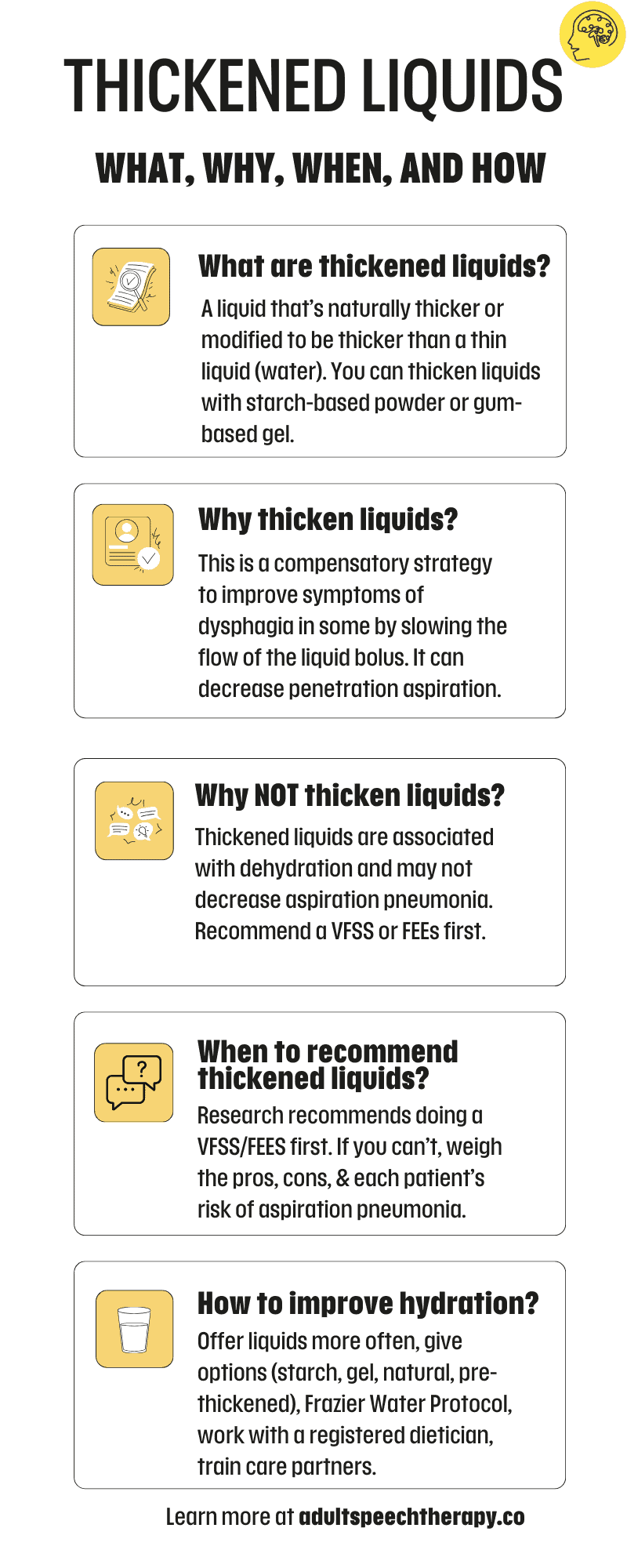
Thickening liquids for the elderly requires professional assessment first. Never guess about thickness levels. Always use IDDSI flow tests to verify every drink. Choose gum-based thickeners for stability over time. Avoid ice cream, gelatin, and popsicles because they melt. Never thicken liquid medications without approval. Make drinks appealing through flavor, temperature, and clarity. Encourage small frequent sips to meet fluid goals. Use pre-thickened ice cubes for cold drinks. Involve the senior in choices to preserve dignity. Monitor weight and urine weekly for early warning signs.
Thickening liquids is not just about safety. It is about quality of life. With the right tools and knowledge, seniors can stay hydrated, nourished, and included in mealtimes without fear. By following evidence-based practices, using standardized systems like IDDSI, and centering patient preferences, caregivers can turn a medical necessity into a dignified, manageable routine.
Frequently Asked Questions About Thickening Liquids for the Elderly
What is the safest thickening level for elderly with dysphagia?
The safest level depends on the individual’s swallowing assessment. Level 3 honey-thick is most commonly effective for reducing aspiration in older adults with Parkinson’s or dementia, but a speech-language pathologist must determine the appropriate level through formal evaluation.
Can I use cornstarch to thicken liquids for elderly?
Cornstarch is not recommended for commercial use because it continues to thicken over time and becomes unstable. It also does not pass IDDSI flow tests. Commercial gum-based thickeners are safer and more consistent.
How long does thickened liquid stay good?
Gum-based thickened liquids can be stored for up to 24 hours in the refrigerator. Starch-based thickened liquids must be made fresh each time because they change consistency rapidly.
Why do seniors refuse thickened liquids?
Many seniors dislike the texture of thickened liquids, especially at Level 3 and 4. Poor palatability leads to refusal. Improve acceptance by using flavored drinks, clear thickeners for visual appeal, and involving the senior in choosing their thickener brand.
Are pre-thickened drinks better than fresh thickened liquids?
Pre-thickened drinks are convenient for travel and independent use, but they are often thicker than prescribed. Fresh preparation allows for precise IDDSI-level consistency. Use pre-thickened drinks when traveling but verify consistency against IDDSI standards at home.