Leg pain in the elderly is more than just an aging inconvenience. It stems from conditions like poor circulation, arthritis, nerve damage, muscle weakness, or venous insufficiency. Over one-third of adults over 60 experience leg discomfort that disrupts sleep, mobility, and independence. The good news? Most causes are manageable with targeted, evidence-based strategies. Whether you are dealing with nighttime cramps, walking-related aches, or chronic stiffness, relief is possible through movement, nutrition, therapy, and medical care. This guide delivers actionable solutions to reduce leg pain, improve circulation, prevent complications, and restore quality of life.
Identify the Root Cause First
Before applying treatments, it is crucial to determine why leg pain occurs. Different patterns point to distinct conditions, each requiring a unique approach.
Recognize Common Pain Patterns
The timing and nature of your pain offer diagnostic clues. Consider these common patterns:
• Pain during walking that stops with rest suggests peripheral artery disease (PAD).
• Stiffness and ache after sitting or sleeping often indicates arthritis or muscle tightness.
• Burning, tingling, or electric shocks at night suggests neuropathy.
• Heaviness, swelling, or visible veins points to venous insufficiency.
• Sudden, severe calf cramp at night could mean electrolyte imbalance or dehydration.
Misdiagnosing the cause can lead to ineffective or harmful treatments. Always consider professional evaluation if pain persists.
When to See a Doctor Immediately
Seek urgent care for these warning signs:
• Cold, pale, or blue leg could signal acute arterial blockage.
• Sudden, severe swelling and redness may indicate deep vein thrombosis (DVT).
• Open sores that will not heal signal poor circulation or diabetes.
• Pain that wakes you at night may point to advanced PAD or neuropathy.
• Inability to bear weight could mean fracture, severe arthritis, or nerve compression.
Early diagnosis prevents complications like amputation, stroke, or chronic disability.
Improve Circulation to Reduce Leg Pain

Poor blood flow is a leading cause of leg pain in seniors, especially from peripheral artery disease (PAD). Enhancing circulation relieves cramping, speeds healing, and lowers cardiovascular risk.
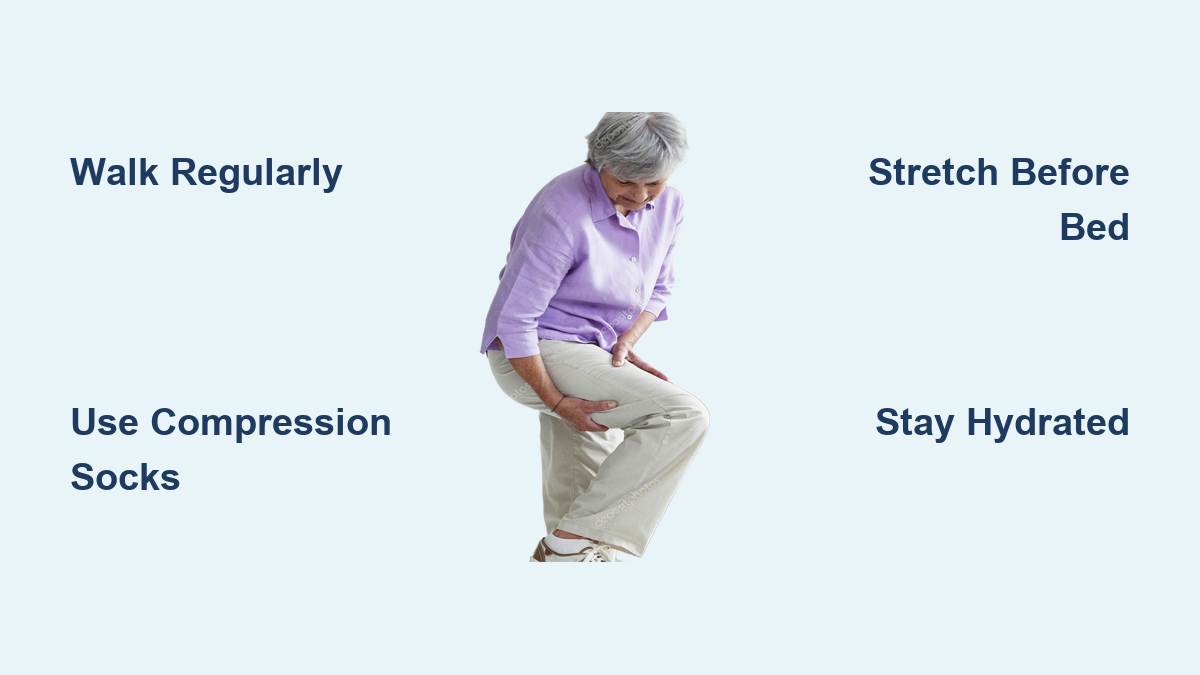
Walk Regularly to Boost Blood Flow
Walking is the number one recommended therapy for PAD. Follow these guidelines:
• Start with 5 to 10 minutes daily, gradually increasing to 20 to 30 minutes most days.
• Walk until mild discomfort, then rest. This builds collateral circulation over time.
• Use a flat, safe surface and wear supportive shoes.
• Supervised walking programs improve pain-free walking distance by up to 150%.
Pro tip: Walk after meals to help control blood sugar, which benefits both circulation and neuropathy.
Use Compression Socks for Vein Support
Compression therapy helps blood return from the legs. Use these tips:
• Wear 15 to 20 mmHg graduated compression socks during the day.
• Put them on first thing in the morning, before swelling starts.
• Replace every 3 to 6 months as elasticity fades.
• Avoid if you have severe PAD. Check with your doctor first.
These socks reduce leg heaviness, swelling, and risk of blood clots during travel or prolonged sitting.
Elevate Legs to Reduce Swelling
Elevation aids venous return and reduces fluid buildup. Follow this protocol:
• Lie down and raise legs above heart level using pillows.
• Hold for 15 to 20 minutes, 2 to 3 times daily.
• Ideal after standing for long periods or before bed.
Avoid crossing your legs. This restricts circulation and worsens venous pooling.
Manage Arthritis and Joint Pain
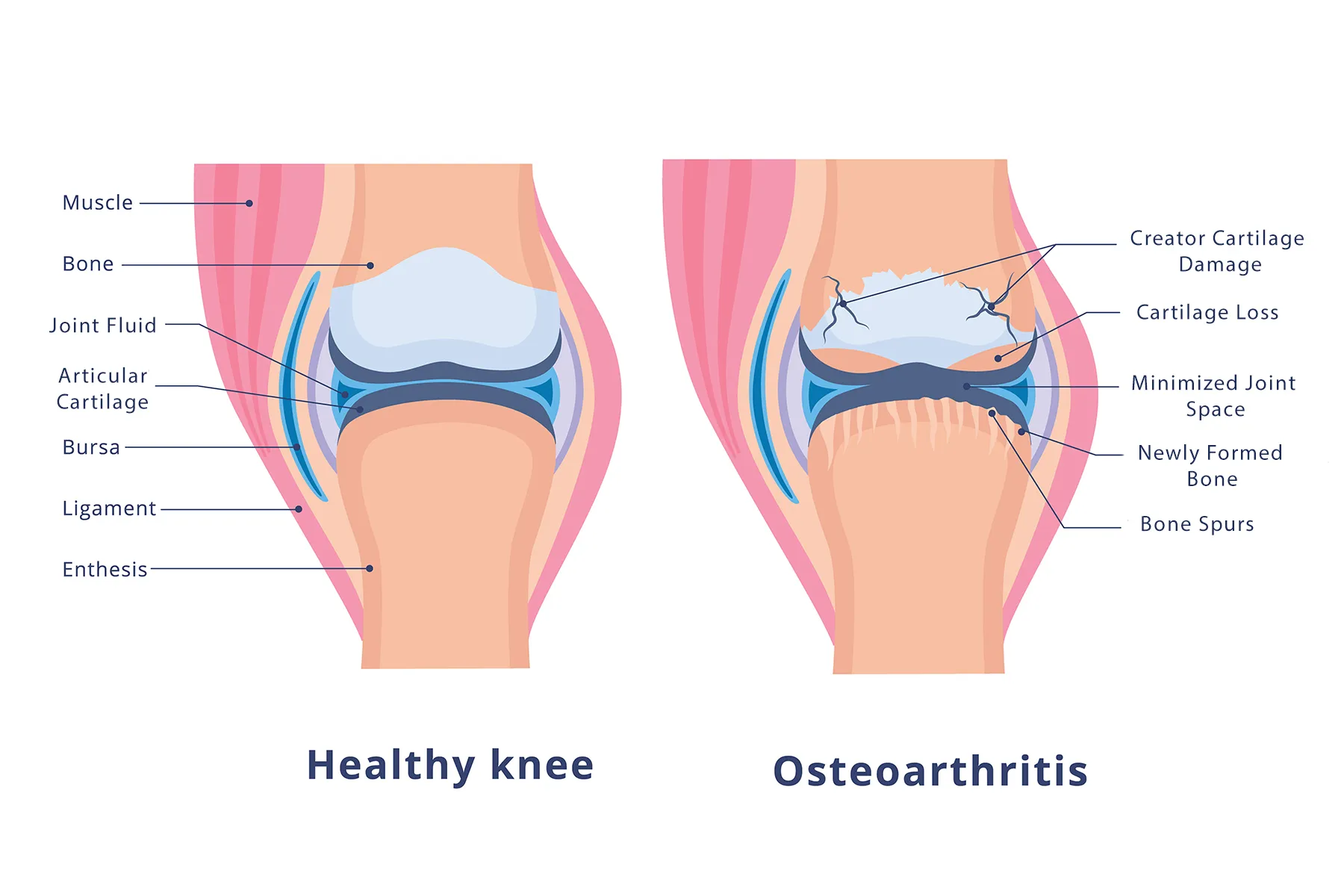
Osteoarthritis in the knees and hips is a major source of leg pain in older adults. While cartilage loss cannot be reversed, symptoms can be significantly reduced.
Apply Heat for Morning Stiffness
Heat relaxes tight muscles and eases joint rigidity. Try these methods:
• Use a heating pad for 20 minutes before getting out of bed.
• Take a warm shower to loosen joints.
• Try a moist heat pack (microwaved towel) for deeper penetration.
Never apply heat to swollen or inflamed joints. This worsens inflammation.
Use Cold for Arthritis Flare-Ups
Cold numbs pain and reduces acute inflammation. Apply correctly:
• Wrap an ice pack in a thin towel.
• Apply for 15 to 20 minutes on painful joints.
• Use every 2 to 3 hours as needed.
Cold is safe for recent pain spikes, especially after activity.
Wear Supportive Footwear Daily
Poor shoes increase joint stress. Make these choices:
• Choose low-heeled, cushioned shoes with arch support.
• Use orthotic insoles if you have flat feet or overpronation.
• Avoid flip-flops, high heels, or worn-out soles.
Proper footwear can reduce knee and hip pain by up to 30%.
Prevent and Stop Leg Cramps Fast
Nighttime leg cramps affect millions of seniors. While brief, they disrupt sleep and increase fall risk.
Stretch Before Bed to Prevent Cramps
Daily stretching reduces cramp frequency. Perform this routine every night:
• Calf stretch: Stand arm’s length from a wall. Step one foot back, press heel down, and lean forward. Hold 20 to 30 seconds per leg.
• Foot flex: While lying down, point toes up toward the ceiling, then pull them back. Repeat 10 times.
• Hamstring stretch: Sit on a chair, extend one leg, and gently lean forward.
Stay Hydrated and Balance Electrolytes
Dehydration and low minerals trigger cramps. Follow these guidelines:
• Drink 64 to 104 oz (2 to 3 liters) of water daily.
• Check urine color: light yellow means hydrated; dark means drink more.
• Eat potassium-rich foods like bananas, potatoes, and spinach.
• Include magnesium sources like almonds, avocado, and whole grains.
• Limit diuretics like caffeine and alcohol.
Warning: Diuretic medications can deplete potassium and magnesium. Ask your doctor about supplements if needed.
Massage and Warm the Area During a Cramp
When a cramp strikes, take these steps:
- Straighten the leg and flex the foot upward.
- Massage the calf with firm, circular motions.
- Apply a warm towel or heating pad to relax the muscle.
- Walk gently once the spasm eases.
This combination usually resolves cramps within minutes.
Address Nerve-Related Leg Pain
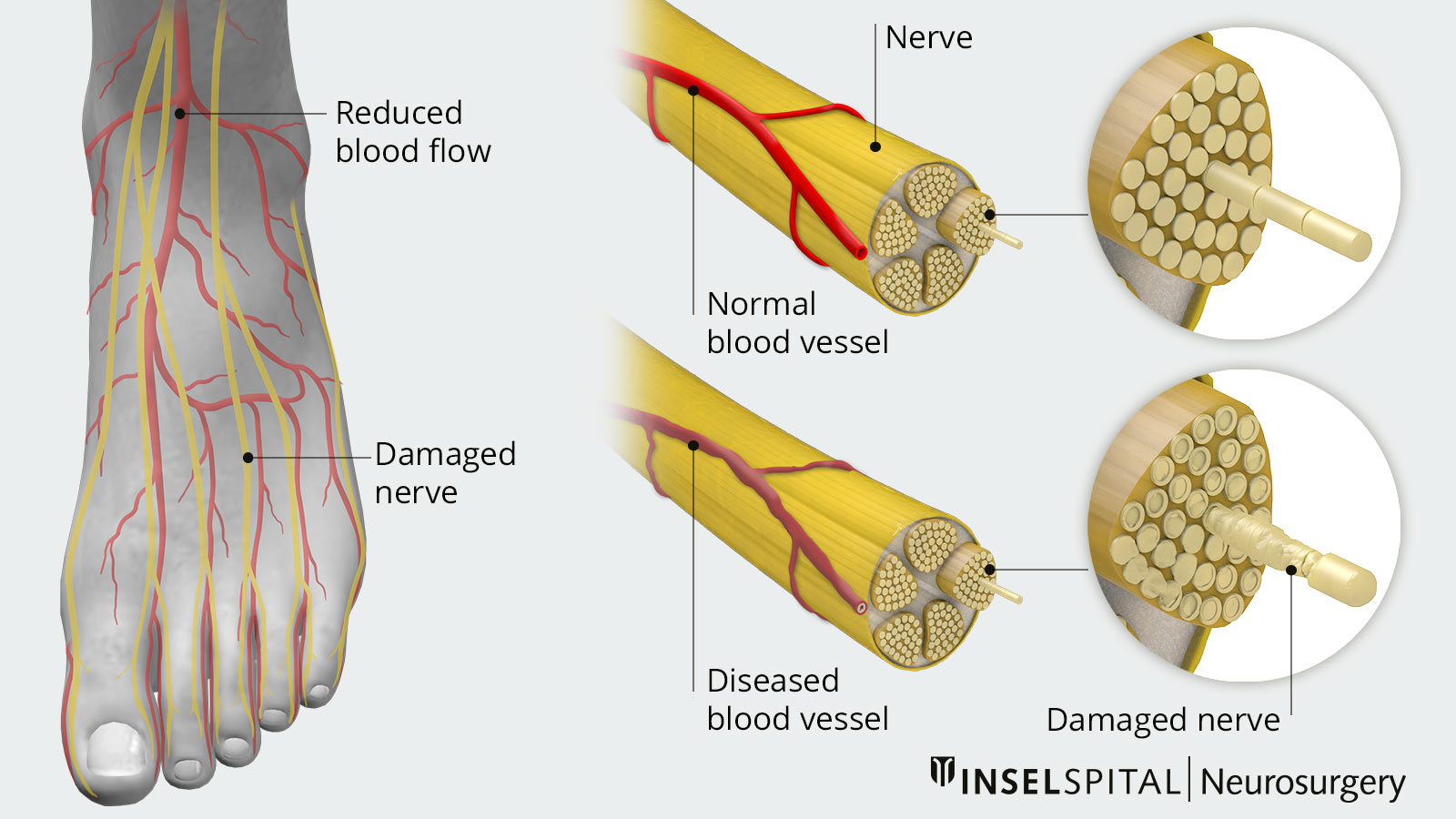
Neuropathy and nerve compression cause burning, tingling, or electric pain. This is common in diabetics or those with spinal issues.
Control Blood Sugar to Protect Nerves
For diabetic neuropathy, maintain these targets:
• Keep HbA1c below 7% (per your doctor’s guidance).
• Monitor blood sugar daily.
• Eat balanced meals with fiber, lean protein, and healthy fats.
Stable glucose slows nerve damage and reduces pain.
Try Medications for Nerve Pain
Prescription options include these medications:
• Gabapentin or pregabalin reduce nerve firing.
• Duloxetine is an antidepressant that eases neuropathic pain.
• Topical lidocaine or capsaicin cream provides localized relief.
Never start these without medical supervision. Side effects like dizziness increase fall risk.
Consider TENS Therapy for Relief
Transcutaneous Electrical Nerve Stimulation (TENS) offers these benefits:
• Uses low-voltage current to block pain signals.
• Can be used at home with a portable device.
• Apply pads to painful areas for 20 to 30 minutes daily.
Studies show TENS reduces neuropathic pain in 60 to 70% of users.
Strengthen Muscles and Improve Mobility
Weak muscles contribute to pain, instability, and falls. Building strength breaks the pain-immobility cycle.
Start Low-Impact Exercise Today
Choose joint-friendly activities:
• Walking: 10 minutes, 2 to 3 times daily.
• Water aerobics or swimming: Buoyancy protects joints.
• Stationary cycling: Builds leg strength safely.
• Chair yoga or tai chi: Improves balance and flexibility.
Aim for 150 minutes per week of moderate activity, broken into manageable sessions.
Perform Daily Leg Stretches
Stretch major muscle groups:
• Quadriceps: Stand, hold ankle, pull heel to glutes. Keep knees close.
• Hamstrings: Sit, extend one leg, reach toward toes.
• Calves: Wall stretch with back leg straight.
Hold each stretch 20 to 30 seconds, repeat 2 to 3 times.
Do not bounce. This can cause micro-tears in aging muscles.
Optimize Diet and Hydration
Nutrition plays a direct role in inflammation, nerve health, and muscle function.
Eat Anti-Inflammatory Foods
Include these foods daily:
• Fatty fish (salmon, sardines) rich in omega-3s.
• Berries and leafy greens high in antioxidants.
• Turmeric and ginger as natural anti-inflammatories.
• Nuts and seeds providing magnesium and healthy fats.
These foods reduce joint and nerve inflammation.
Avoid Pro-Inflammatory Triggers
Limit these items:
• Processed foods and sugary drinks.
• Refined carbs like white bread and pastries.
• Excess red meat and trans fats.
These increase systemic inflammation, worsening arthritis and pain.
Consider Key Supplements
With doctor approval, consider these supplements:
• Vitamin D: Deficiency links to muscle weakness and pain.
• Vitamin B12: Low levels cause neuropathy.
• Magnesium: May reduce cramps (avoid if kidney issues).
• Curcumin (turmeric extract): Anti-inflammatory, but use caution with blood thinners.
Always review supplements with your physician, especially if you take other medications.
Improve Sleep and Nighttime Comfort
Poor sleep worsens pain perception. Optimizing rest reduces nighttime leg issues.
Adjust Sleep Position and Bed Setup
Make these adjustments:
• Elevate legs slightly with a pillow under the calves (not feet).
• Sleep on your back or side. Avoid stomach sleeping, which strains the spine.
• Use a firm mattress for proper spinal alignment.
• Keep room cool (60 to 67°F) for deeper sleep.
Avoid pointing toes down during sleep. This can trigger cramps.
Develop a Pre-Bed Routine
Create a consistent routine:
• Stretch calves and feet 30 minutes before sleep.
• Massage legs with warm oil (coconut or peppermint).
• Take a warm bath to relax muscles.
• Avoid caffeine and alcohol 4 to 6 hours before bed.
Consistency trains the body to relax and reduces nocturnal cramps.
Know When Home Care Is Not Enough
While many cases improve with lifestyle changes, some require medical intervention.
Explore Medical Treatments by Condition
| Condition | Treatment Options |
|---|---|
| PAD | Antiplatelets (aspirin), statins, angioplasty, stenting |
| Arthritis | Joint injections, DMARDs (for RA), physical therapy, surgery |
| Neuropathy | Blood sugar control, nerve pain meds, TENS, foot care |
| Varicose Veins | Sclerotherapy, laser treatment, vein stripping |
| Severe Cramps | Quinine (rarely used), magnesium, medication review |
Never self-prescribe. Many drugs interact dangerously in seniors.
Schedule Annual Check-Ups
Yearly exams should include these assessments:
• Ankle-Brachial Index (ABI) screens for PAD.
• Blood tests check glucose, electrolytes, B12, vitamin D.
• Foot and leg exam assesses pulses, skin, sensation.
• Medication review identifies drugs causing cramps or weakness.
Prevention is the best pain relief.
Prevent Leg Pain Before It Starts
Long-term leg health depends on consistent, simple habits.
Stay Active Every Day
Follow these recommendations:
• Walk, stretch, or do chair exercises daily.
• Take a 1 to 2 minute movement break every hour if sedentary.
• Join a senior fitness class for motivation.
Even 10 minutes of activity helps.
Wear Compression Socks Proactively
If you stand or sit for long periods, wear compression socks to prevent swelling and DVT. This is ideal for travel, office work, or caregiving duties.
Maintain a Healthy Weight
Every extra pound adds 4 pounds of pressure on the knees. Losing 10 pounds can reduce knee pain by 50%.
Practice Good Posture
Follow these guidelines:
• Sit with feet flat, back supported.
• Avoid leg crossing.
• Use a footrest if needed.
Good posture prevents nerve compression and poor circulation.
Key Takeaways for Relieving Leg Pain in the Elderly
Leg pain in the elderly is treatable, not inevitable. By identifying the cause, staying active, eating well, and using targeted therapies like stretching, compression, and heat or cold, most seniors can find meaningful relief. Start with one small change today: a 5-minute walk, a bedtime stretch, or a glass of water. Consistency turns these steps into lasting comfort and mobility. For persistent or severe pain, consult a healthcare provider to rule out serious conditions and tailor a safe, effective plan.
Frequently Asked Questions About Leg Pain in the Elderly
What causes leg pain in seniors?
Leg pain in seniors stems from multiple causes including peripheral artery disease (PAD), arthritis, muscle weakness, nerve damage (neuropathy), varicose veins, and electrolyte imbalances. Identifying the root cause is essential for effective treatment.
When should I worry about leg pain in the elderly?
Seek immediate medical attention if leg pain is accompanied by cold or pale skin, sudden swelling, open sores that will not heal, severe pain at rest, or inability to bear weight. These could indicate serious conditions like DVT or arterial blockage.
Does walking help leg pain in elderly?
Yes, walking regularly improves circulation, strengthens muscles, and reduces pain, especially for PAD. Start with 5 to 10 minutes daily and gradually increase. Supervised walking programs can improve pain-free walking distance significantly.
What helps nighttime leg cramps in seniors?
Stretching before bed, staying hydrated, maintaining electrolyte balance (potassium, magnesium), and massaging the affected area during a cramp provides relief. Warm towels or heating pads also help relax tight muscles.
Are compression socks good for elderly leg pain?
Yes, compression socks (15 to 20 mmHg) improve venous return, reduce swelling, and lower the risk of blood clots. Wear them during the day and remove at night. Consult a doctor first if you have severe PAD.