
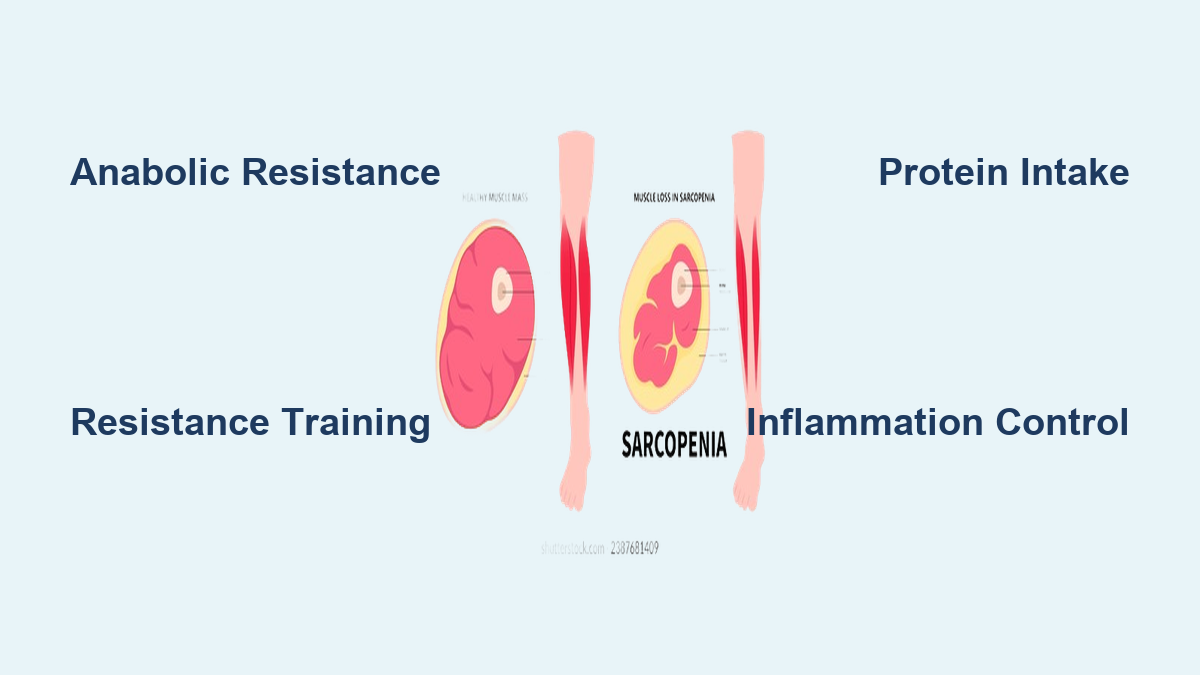
You’re not imagining it. Muscle loss is real, and it starts earlier than most people think. Around age 30, adults begin losing 3–5% of their muscle mass every decade, with this decline accelerating significantly after 60. By age 70, the average person has lost about 12% of total muscle mass, and those over 80 may have lost up to 30%. This condition, called sarcopenia, threatens mobility, independence, and long-term health.
The good news is that muscle loss isn’t inevitable. While aging plays a role, lifestyle factors like physical inactivity and poor nutrition are major drivers. The body’s ability to rebuild muscle weakens with age due to anabolic resistance, hormonal shifts, chronic inflammation, and nerve degeneration. But research confirms that muscle can be rebuilt at any age with the right interventions.
The Science Behind Age-Related Muscle Loss
Sarcopenia is the medical term for age-related muscle decline. It involves a progressive loss of muscle mass, strength, and function. The word comes from Greek: sarco means flesh, and penia means poverty, reflecting the “poverty of muscle” seen in older adults. Over time, muscle fibers are replaced by fat and connective tissue, leading to a marbled appearance similar to aged meat.
This condition affects 10%–20% of adults over 65 and up to 50% of those over 80, depending on diagnostic criteria. Unlike temporary weakness from illness, sarcopenia develops gradually and often goes unnoticed until daily tasks become difficult, like rising from a chair or climbing stairs. While part of natural aging, sarcopenia is not unavoidable. With proper exercise and nutrition, its impact can be significantly reduced.
Muscle Mass vs. Muscle Quality
Simply measuring muscle size doesn’t tell the whole story. Two critical dimensions determine true muscle health:
- Muscle mass refers to total skeletal muscle volume, typically measured using DXA, MRI, or BIA.
- Muscle quality describes how well the muscle functions, including its strength, metabolic efficiency, and fat infiltration.
An older adult may have normal muscle mass but poor quality due to intramuscular fat buildup or reduced contractility, leading to weakness and higher fall risk. This is why tests like grip strength and gait speed are better predictors of disability than mass alone.
Functional Performance Matters Most
Real-world abilities reveal muscle health more accurately than scans. Key indicators include:
- Walking speed (less than 1 m/s over 4 meters is a red flag)
- Chair stand test (fewer than 8 rises in 30 seconds suggests weakness)
- Timed Up and Go test (more than 12 seconds indicates mobility issues)
These functional measures are strong predictors of hospitalization, falls, and mortality, making them essential for early detection.
How Anabolic Resistance Drives Muscle Decline

One of the biggest reasons elderly lose muscle is anabolic resistance, a reduced ability to build muscle in response to protein and exercise. In younger people, eating protein triggers a strong spike in muscle protein synthesis. But in older adults, this response is blunted due to multiple factors.
Poor digestion and absorption of protein impairs the body’s ability to utilize dietary amino acids. Amino acids become trapped in the gut and splanchnic organs rather than reaching muscle tissues. Cellular transport mechanisms weaken, and the mTOR signaling pathway that turns on muscle growth becomes less responsive. Additionally, insulin sensitivity decreases, further hampering nutrient delivery to muscles.
As a result, seniors need more protein per meal, around 25–35 grams, to stimulate muscle protein synthesis effectively. Spreading protein intake across meals rather than loading it at dinner maximizes muscle maintenance.
Neuromuscular Changes That Weaken Muscles
Aging damages the nervous system’s control over muscles. Motor neurons, the nerves that activate muscle fibers, begin to die off, leading to significant functional decline.
This nerve degeneration causes several problems:
- Loss of motor units, which are neurons connected to their muscle fibers
- Denervation of muscle fibers, causing atrophy
- Reduced coordination and slower movement
This disconnect contributes to weakness even when muscle mass appears preserved. Rebuilding neuromuscular connections through resistance training helps restore function and improve overall mobility.
Hormonal Shifts That Accelerate Muscle Loss
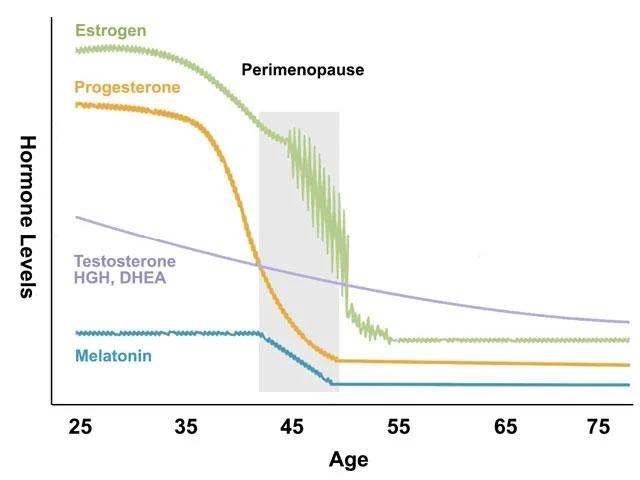
Key anabolic hormones decline with age, creating a less muscle-friendly environment. Testosterone drops in men during andropause, reducing muscle growth and increasing fat storage. Estrogen falls sharply after menopause, linked to increased inflammation and muscle loss. Growth hormone and IGF-1 both decline, impairing tissue repair and regeneration. Insulin resistance becomes common in older adults, hampering nutrient delivery to muscles.
While hormone replacement therapy exists, it carries risks and isn’t FDA-approved for sarcopenia. Lifestyle strategies remain safer and more effective as first-line solutions.
Chronic Inflammation and Its Impact on Muscle
Low-grade, persistent inflammation rises with age and accelerates muscle breakdown. This phenomenon, called inflammaging, involves elevated levels of pro-inflammatory cytokines that increase muscle protein breakdown, suppress muscle regeneration, and worsen insulin resistance.
Conditions like obesity, diabetes, and sedentary behavior fuel inflammaging. Fighting it requires anti-inflammatory nutrition, such as omega-3 fatty acids, and regular physical activity to reduce systemic inflammation.
How Inactivity Speeds Up Muscle Loss
Sedentary behavior is one of the fastest ways to lose muscle. Even short periods of inactivity, like bed rest during illness, can cause rapid atrophy. Studies show muscle loss begins within days of immobilization.
Many older adults rely only on aerobic exercise, like walking, which supports heart health but does not prevent sarcopenia. Without progressive resistance training, muscle mass continues to decline. The pandemic highlighted this risk, as lockdowns led to dramatic drops in activity and accelerated functional decline among seniors.
Nutritional Deficiencies That Undermine Muscle Health
Even active seniors can lose muscle if they don’t eat right. Common nutritional pitfalls include low protein intake, especially at breakfast, insufficient calories leading to muscle catabolism, vitamin D deficiency linked to weakness and falls, and oral health issues making chewing hard proteins difficult.
Diets high in ultra-processed foods lack essential nutrients and promote inflammation, further accelerating muscle loss. Addressing these nutritional gaps is essential for maintaining muscle health.
Medical Conditions That Worsen Muscle Wasting
Several illnesses increase muscle breakdown through inflammation, reduced appetite, and metabolic stress. Type 2 diabetes causes insulin resistance and nerve damage. COPD leads to breathlessness and inactivity. Kidney disease alters protein metabolism. Heart failure reduces oxygen delivery to muscles. Cancer cachexia involves severe muscle loss in advanced disease.
These conditions create a hypermetabolic state that burns through muscle tissue, making nutritional and exercise support even more critical for affected individuals.
Recognizing Early Signs of Muscle Decline
Sarcopenia often progresses silently. Key warning signs include weakness when lifting objects or opening jars, slow walking speed, difficulty standing from a chair without using arms, frequent falls or balance problems, fatigue during routine activities, and noticeable muscle shrinkage, especially in legs and arms.
Self-reported difficulty with daily tasks like climbing stairs or carrying groceries is a strong indicator of underlying muscle decline.
Health Risks of Untreated Muscle Loss
Weak muscles compromise balance and reaction time. Seniors with sarcopenia face a 2.3 times greater risk of low-trauma fractures like hip breaks. Falls are the leading cause of accidental death in adults over 65.
Declining muscle function makes daily tasks harder, from rising from a chair to walking unassisted. This loss of autonomy increases the risk of depression, isolation, and need for assisted living.
Muscle is metabolically active tissue. Less muscle means lower resting metabolic rate, increasing obesity risk, impaired glucose uptake raising type 2 diabetes risk, and reduced amino acid reservoir during illness.
Sarcopenia is independently linked to cardiovascular disease, osteoporosis, liver and kidney disease, and poor surgical outcomes. It’s also a predictor of mortality, regardless of BMI.
Proven Strategies to Prevent and Reverse Muscle Loss
Progressive resistance training is the most effective way to rebuild muscle at any age. Studies show older adults gain an average of 2.4 pounds of lean mass with consistent training.
An effective program includes training 2–3 times per week with 8–10 exercises targeting major muscle groups. Start with 2–3 sets of 12–15 reps at moderate effort. Gradually increase weight, reduce reps to 8–12, and maintain proper form throughout.
Use free weights, machines, resistance bands, or bodyweight exercises like squats, lunges, and push-ups. Older adults can indeed increase muscle mass lost due to aging. It takes work, dedication, and a plan, but it is never too late to rebuild muscle and maintain it.
Power Training for Better Function
Muscle power, the ability to generate force quickly, declines faster than strength and is more closely tied to fall prevention. Train power with fast chair rises, quick-step walking, controlled stair climbing, and supervised plyometric drills.
Improving power enhances dynamic stability and reaction time, significantly reducing fall risk.
Everyday Movement Counts
You don’t need a gym. Daily activities like gardening, vacuuming, carrying groceries, and climbing stairs all help maintain muscle use and independence. Encourage doing these tasks without assistance when safe.
Optimal Nutrition to Support Muscle
Older adults need more protein to overcome anabolic resistance. Recommended intake is 1.0–1.3 grams of protein per kilogram of body weight per day. A 175-pound person needs 79–103 grams daily.
One study found those consuming 92.2 grams per day had a 30% lower risk of weakness than those eating only 64.4 grams per day. Include 25–30 grams of protein at every meal, especially breakfast, and avoid loading most protein at dinner.
High-quality protein sources include chicken breast providing 31 grams per 3.5 ounces, salmon providing 24 grams, Greek yogurt providing 17 grams per 6 ounces, and whey protein providing about 30 grams per scoop.
Leucine is an essential amino acid that activates muscle synthesis. Animal proteins like whey, eggs, and meat are richest in leucine. Plant-based eaters may need larger portions or supplements to meet thresholds.
To maximize recovery, consume carbohydrates and protein in a 3:1 or 4:1 ratio within 30 minutes post-exercise. An example is 8 ounces of chocolate milk providing 22 grams of carbs and 8 grams of protein.
Supplements That Help
Omega-3 fatty acids found in oily fish like salmon, mackerel, and sardines enhance muscle sensitivity to protein and reduce inflammation. Recommendation is one serving per week or consider fish oil supplements.
Vitamin D deficiency is common in seniors and linked to muscle weakness and falls. Supplementation improves strength, especially in deficient individuals.
Creatine monohydrate at 3–5 grams per day, combined with resistance training, increases strength and lean mass in older adults. It’s safe and well-tolerated.
Building Muscle at Any Age
Contrary to myth, older adults can rebuild muscle. A 70-year-old who starts resistance training and eats enough protein can regain lost strength and mass. Even people in their 80s and 90s show measurable improvements.
Research shows that older adults see even greater improvements in their muscle strength versus younger adults. So it’s never too late to start.
Progress depends on consistency, baseline health, and proper program design, but gains are always possible.
Frequently Asked Questions About Muscle Loss in Seniors
At what age does muscle loss typically begin?
Muscle loss typically begins around age 30, when adults start losing approximately 3–5% of their muscle mass every decade. This decline accelerates significantly after age 60 and becomes more pronounced after 80.
Can muscle loss be reversed in older adults?
Yes. With progressive resistance training and adequate protein intake (1.0–1.3 g/kg/day), significant gains in muscle mass and strength are achievable at any age. Even individuals in their 80s and 90s show measurable improvements.
How much protein do seniors need to maintain muscle?
Seniors need 1.0–1.3 grams of protein per kilogram of body weight daily, with 25–30 grams at each meal to overcome anabolic resistance. Consuming 92 grams daily has been shown to reduce weakness risk by 30%.
What is the difference between sarcopenia and dynapenia?
Sarcopenia refers to loss of muscle mass, confirmed by imaging. Dynapenia refers to loss of muscle strength without necessarily involving mass loss. Both often coexist and contribute to functional decline.
Does aerobic exercise prevent muscle loss?
Aerobic exercise alone does not prevent sarcopenia. While it supports cardiovascular health, progressive resistance training is essential for maintaining muscle mass and strength.
How quickly does muscle decline during inactivity?
Muscle loss can begin within days of immobilization. Even short periods of bed rest during illness can cause rapid atrophy, highlighting the importance of staying active.
Key Takeaways for Preserving Muscle Mass
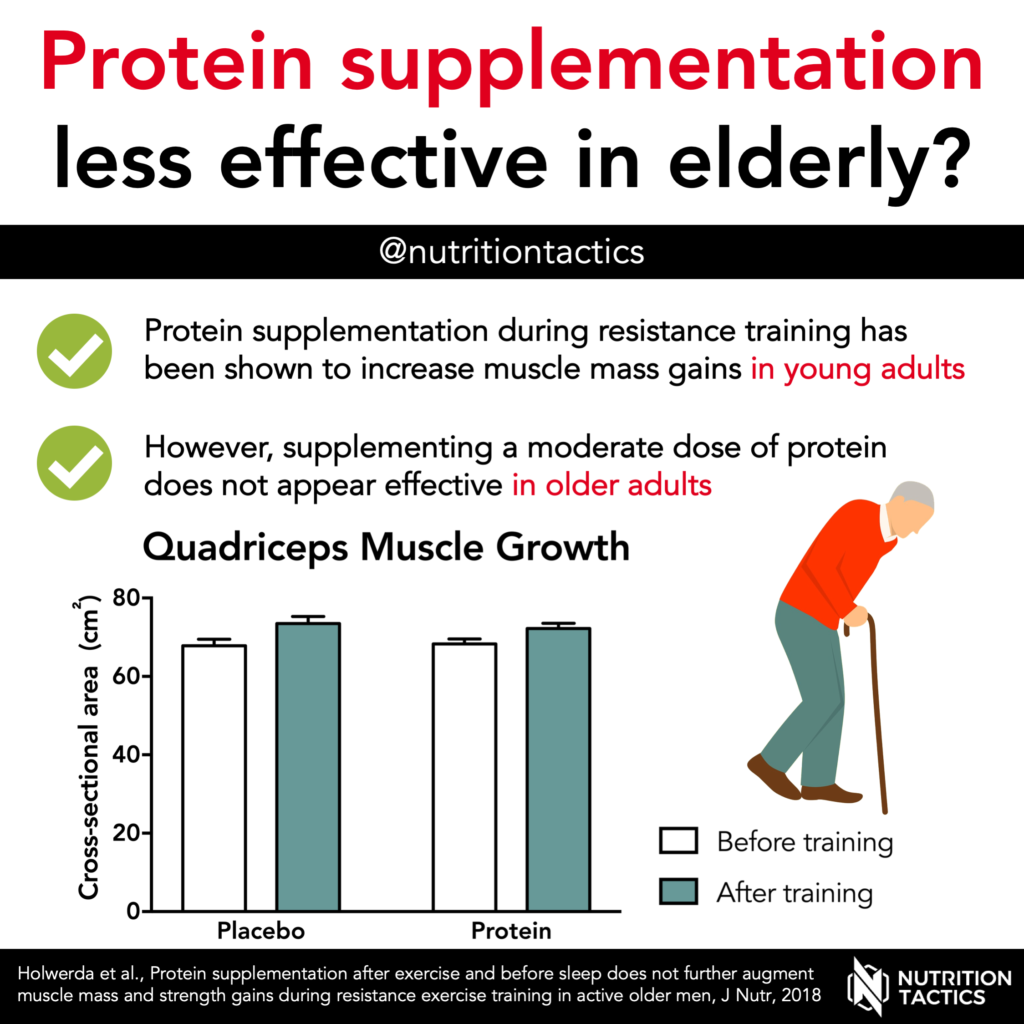
Muscle loss in the elderly is real but not inevitable. The primary causes include anabolic resistance, physical inactivity, poor nutrition, chronic inflammation, neuromuscular degeneration, and hormonal changes. By combining progressive resistance training with adequate protein intake and anti-inflammatory nutrition, seniors can preserve strength, independence, and quality of life.
The recommended approach includes 2–3 resistance training sessions per week targeting all major muscle groups, protein intake of 1.0–1.3 g/kg/day distributed across meals, omega-3 supplementation or weekly oily fish consumption, vitamin D supplementation if deficient, and creatine supplementation at 3–5 g/day combined with exercise.
Early detection through functional tests like grip strength and gait speed allows timely intervention before significant disability occurs. It’s never too late to build muscle. Start today, stay consistent, and your future self will thank you.