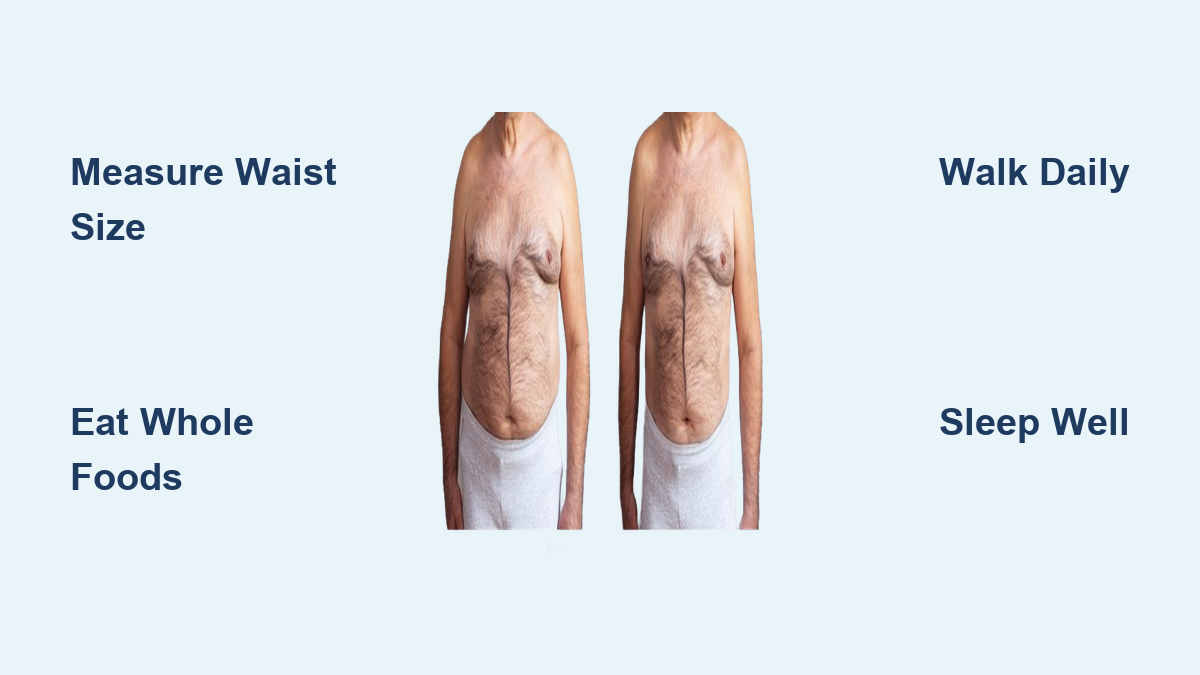
Belly fat after 50 isn’t just a cosmetic concern. It’s a silent health threat that significantly raises your risk of heart disease, type 2 diabetes, stroke, and even cognitive decline. The good news? You can lose belly fat at 60, 70, or beyond. Science confirms that with the right combination of diet, movement, and lifestyle changes, seniors can reduce dangerous visceral fat and improve their long-term health.
This guide cuts through the noise and delivers a proven, senior-friendly action plan. You’ll learn exactly how to eat for fat loss without extreme diets, move safely to burn fat and preserve muscle, and use simple daily habits that quietly shrink belly fat over time.
Measure Your Belly Fat First
Before starting any plan, know your starting point. Waist circumference is the most reliable way to assess dangerous belly fat, not the scale.
How to Measure Your Waist Correctly
- Stand up straight and locate the top of your hipbone
- Wrap a soft tape measure around your bare abdomen just above the hips, at navel level
- Keep the tape snug but not tight, parallel to the floor
- Breathe out normally, do not suck in, and read the number
Understanding Your Risk Level
Women with a waist measurement over 35 inches face high health risks. Men exceeding 40 inches are in the high-risk category. If you’re above these numbers, visceral fat is likely elevated. The goal is to reduce your waistline by 1 to 3 inches in 8 to 12 weeks through consistent lifestyle changes.
Eat a Whole-Food Diet to Fight Belly Fat
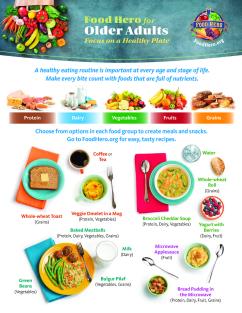
Diet is the most powerful tool for losing belly fat. No amount of exercise can outpace a poor diet, especially as metabolism slows with age.
Foods That Target Belly Fat
Focus on adding these belly-fat-fighting foods to your meals. Pulses like beans, lentils, and chickpeas are high in fiber and plant protein, stabilizing blood sugar and reducing waist size. Regular pulse eaters have 20% lower obesity risk. Monounsaturated fats found in avocados, olive oil, nuts, and seeds improve insulin sensitivity and help burn visceral fat. Soluble fiber from oats, apples, pears, and Brussels sprouts feeds good gut bacteria and reduces fat storage. Whole grains like quinoa, brown rice, and barley lower inflammation and support fat loss. Lean proteins including fish, eggs, tofu, and skinless poultry help maintain muscle and keep you full.
Foods to Avoid
Added sugars in soda, sweets, and even healthy smoothies spike insulin and drive fat into the abdomen. Refined carbs like white bread, muffins, and pastries act like sugar in the body. Ultra-processed foods including frozen meals, fast food, and packaged snacks make up over half of the average American diet and are directly linked to fat gain and disease.
Try Time-Restricted Eating Safely
Intermittent fasting, especially time-restricted eating, can help seniors lose belly fat by aligning food intake with natural metabolism.
How to Implement Time-Restricted Eating
Eat all meals within a 10 to 12 hour window, for example from 8 a.m. to 6 p.m. Fast for the remaining 12 to 14 hours, drinking only water, tea, or black coffee. You do not need to count calories, but food quality still matters significantly.
Important Safety Considerations
Seniors with diabetes, low blood pressure, or malnutrition risk should consult a doctor before starting. Time-restricted eating is not appropriate for everyone, but many find it easier than calorie counting. Start with a 12-hour fast, such as 7 p.m. to 7 a.m., and gradually tighten the window if needed.
Do Cardio That Burns Belly Fat
Exercise burns calories, improves insulin function, and directly targets visceral fat. Aerobic activity is essential, but not all cardio is equally effective.
Best Cardio Exercises for Seniors
Brisk walking for 30 minutes, five days per week is easy on joints and highly effective. Swimming or water aerobics provides zero impact and is great for arthritis or balance issues. Stationary cycling puts low stress on knees while boosting heart health. Gardening or dancing are fun ways to stay active daily.
Adding HIIT Safely
High-intensity interval training burns more fat in less time by spiking metabolism and increasing post-exercise calorie burn. A senior-safe format uses 20 seconds of effort followed by 20 seconds of rest. Complete 5 exercises for 2 rounds with 50-second breaks between rounds. The intensity should leave you slightly breathless, able to talk but not sing.
Build Muscle With Strength Training
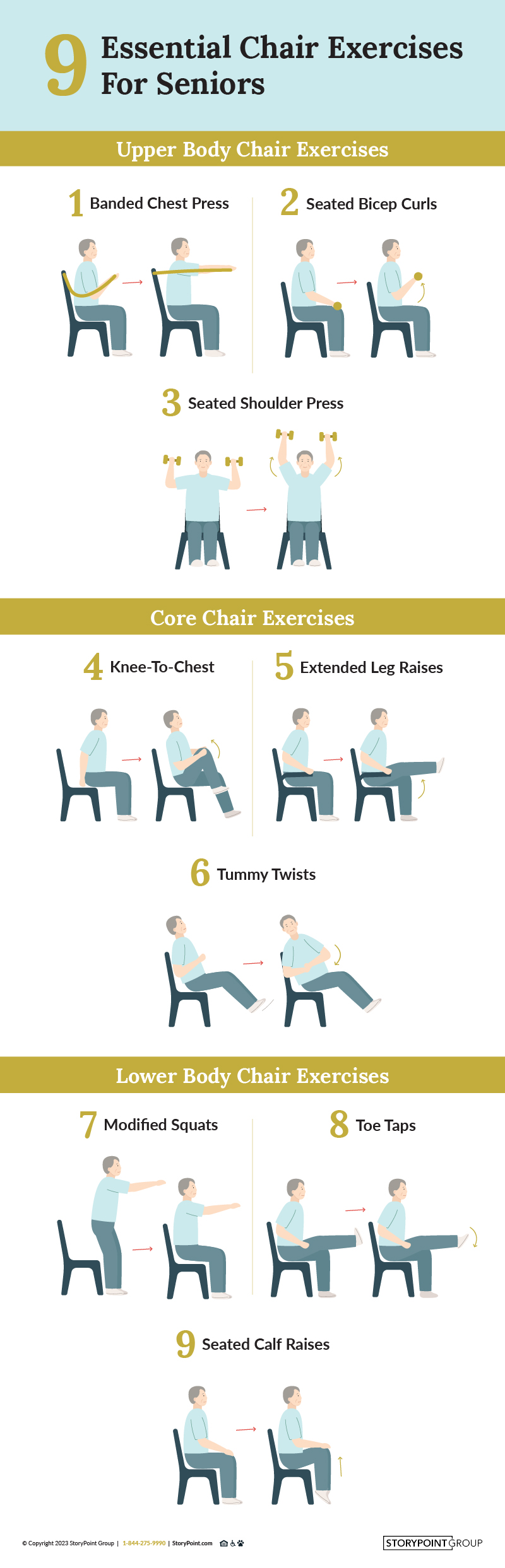
Muscle burns more calories at rest than fat. After 50, you lose 3 to 5% of muscle per decade, slowing metabolism and promoting fat gain.
Why Strength Training Matters for Seniors
Strength training boosts your resting metabolism, preserves independence and balance, prevents falls and frailty, and helps control blood sugar. These benefits make it essential for anyone over 50 looking to lose belly fat.
Senior-Friendly Strength Exercises
Perform these exercises twice per week. Sit-to-stand squats using a sturdy chair build legs and core. Wall push-ups are safer than floor push-ups and work chest and arms. Seated leg lifts strengthen hips and improve mobility. Light dumbbell curls using water bottles or cans build upper body strength. Resistance band rows improve posture and upper-body strength.
Start with 1 to 3 sets of 10 to 12 reps per exercise. Focus on slow, controlled movements and prioritize form over weight.
Strengthen Your Core Safely
Core exercises won’t spot-reduce belly fat, but they improve posture, stability, and functional strength, making daily movements easier and reducing back pain.
Effective Core Exercises for Seniors
Seated abdominal contractions involve sitting tall and pulling your belly button toward your spine for 5 seconds. Seated bicycle crunches gently twist and bring elbow to opposite knee. Modified bird-dog on hands and knees extends opposite arm and leg. Planks on knees or against a wall held for 10 to 20 seconds work well. Stir the pot uses forearms to make small circles in a plank position.
Avoid traditional crunches or sit-ups if you have back pain or osteoporosis.
Use Chair Exercises When Mobility Is Limited
If standing is difficult, chair-based workouts are effective, safe, and can be done at home.
How to Structure Chair Exercises
Perform each move for 30 seconds. Rest briefly between exercises. Complete 2 to 3 rounds. Repeat 1 to 2 times daily.
Effective Chair Exercises
Seated marching lifts knees to boost heart rate. Sitting side bends target obliques. Sit-to-stand squats build lower-body strength. Seated bicycle crunches engage the core. Double step reach and push improves arm and leg coordination.
Prioritize Sleep to Reduce Belly Fat
Poor sleep disrupts hunger hormones, increasing ghrelin while decreasing leptin. This leads to late-night cravings and fat storage.
Sleep Tips for Seniors
Go to bed and wake up at the same time daily. Avoid screens one hour before bed. Keep your room cool and dark. Limit caffeine after 2 p.m.
Sleep apnea is common in seniors and linked to belly fat. See a doctor if you snore or wake up tired.
Manage Stress to Lower Cortisol
Chronic stress raises cortisol, a hormone that drives fat storage especially in the abdomen.
Simple Stress-Reduction Techniques
Deep breathing uses 4 counts in, 4 counts hold, and 6 counts out. Mindfulness meditation through apps like Calm or Insight Timer works well. Gentle yoga or stretching calms the nervous system. Walking in nature provides dual benefits. Journaling or listening to calming music helps process emotions.
Even 5 minutes of deep breathing can lower cortisol and reduce emotional eating.
Stay Hydrated and Limit Alcohol
Small habits make a big difference in your belly fat loss journey.
Hydration Tips
Dehydration mimics hunger and slows metabolism. Drink a glass before meals to reduce overeating. Flavor water with lemon, cucumber, or mint if plain water is boring.
Alcohol Guidelines
Alcohol adds empty calories and disrupts fat burning. Beer belly is real, as alcohol promotes liver and abdominal fat. Limit to maximum one drink per day if appropriate for your health. Choose dry wine over sugary cocktails.
Track Progress Beyond the Scale
The scale can mislead, especially when you’re gaining muscle while losing fat.
Better Ways to Track Success
Measure your waist monthly. Notice how clothes fit. Monitor energy levels. Track mobility improvements like walking farther or standing longer. Note sleep quality and mood improvements.
Keep a simple journal recording meals, exercise, sleep, and how you feel.
Address Medical Barriers With Your Doctor
Some conditions and medications make belly fat harder to lose.
Common Medical Issues
Hypothyroidism slows metabolism, so ask about testing TSH levels. Insulin resistance or prediabetes leads to fat storage, so check HbA1c or fasting insulin. Medications like corticosteroids, some antidepressants, and beta-blockers can cause weight gain.
Request blood work during your next checkup. Review medications with your doctor or pharmacist. See a registered dietitian for a personalized nutrition plan.
Realistic Timeline and Expectations
Consistency beats perfection when it comes to losing belly fat.
What to Expect
Weeks 1 to 4 involve adjusting habits and building routine. Energy may dip then rise. Weeks 5 to 8 show clothes fitting looser and waist measurement starting to drop. Weeks 8 to 12 typically yield 1 to 3 inches lost from the waist with consistent effort.
Non-scale wins appear earlier, including better sleep, improved mood, easier movement, and fewer cravings.
Key Takeaways for Seniors Losing Belly Fat
Belly fat is reversible at any age. You do not need extreme diets or exhausting workouts. What works is consistent, science-backed action including eating real food, moving daily, sleeping well, and managing stress.
Start where you are. Pick one change like drinking more water or walking 10 minutes daily. Build from there. Your health at 70, 80, or 90 depends on the choices you make today.
Frequently Asked Questions About Senior Belly Fat Loss
Can seniors over 70 really lose belly fat?
Yes, seniors can lose belly fat at any age. Research confirms that with the right combination of diet, exercise, and lifestyle changes, adults in their 70s and 80s can reduce dangerous visceral fat. The key is using age-appropriate strategies that protect joints while building muscle and improving metabolism.
What is the fastest way for seniors to lose belly fat?
The fastest sustainable approach combines a whole-food diet with regular physical activity. Focus on plant-based foods, lean proteins, and fiber while limiting sugar and processed foods. Add 150 minutes of moderate cardio weekly plus two strength training sessions. Expect visible results in 8 to 12 weeks.
Does walking help seniors lose belly fat?
Yes, brisk walking is one of the best exercises for seniors losing belly fat. Walking for 30 minutes, five days per week burns calories, improves insulin sensitivity, and targets visceral fat. It is low-impact, easy on joints, and can be done anywhere.
Why is belly fat dangerous for seniors?
Belly fat, especially visceral fat, surrounds internal organs and releases inflammatory substances. This significantly raises the risk of heart disease, type 2 diabetes, stroke, and Alzheimer’s disease in seniors. Reducing belly fat improves overall health and extends functional independence.
Are there medical reasons seniors struggle to lose belly fat?
Yes, several medical conditions can make belly fat loss more difficult. Thyroid disorders, insulin resistance, and certain medications like corticosteroids or antidepressants can contribute. Seniors should request blood work and review medications with their doctor to address these barriers.