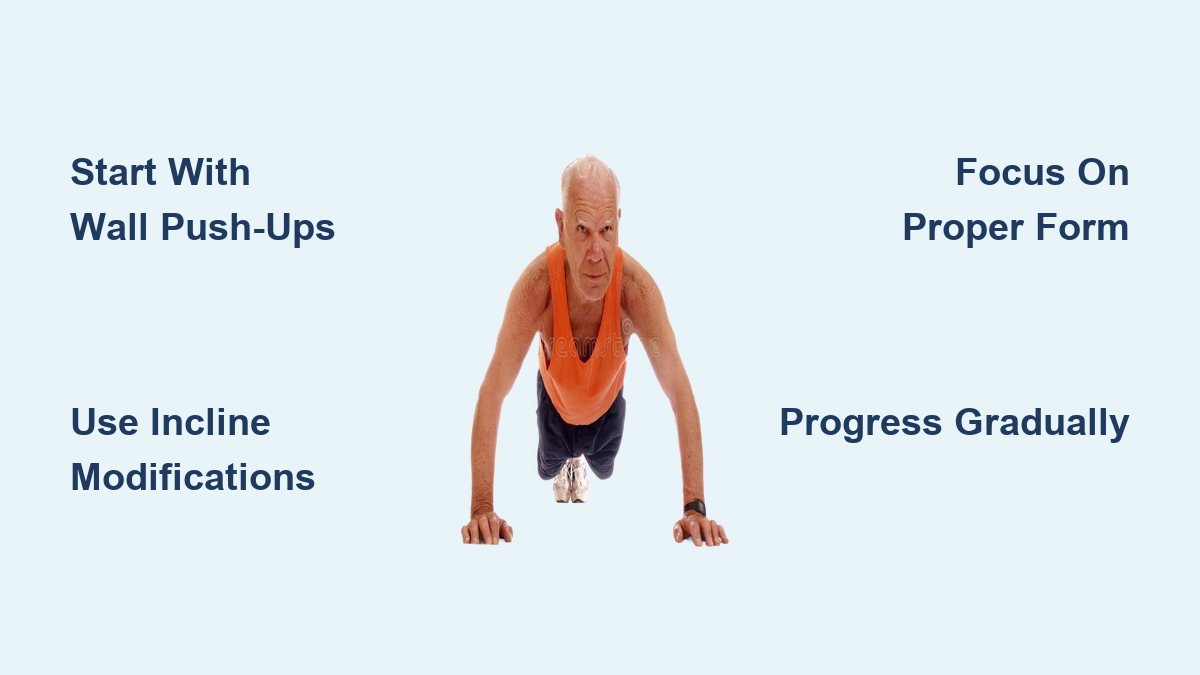
Yes, seniors should do push-ups, and the research is clear: age is not the barrier many assume it to be. Push-ups are one of the most effective bodyweight exercises for maintaining upper-body strength, cardiovascular health, and functional independence well into later life. Whether you’re 60 or 80, modified push-up variations allow anyone to build strength safely without gym equipment or expensive memberships. The key lies in starting at the appropriate level, progressing gradually, and respecting your body’s signals throughout the process.
This guide covers the science behind push-up benefits for seniors, safe modification options ranging from wall push-ups to full variations, training recommendations, and strategies for overcoming common mental barriers. You’ll find practical steps to integrate push-ups into your fitness routine while protecting your joints and preventing injury.
Why Push-Ups Benefit Older Adults
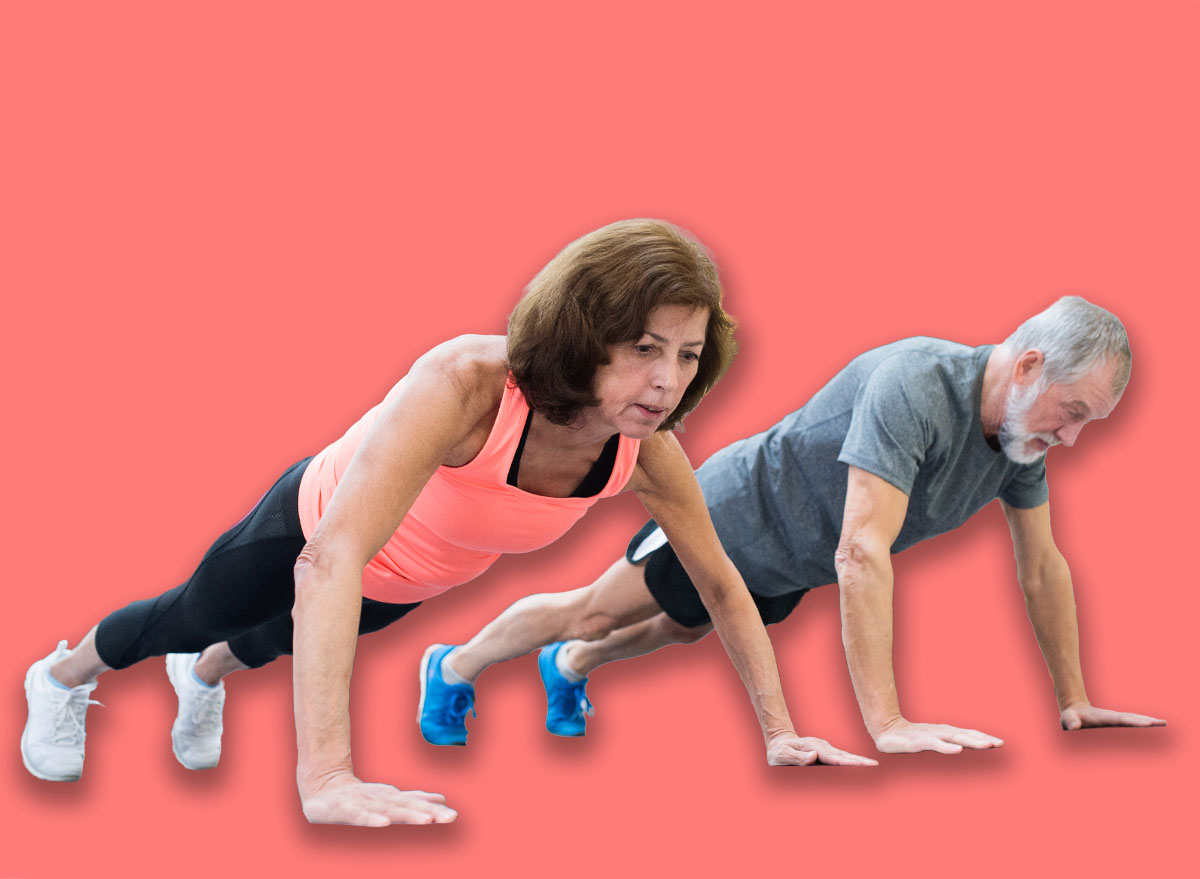
Push-ups engage multiple muscle groups simultaneously, making them a highly efficient exercise for seniors seeking functional strength. The movement activates the chest, shoulders, triceps, and core stabilizers, all of which play critical roles in daily activities like lifting groceries, pushing doors open, or rising from a fallen position. Unlike machine-based exercises that isolate single muscles, push-ups train your body to work as a coordinated unit, improving real-world functionality.
Beyond muscle strength, push-ups serve as a powerful indicator of cardiovascular health. A landmark 2019 study published in JAMA Network Open found that men who could perform 40 or more consecutive push-ups had a 96% lower risk of cardiovascular disease over 10 years compared to those who could do fewer than 10. While this study focused on middle-aged men, the principle extends to older adults: upper-body muscular endurance reflects overall cardiometabolic fitness and systemic health resilience.
The exercise also sharpens neuromuscular coordination by requiring your nervous system to synchronize multiple muscle groups. This training improves balance, postural control, and reaction time, all of which contribute to fall prevention. For seniors, maintaining these capacities means greater confidence in movement and reduced risk of injury during everyday tasks.
How Age Really Affects Push-Up Performance
National data challenges the assumption that younger adults are naturally stronger than seniors. A Gymless.org survey of 2,000 American adults revealed that more than half of all Americans cannot perform 10 consecutive push-ups, regardless of age. Perhaps surprisingly, only 8.29% of seniors over 65 reported being unable to do more than 5 push-ups, a better performance rate than many younger, sedentary age groups.
This data confirms that consistent movement matters far more than chronological age when it comes to push-up ability. While sarcopenia, the natural age-related loss of muscle mass, does occur after 65, research shows that resistance training effectively reverses this decline even in frail older adults. The nervous system adapts quickly as well, improving muscle activation and coordination within weeks of beginning a training program. Starting push-ups, even in modified forms, triggers these positive changes and begins rebuilding strength regardless of your starting point.
Physical Challenges Seniors May Face
Several physiological changes can affect push-up performance, but none of them should prevent you from exercising. Muscle mass declines at a rate of 3-8% per decade after 65, with fast-twitch fibers responsible for explosive movements diminishing first. This leads to reduced pushing power, slower reactions, and increased fatigue during effort. However, resistance training directly combats this loss by stimulating muscle protein synthesis and improving neuromuscular efficiency.
Joint stiffness and arthritis in the wrists, shoulders, or thumbs can make standard push-up positions uncomfortable. Similarly, cervical spine issues may cause neck pain during downward movement. These conditions call for smart modifications rather than avoidance. Using elevated surfaces, neutral-grip handles, or alternative pressing movements allows you to train safely while protecting sensitive joints. The goal is not to push through pain but to find variations that work for your body.
Limited range of motion from years of sitting or inactivity also makes full push-ups difficult. This restriction improves with consistent movement, however. Starting with wall or incline pushes gradually increases flexibility while building strength, preparing your body for more advanced variations over time.
Safe Push-Up Modifications for Every Fitness Level
Wall Push-Ups
Wall push-ups offer the easiest starting point, using only 20-40% of your body weight. This makes them ideal for beginners, those with significant weakness, or anyone experiencing joint pain.
Stand facing a sturdy wall at arm’s length. Place hands on the wall slightly wider than your shoulders, keeping wrists neutral by gripping the sides rather than pressing palms flat. Lean forward, bending elbows to 90 degrees, then push back to the starting position with control. Keep your core tight and spine straight throughout the movement. To increase difficulty, step farther from the wall to create a steeper angle.
Incline Push-Ups
Incline push-ups using a sturdy table, countertop, or bench provide a smooth transition between wall and floor variations, loading approximately 50-70% of your body weight.
Place your hands on a surface at knee-to-waist height. Step your feet back so your body forms a straight line from head to heels. Lower your chest toward the surface, keeping elbows at 45 degrees to your torso. Push back up with control. Progression involves lowering the surface height over time, such as moving from a countertop to a coffee table to a sturdy bench.
Knee Push-Ups
Knee push-ups represent the intermediate step before attempting full floor push-ups, using 60-80% of your body weight.
Start on hands and knees with hands slightly wider than shoulders. Cross your ankles and extend your legs behind you, resting your weight on your knees. Place a cushion or folded towel under your knees for comfort. Lower your chest toward the floor while keeping your hips aligned with your shoulders and knees. Push back up without allowing your hips to sag. Only progress to full push-ups when you can perform 2-3 sets of 10 knee push-ups with ease and proper form.
Full Push-Ups
Full push-ups on your toes represent the advanced variation and require adequate strength and core stability.
Position hands on the floor slightly wider than shoulders. Balance on your toes with your body forming a straight line from head to heels. Engage your glutes and core to prevent back sag. Lower until your chest nearly touches the floor, keeping elbows at 45 degrees rather than flaring outward. Push back up with control while breathing: inhale on the descent and exhale on the ascent.
Alternative Exercises When Push-Ups Aren’t Possible
Isometric Holds
If full movement proves too challenging, hold the top position of a wall or incline push-up for 10-30 seconds. This builds static strength and joint stability without the strain of dynamic movement. Gradually increase hold time as your strength improves.
Dumbbell Floor Press
Lie on your back with knees bent and feet flat on the floor. Hold dumbbells over your chest with arms extended. Slowly lower the weights until your upper arms touch the floor, then press back up. This eliminates wrist pressure while allowing precise resistance control. Start with light weights and perform 2-3 sets of 8-12 reps.
Inverted Rows
Sit under a sturdy table or use a resistance band anchored overhead. Pull your chest toward the surface while keeping your body straight. This strengthens back muscles, balances pushing movements, and improves posture. Perform 2-3 sets of 8-10 reps.
Training Guidelines for Senior Push-Up Success
Perform push-up variations 2-3 times per week with rest days between sessions. This frequency allows muscles to recover and grow stronger while preventing overtraining. Begin with 2-10 reps per set depending on your ability, focusing on control rather than speed. Aim for 3 sets with 60-90 seconds rest between each.
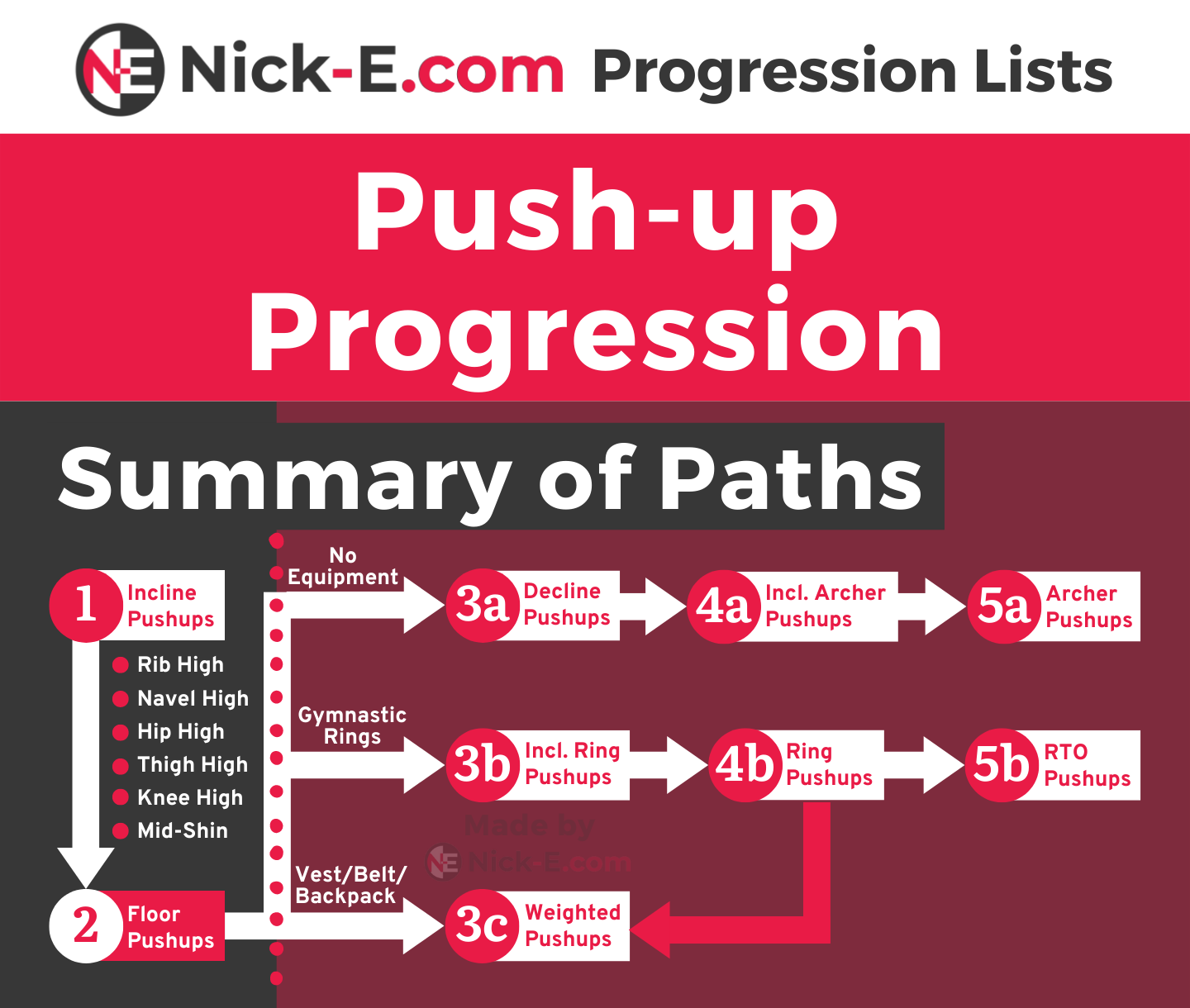
Progressive overload drives continued improvement. Add 1-2 reps per set weekly when the current variation feels manageable, then increase sets from 2 to 3. You can also lower the incline surface or slow down the movement to increase difficulty. Never sacrifice form for additional reps.
Follow this progression sequence: wall push-ups, higher incline, lower incline, knee push-ups, then full push-ups. Only advance when you can complete all sets with good form, no joint pain occurs, and your breathing remains steady.
Overcoming Mental Barriers to Push-Up Training
Many seniors believe strength training belongs exclusively to younger people. This mindset limits potential before anyone tries. Research and real-world results prove that age is not a barrier to meaningful strength gains. Replacing “I can’t” with “I’ll try” opens the door to progress. Even small gains translate to noticeable improvements in daily life.
Fear of injury stops others from attempting push-ups. Controlled, gradual training actually reduces injury risk by building tissue resilience and improving movement patterns. Pain serves as a signal, not a challenge to push through. Respect discomfort, modify as needed, and build confidence slowly. Most seniors find that consistent practice reduces joint pain and stiffness over time.
Using modifications does not represent failure. Wall and incline push-ups are smart training tools that enable safe progression toward goals. Elite athletes use progressions constantly. The objective is function, strength, and independence, not performing exercises in any particular way.
Safety Tips to Prevent Injury
Listen to your body’s pain signals carefully. Never push through sharp or joint-related discomfort. If wrists, shoulders, or neck cause pain, switch to a higher incline, use dumbbells or handles, or try the floor press instead. Mild muscle fatigue is normal; joint pain is not.
Protect your wrists by using push-up handles or dumbbells to maintain neutral wrist positions. Fist push-ups on your knuckles work if your joints allow. Perform wrist circles and stretches before exercising to prepare joints.
Keep elbows at 45 degrees to your body rather than flaring them outward. Engage shoulder blades by pulling them down and back during movement. Maintain a straight spine without sagging hips or an arched back. Keep your neck neutral with eyes slightly ahead of your hands. Consider using a mirror or asking a partner to check your form.
Seniors with heart disease, osteoporosis, recent surgery, or joint replacements should consult a doctor or physical therapist before starting. Professional guidance ensures safe variations and helps design a personalized program.
Push-Up Benchmarks for Seniors
According to fitness experts, these benchmarks indicate strength levels for standard push-ups performed on toes for adults aged 60-69:
| Fitness Level | Repetitions |
|---|---|
| Above Average | 12-16 |
| Excellent | 20+ |
These numbers apply to full push-ups with proper form. For knee push-ups, aim for 15-25 reps as a strong baseline. Even performing 10 push-ups, whether modified or full, places you ahead of most adults. Reaching 40 or more signals excellent cardiovascular resilience.
Use benchmarks as motivation rather than pressure. Focus on personal progress, recognizing that each rep represents a victory.
Building a Complete Fitness Routine
Push-ups alone do not provide full-body fitness. Pair them with lower-body exercises like bodyweight squats, step-ups, lunges, and heel raises. This builds balanced strength and supports overall mobility.
Add core and stability work including planks held for 20-60 seconds, bird-dogs, or dead bugs. Strong core muscles support push-up form and reduce back strain.
Include cardiovascular exercise aiming for 150 minutes weekly of moderate activity such as brisk walking, swimming, cycling, or water aerobics. Daily stretching or gentle yoga maintains mobility and reduces stiffness.
Real-Life Benefits of Push-Ups for Seniors
The ability to push up from the floor after a fall represents one of the most critical skills for seniors. Building upper-body strength through push-ups trains exactly this motion, enabling greater independence and reduced fear of falling.
Daily tasks like maneuvering grocery carts, pushing lawnmowers, or lifting laundry become easier with stronger arms and shoulders. Push-ups translate directly to real-world function, making ordinary activities less burdensome.
Strength builds confidence. Knowing you can handle physical challenges like helping a grandchild or moving furniture boosts mental well-being and quality of life.
Getting Started With Push-Ups Today
Seniors can and should do push-ups with the right approach. Start where you are, use modifications, and progress gradually. The benefits extend far beyond muscle to include improved heart health, better balance, greater independence, and enhanced confidence.
Key points to remember include using wall push-ups as a valid starting point, prioritizing consistency over intensity, focusing on form more than reps, viewing modifications as smart training strategies, and recognizing that every push-up builds resilience.
You do not need to perform 40 push-ups to gain benefits. Start with one. Over time, that one becomes five, then ten, then twenty. The journey to strength begins not with perfection but with action.
Frequently Asked Questions About Push-Ups for Seniors
Can seniors over 75 safely do push-ups?
Yes, seniors over 75 can safely perform push-ups using appropriate modifications. Wall push-ups and incline push-ups provide the safest starting points, allowing you to build strength with minimal joint stress. Progress gradually as your strength improves, and always consult your doctor if you have pre-existing conditions.
Are push-ups bad for aging shoulders?
Push-ups are not inherently bad for aging shoulders when performed with proper form. Keeping elbows at 45 degrees rather than flaring them outward reduces shoulder strain. Modifications like incline push-ups decrease load on the shoulder joint. If you experience pain, switch to alternative exercises like dumbbell presses.
How many push-ups should a 65-year-old be able to do?
According to fitness benchmarks, adults aged 60-69 who can perform 12-16 standard push-ups are considered above average, while 20 or more indicates excellent strength. However, modified push-ups count too. Even 10 push-ups in any form places you ahead of most adults.
What if I cannot do a single push-up?
If you cannot do a single push-up, start with isometric holds against a wall. Hold the top position for 10-30 seconds and gradually increase hold time. Wall push-ups then provide the next step, followed by incline and knee variations. Every exercise builds toward your goal.
Do push-ups help prevent falls in seniors?
Push-ups help prevent falls by improving upper-body strength needed to catch yourself, improving neuromuscular coordination, and enhancing core stability for better balance. The ability to push up from the floor after a fall specifically reduces fall-related complications and maintains independence.
Should seniors do push-ups every day?
Seniors should not do push-ups every day. Performing push-ups 2-3 times per week allows muscles to recover and grow stronger. Daily training unless using very light loads risks overtraining and injury. Rest days between sessions are essential for adaptation.
Key Takeaways for Senior Push-Up Training

Push-ups represent one of the most accessible and effective exercises for seniors seeking to maintain strength, independence, and health. The evidence is clear that age is not the limiting factor, that modifications make push-ups achievable for virtually any fitness level, and that the benefits extend from cardiovascular health to functional independence. Start with wall push-ups if you’re new, progress gradually through incline and knee variations, and prioritize proper form over repetition count. Consult a healthcare provider before beginning any new exercise program, especially if you have pre-existing conditions. Your strength journey begins with a single push-up, and every repetition builds toward a more capable, confident you.