Every year, more than one in four adults aged 65 and older experiences a fall, and poor balance is a leading cause of these incidents. As we age, changes in muscle strength, joint flexibility, vision, and inner ear function can all contribute to instability. The good news is that balance is not fixed. With the right exercises and habits, seniors can significantly improve their stability, reduce fall risk, and maintain independence. This guide reveals the most effective, science-backed strategies so you can move with confidence at any age.
Start with Core Balance Exercises
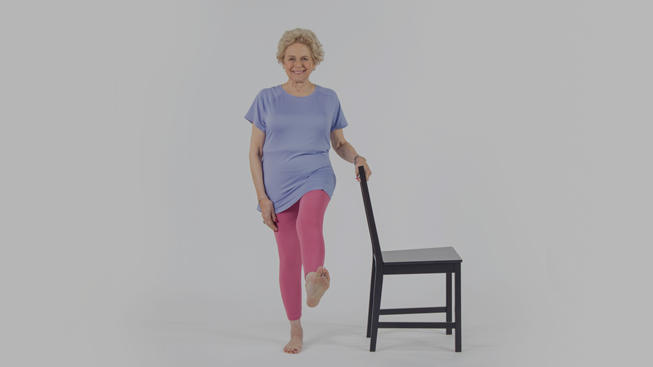
Improving balance begins with foundational movements that challenge stability in a safe, controlled way. These exercises build neuromuscular awareness and train the body to respond quickly to shifts in weight. Always perform them near a wall, chair, or countertop for support.
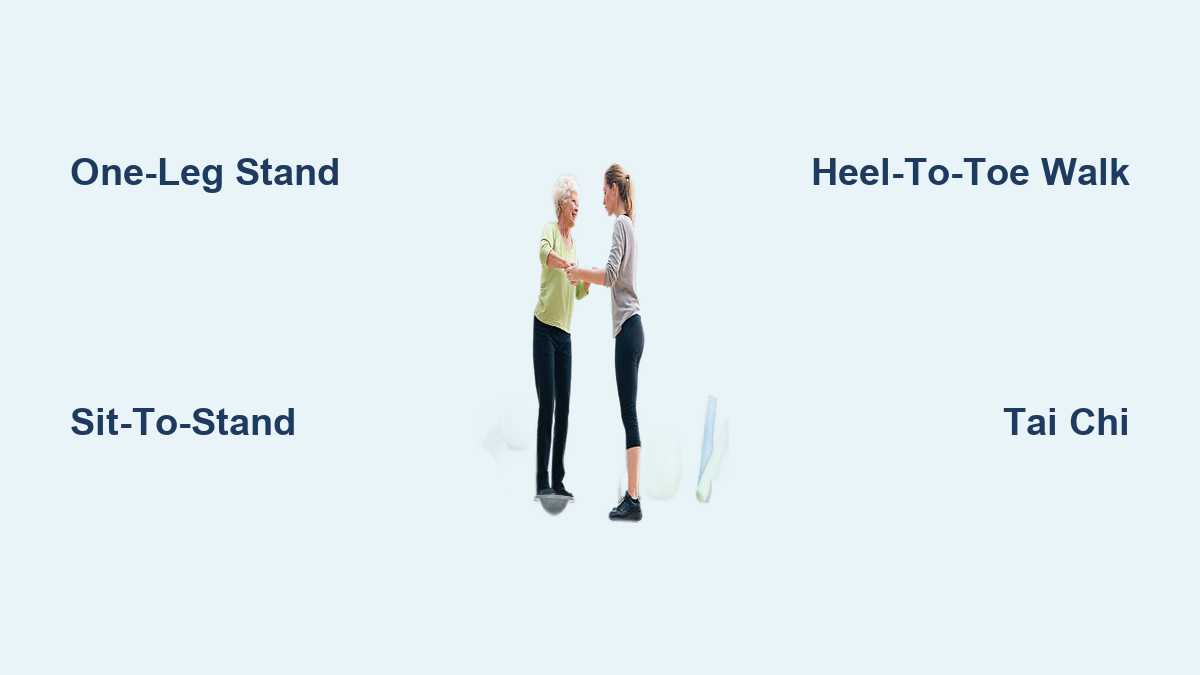
Master the One-Leg Stand
The single-leg stand is one of the most effective balance exercises for seniors. It strengthens the ankle, knee, and hip stabilizers while improving proprioception, which is the body’s sense of where it is in space.
To perform this exercise, stand with feet shoulder-width apart. Lift one foot 1 to 2 inches off the ground. Keep your hips level and your standing knee slightly bent. Extend your arms out to the sides if needed for counterbalance. Hold for 5 to 30 seconds, then switch legs.
Progressions for the one-leg stand:
• Start with fingertips touching a wall for support
• Gradually reduce hand contact until you can balance unassisted
• Increase hold time up to 60 seconds
• Try standing on a pillow or foam pad to increase difficulty
• Close your eyes only if safe and supported
Goal: 3 sets of 30 seconds per leg, twice daily. Most healthy 50-year-olds can hold 50 seconds or more. Those over 80 may start at 10 seconds and build up gradually.
Practice the Heel-to-Toe Stand
This narrow-base stance mimics tightrope walking and trains your body to maintain balance with reduced support. Place one foot directly in front of the other, with the heel touching the toes of your standing foot. Keep your arms at shoulder height for balance. Hold for 10 to 30 seconds. Switch foot positions and repeat.
Progressions for heel-to-toe stand:
• Cross arms over chest to increase difficulty
• Close your eyes, but only with support nearby
• Increase your hold time gradually
Frequency: 5 repetitions per side, twice daily.
Try the Tandem Walk
Also known as the tightrope walk, this dynamic exercise improves gait control and coordination. Walk in a straight line, placing the heel of one foot directly in front of the toes of the other. Keep your head up and gaze forward. Pause briefly, up to 5 seconds, between steps for control. Use a wall or counter for support if needed.
Progressions for tandem walk:
• Increase distance, such as walking across a room
• Add head turns while walking
• Use floor tiles or tape as a visual guide
Frequency: Once daily.
Build Strength to Support Stability
Strong muscles are essential for balance. Weak legs make it harder to recover from a stumble. These functional exercises target key muscle groups used in daily movement.
Do Sit-to-Stand Reps
This simple movement builds quadriceps and glute strength, which are crucial for rising from chairs, toilets, and cars. Sit on a sturdy, non-rolling chair with feet flat on the floor. Scoot forward to the edge of the seat. Lean your chest slightly forward over your toes. Squeeze your glutes and stand up without using your hands if possible. Sit back down slowly.
Progressions for sit-to-stand:
• Start with hand assistance if needed
• Goal: stand without using arms
• Add light hand weights for resistance
• Lower seat height by removing cushions
Repetitions: 10 reps, twice daily.
Caution: Stop if you feel knee, hip, or back pain.
Step Up Safely
Step-ups improve leg strength, coordination, and stair-climbing ability. For a forward step-up, use a 4 to 8 inch step with railings. Step up with one leg, bring the other to meet it. Step down in reverse. Keep your posture upright.
For a side step-up, position sideways to the step. Step up with your lead foot, bring the other to meet it. Step down in reverse.
Repetitions: 5 to 10 per leg.
Progression: Increase step height or add arm movements.
Add Lunges for Hip Stability
Lunges build unilateral leg strength and improve hip control. Step forward with one leg. Lower your body until your front thigh is parallel to the floor. Keep your back straight and your knee over your ankle. Hold for 30 seconds, then return to start.
Repetitions: 5 to 10 per leg.
Safety: Perform near support. Avoid this exercise if you have knee pain.
Boost Coordination and Dynamic Control

Balance is not just about standing still. It is about moving with purpose. These exercises train your body to shift weight, change direction, and respond to challenges in real time.
March While Standing
Also known as the flamingo stand, this exercise improves balance during leg elevation. Stand near a wall with feet shoulder-width apart. Raise one knee to hip level, hold briefly, then lower. Alternate legs.
Repetitions: 10 to 20 per side.
Progression: Increase speed or height. Reduce hand support as you improve.
Walk Sideways
Side-stepping strengthens hip abductors and adductors, which are vital for lateral stability. Step sideways with one foot, bring the other to meet it. Keep hips level and posture upright.
Repetitions: 10 steps each direction.
Progression: Reduce hand support. Make smaller steps for added difficulty.
Try the Simple Grapevine
This coordination drill challenges dynamic balance and body awareness. Cross one foot over the other, for example right over left. Step laterally with the uncrossed foot. Repeat the sequence.
Repetitions: 5 cross-steps per side.
Support: Use a wall or chair for safety.
Practice Forward and Backward Stepping
This trains controlled weight shifting, which is crucial for catching yourself during a stumble. Step one foot forward, return to center. Step backward, return to center. Alternate legs.
Repetitions: 5 per leg.
Use Foot Taps for Stair Prep
Tapping a step with one foot builds single-leg stability and prepares for stair climbing. Stand in front of a step. Tap the top with one foot, return to floor. Alternate legs.
Repetitions: 15 to 20 per leg.
Support: Hold a wall, cane, or counter.
Enhance Postural Awareness with Mind-Body Practices

Mind-body exercises improve focus, body alignment, and core engagement. These are key components of long-term balance improvement.
Try the Tree Pose
This yoga-based balance pose enhances focus and stability. Stand with feet shoulder-width apart. Lift one leg and place your foot against your inner thigh or calf, avoiding the knee. Bring hands together at chest or raise overhead. Fix your gaze on a stationary point.
Hold: At least 30 seconds per side.
Repetitions: 3 rounds per leg.
Support: Hold a chair with one hand.
Join Tai Chi or Gentle Yoga
Both practices have been proven to reduce fall risk in clinical studies. Tai Chi uses slow, flowing movements to improve coordination and weight shifting. Gentle yoga enhances flexibility, strength, and body awareness.
Recommendation: Seek beginner or senior-specific classes.
Add Head Rotations
Train your balance system to handle changing visual input. Sit or stand with good posture. Rotate your head side to side, then up and down. Progress to standing when comfortable.
Caution: Stop if dizziness occurs.
Practice Walking Head Turns
This dual-task exercise mimics real-world challenges like looking over your shoulder while walking. Walk forward while turning your head to look over one shoulder. Alternate sides. Pause briefly between turns for control.
Sets: 5 sets of 5 steps each.
Shift Weight with Rock the Boat
This exercise improves lateral and forward-backward weight transfer, which is essential for recovery from slips. Shift your weight to the right and lift your left foot slightly. Hold for 10 to 30 seconds, return to center. Repeat on the left side.
Alternative approach: Shift forward by lifting your heels, then backward by lifting your toes, then left and right.
Repetitions: 5 to 10 per direction.
Follow a Safe, Progressive Routine
To see real improvement, balance training must be consistent, progressive, and safe.
Train at the Right Frequency
Perform core exercises like one-leg stand and sit-to-stand twice daily. Aim for the full routine at least twice per week. Even 5 to 10 minutes daily can make a difference.
Progress Gradually
Use this framework to advance safely:
Beginner level: Requires constant support with seated options available. Example exercises include seated head turns, foot taps with support, and sit-to-stands using arms.
Intermediate level: Can perform standing exercises with intermittent support and balance for 15 to 30 seconds. Example exercises include one-leg stand with hand support and heel-to-toe walk.
Advanced level: Can perform exercises with minimal or no support and with eyes closed. Example exercises include tandem stand with eyes shut and single-leg stance on foam pad.
Stay Safe During Exercise
Always have a stable surface nearby such as a wall, chair, or countertop. Exercise in a clear, well-lit, non-slip area. Wear supportive, non-slip footwear or go barefoot on safe surfaces. Stop immediately if you feel pain, dizziness, or severe fatigue. Stay hydrated and take breaks.
Get Medical Clearance First
Consult a doctor or physical therapist before starting if you have a history of falls, live with Parkinsons disease, stroke, or neuropathy, have joint or back pain, or take medications that cause dizziness.
Prevent Falls with Environmental Tweaks
Even the best balance training cannot overcome a hazardous home. Combine exercise with smart environmental changes.
Make the Bathroom Safer
Install grab bars near the toilet and in the shower. Use non-slip mats inside and outside the tub. Consider a raised toilet seat. Avoid stepping out of the tub onto wet floors.
Optimize Bedroom and Hallways
Install nightlights for nighttime trips to the bathroom. Keep pathways clear of clutter. Place a phone or medical alert within reach of your bed.
Fix General Hazards
Remove loose rugs or secure them with non-slip pads. Improve lighting throughout the home. Use non-slip flooring or rugs in high-risk areas.
Manage Medications and Vision
Medical factors play a big role in balance.
Review Your Medications
Some drugs increase fall risk. Antihypertensives can cause dizziness when standing. Benzodiazepines and sedatives cause drowsiness. Antidepressants and antipsychotics may affect balance. Ask your doctor to review all medications for side effects.
Update Your Vision
Get regular eye exams. Update your glasses prescriptions. Treat conditions like cataracts or glaucoma. Avoid walking in dim light if you have poor night vision.
Wear Proper Footwear
Choose well-fitting, supportive shoes. Use low heels and non-slip soles. Avoid walking in socks or slippers without grip, especially on hardwood or tile floors.
Make Balance Part of Daily Life
The best results come from lifelong habits, not just formal exercise sessions.
Integrate Balance Into Your Routine
During your morning routine, try standing marches while brushing your teeth. While cooking, practice weight shifting or heel raises at the counter. During TV time, do sit-to-stands during commercials. When walking outdoors, practice heel-to-toe steps on sidewalks.
Stay Social and Active
Join a senior fitness class. Try a Tai Chi group. Walk with friends. Social activity supports consistency and makes exercise more enjoyable.
Frequently Asked Questions About Senior Balance Improvement
How often should seniors practice balance exercises?
Seniors should perform balance exercises at least twice per week, with some exercises like one-leg stands and sit-to-stands performed twice daily. Even 5 to 10 minutes of daily practice can yield significant improvements over time.
What is the single most effective balance exercise for seniors?
The one-leg stand, also called single-leg stance, is considered one of the most effective exercises. It strengthens ankle, knee, and hip stabilizers while improving proprioception. Aim for 30 seconds per leg unassisted as a target.
Can balance improve in seniors over 80?
Yes, balance can improve at any age. While benchmarks may differ, adults over 80 can start with 10 seconds per leg and gradually build up. Consistency and progressive difficulty are key to seeing improvement.
Should seniors exercise alone or with supervision?
Seniors with moderate to high fall risk should exercise with supervision, at least initially. Lora Stutzman, a physical therapist at Johns Hopkins, notes that it is always best to have company at home while exercising for safety.
What environmental changes help prevent falls in seniors?
Key modifications include installing grab bars in the bathroom, using non-slip mats, removing loose rugs, improving lighting throughout the home, and wearing supportive, non-slip footwear. These changes combined with exercise provide the best fall prevention.
When should seniors seek medical advice before starting balance exercises?
Consult a doctor before starting if you have a history of falls, have been diagnosed with Parkinsons disease, stroke, or neuropathy, experience joint or back pain, or take medications that cause dizziness or sedation.
Key Takeaways for Improving Senior Balance

Improving balance as a senior is not just possible. It is essential for maintaining independence and reducing fall risk. The most effective approach combines targeted exercises that build strength, coordination, and proprioception with environmental safety modifications and medical awareness. Start with basic exercises like the one-leg stand and sit-to-stand, using a wall or chair for support. Progress gradually by increasing hold times, reducing hand support, and adding complexity like closing your eyes or standing on uneven surfaces. Remember to review medications with your doctor, update your vision care, and make necessary home modifications to remove fall hazards. Even minimal daily activity is better than none. Your balance is worth the investment, and with consistent practice, you can move with greater confidence and independence.