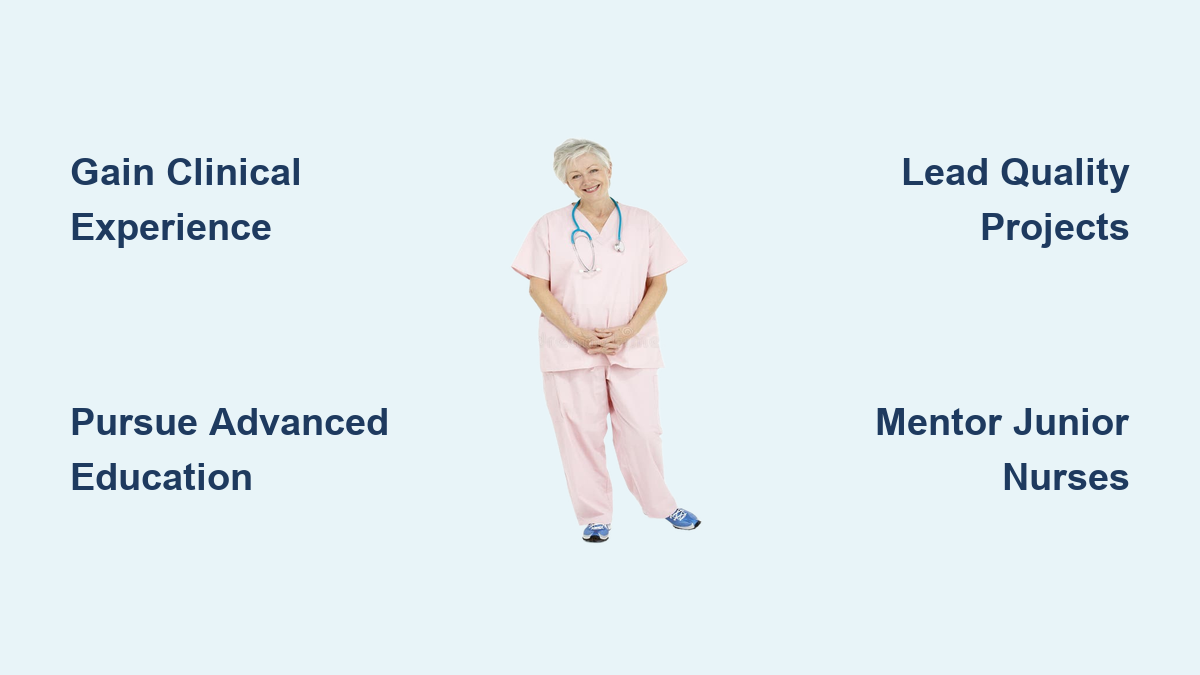
Becoming a senior nurse represents a pivotal moment in your nursing career. It means stepping beyond daily patient care into leadership, mentorship, and strategic decision-making roles that shape both your team and patient outcomes. Whether you are a newly registered nurse or an experienced clinician looking to accelerate your progression, understanding the exact pathway to senior roles is essential for achieving your career goals.
This guide walks you through the complete journey from qualification to senior nursing positions. You will discover how to gain meaningful clinical experience, develop leadership skills, pursue advanced education, and position yourself for roles like Band 6 in the NHS, Senior Staff Nurse, or Clinical Nurse Specialist. Every step outlined here is designed to help you build the competencies that healthcare organizations actively seek in senior nursing candidates.
Qualify as a Registered Nurse
Your journey to becoming a senior nurse begins with obtaining your nursing qualification and license. This foundational requirement is non-negotiable across all healthcare systems and serves as the entry point to your professional nursing career.
Complete an Accredited Nursing Program
Select a program that aligns with your location and long-term career objectives. In Singapore, options include the Diploma in Nursing at Nanyang Polytechnic or Ngee Ann Polytechnic, or a Bachelor of Science in Nursing at the National University of Singapore or Singapore Institute of Technology. In other jurisdictions, you may pursue an Associate Degree in Nursing or a Bachelor of Science in Nursing, with the BSN increasingly preferred by employers. All programs combine classroom learning with clinical placements in hospitals, clinics, and community settings.
Pass Your Licensing Examination
After completing your nursing program, you must pass your country’s national licensing examination to practice legally. In Singapore, this is the Singapore Nursing Board registration. In the United States, you will take the NCLEX-RN, while the United Kingdom requires Nursing and Midwifery Council registration. Once licensed, you can begin accumulating the hands-on experience necessary for senior roles.
Build Clinical Experience
.jpeg)
Most senior nursing positions require one to three years of post-qualification experience, though some nurses advance faster by demonstrating exceptional initiative and competence. Building the right kind of experience is crucial for developing the clinical judgment and leadership capabilities that senior roles demand.
Work in High-Acuity Units
Seek opportunities in fast-paced clinical environments that challenge your decision-making skills and build your resilience. The Intensive Care Unit, Emergency Department, Surgical Wards, and Oncology or Cardiology Units are particularly valuable for developing your ability to manage complex cases, make quick decisions, and lead during emergencies. These high-pressure settings accelerate your clinical maturity and prepare you for the demands of senior positions.
Take Initiative on the Floor
Do not wait for a formal title to start acting like a leader. Distinguish yourself by volunteering for complex patient assignments, stepping in when colleagues are overwhelmed, leading code blue responses or rapid assessments, and documenting near-misses to improve safety. The more you are seen as a reliable, go-to nurse, the faster you will be considered for advancement opportunities.
Develop Core Senior Nurse Skills
Senior nurses are expected to excel in clinical judgment, team leadership, and operational coordination. These competencies do not develop automatically through experience alone; they must be cultivated intentionally through deliberate practice and reflection.
Master Clinical Decision-Making
Strengthen your ability to assess patients independently using frameworks like ABCDE or SBAR. Learn to recognize early signs of deterioration such as sepsis or respiratory failure, adjust care plans based on changing conditions, and guide junior nurses in clinical reasoning and intervention. Keeping a clinical reflection journal to review challenging cases helps improve your judgment over time and demonstrates your commitment to continuous improvement.
Lead Your Shift Effectively
Even without a formal charge nurse title, you can practice shift leadership by helping assign patient loads during handover, ensuring care tasks are completed on time, communicating updates to doctors and supervisors, and supporting new staff during orientation. These actions demonstrate your readiness for charge nurse or senior staff roles and build the operational coordination skills senior positions require.
Communicate with Confidence
Senior nurses bridge the gap between clinical teams, patients, families, and management. Strengthen your communication by speaking clearly in handovers and ward rounds, delivering difficult news to families with empathy, documenting accurately and concisely in patient records, and representing nursing concerns in management meetings. Poor documentation can lead to legal and clinical risks, so always double-check your entries for accuracy and completeness.
Pursue Advanced Education and Specialization

While not always mandatory, further education significantly boosts your promotion chances and opens doors to advanced practice roles. Many senior positions, especially Clinical Nurse Specialist or Nurse Manager roles, prefer or require a master’s degree.
Enroll in a Master’s Program
A Master of Science in Nursing or MNurs enhances your clinical expertise, leadership and management knowledge, and research and evidence-based practice skills. This advanced qualification demonstrates your commitment to professional growth and equips you with the strategic thinking capabilities that senior roles demand.
Earn Specialty Certifications
Stand out by specializing in high-demand areas such as Critical Care Nursing, Diabetes Management, Palliative Care, Mental Health Nursing, or Sexual and Reproductive Health. Short courses and certifications from accredited institutions add credibility and show commitment to your specialty area. Many healthcare organizations actively seek nurses with specialized knowledge to fill senior clinical positions.
Demonstrate Leadership Early

Leadership is not about a title; it is about behavior, initiative, and influence. Building your leadership profile now accelerates your progression to senior roles.
Mentor Junior Nurses and Students
Volunteer to supervise nursing students during clinical rotations, offer constructive feedback to new hires, and share tips on time management, documentation, and patient communication. Being a mentor builds trust with your colleagues and demonstrates your ability to develop others, a key trait that healthcare organizations look for in senior nurses.
Lead Quality Improvement Projects
Show initiative by solving real problems on your unit. Propose a new medication safety checklist, organize a hand hygiene campaign, or streamline the patient discharge process. Document your project’s impact, such as reduced errors or faster turnover, and use these results for appraisals and job applications. These projects demonstrate your ability to identify problems and implement solutions.
Act as Charge Nurse When Possible
If your hospital allows temporary charge nurse roles, request to cover during absences and learn how to manage staffing, emergencies, and inter-departmental communications. This experience directly prepares you for formal promotion and is often the most direct pathway to a senior nurse role.
Build Your Professional Network
Your professional network can open doors to opportunities that never appear on job boards. Building relationships withsenior nurses, healthcare leaders, and professional organizations expands your career options and provides support throughout your progression.
Join Nursing Associations
Become a member of professional organizations such as the Singapore Nurses Association, Royal College of Nursing, or American Nurses Association. These organizations offer training, conferences, and leadership forums that connect you with peers and mentors in your field. Active participation demonstrates your commitment to professional development.
Engage on Professional Platforms
Follow senior nurses and healthcare leaders on LinkedIn and professional forums. Share insights on patient care or policy changes and comment on industry trends to increase your visibility. A strong online presence positions you as a thoughtful, engaged professional who is serious about advancing their career.
Attend Conferences and Workshops
Look for events focused on nursing leadership, clinical excellence, and healthcare innovation. Networking at these events can lead to mentors, job offers, or collaboration opportunities that accelerate your path to senior roles.
Seek Mentorship and Shadow Leaders
Learning from those already in senior roles accelerates your growth and helps you understand what it takes to succeed in leadership positions.
Find a Formal Mentor
Ask your supervisor or HR department about mentoring programs. If none exist, identify a senior nurse you respect and politely request regular check-ins to discuss career development. Be specific about your goals: “I am aiming to become a senior nurse within two years. Can you advise me on the skills I should focus on?” Employers are more likely to invest in nurses who articulate clear progression goals.
Shadow Nurse Managers and Matrons
Request opportunities to observe how senior leaders handle staffing issues, run team meetings, and respond to clinical incidents. This exposure helps you understand the strategic side of nursing leadership and prepares you for the broader responsibilities that come with senior positions.
Explore Leadership Development Programs
Some hospitals offer structured programs such as leadership shadowing schemes, Trainee Advanced Clinical Practitioner roles, or interdepartmental secondments. These programs fast-track your progression and provide hands-on experience in leadership responsibilities.
Apply for Senior Nurse Roles Strategically
When you meet the experience and skill requirements, start applying for senior roles, but do so strategically to maximize your chances of success.
Tailor Your CV to Highlight Leadership
Include specific leadership actions such as “Led handover for six nurses” or “Mentored three new staff members.” Highlight project outcomes like “Reduced medication errors by fifteen percent through new checklist implementation.” List all relevant certifications and training, and use action verbs such as Led, Trained, Improved, Coordinated, and Implemented to demonstrate your impact.
Prepare for Behavioral Interview Questions
Senior nurse interviews focus on real examples of leadership and problem-solving. Common questions include telling about a time you handled conflict between staff members, how you prioritize care during a busy shift, or describing a situation where you improved patient safety. Use the STAR method (Situation, Task, Action, Result) to structure your answers clearly and persuasively.
Apply Within Your Current Organization
Internal candidates are often preferred for senior roles because they already understand the culture, systems, and team. Express your interest to your manager early, ask for feedback on your readiness, and request to be considered for upcoming openings. This proactive approach demonstrates your commitment and keeps you in mind when positions become available.
Understand Salary and Career Outlook
Knowing what to expect financially and professionally helps you plan your career path and set realistic goals.
Senior Nurse Salary in Singapore
The average annual salary for a senior staff nurse is $57,033. Higher roles command significantly different compensation: Nurse Manager positions average $86,581 annually, while Nursing Home Administrators earn around $45,358. Clinical Nurse Specialist roles typically range from $70,000 to $90,000 depending on specialization and experience. Salaries vary by hospital type, specialty, and education level.
Job Market Trends
Demand for senior nurses is growing due to ageing populations requiring chronic disease management, expansion of primary and community care creating new senior roles, and high turnover in some units creating frequent promotion opportunities. According to the Singapore Ministry of Manpower, healthcare jobs are expected to grow steadily, offering strong job security and advancement potential.
Explore Related Senior Roles
As you progress, consider branching into specialized or managerial positions that align with your interests and strengths.
Nurse Manager
Nurse Managers oversee a unit’s daily operations, handling staffing, budgets, performance reviews, and policy implementation. They act as a liaison between frontline staff and hospital leadership. This role requires strong administrative and people management skills.
Clinical Nurse Specialist
Clinical Nurse Specialists focus on a specialty such as diabetes, wound care, or oncology. They develop clinical guidelines, train staff, and provide expert consultation on complex cases. This role is ideal for nurses who want to stay close to patient care while influencing practice.
Nurse Educator
Nurse Educators teach in nursing schools or hospital training programs, design curricula, and evaluate student performance. They keep clinical staff updated on best practices. This role suits those passionate about teaching and professional development.
Frequently Asked Questions About Becoming a Senior Nurse
How long does it take to become a senior nurse?
Most senior nursing roles require one to three years of post-qualification experience, though some nurses advance faster by demonstrating exceptional initiative and competence. The timeline depends on your clinical area, employer, and how actively you pursue leadership opportunities.
Do I need a master’s degree to become a senior nurse?
A master’s degree is not always mandatory, but it significantly boosts your chances of promotion and opens doors to advanced practice roles. Many senior positions, especially Clinical Nurse Specialist or Nurse Manager roles, prefer or require a master’s degree.
What is the most important skill for a senior nurse?
Senior nurses need a combination of clinical expertise, leadership abilities, and strong communication skills. The ability to make quick clinical decisions, mentor junior staff, and coordinate team operations are all essential competencies for success in senior roles.
How can I stand out for promotion?
Stand out by volunteering for complex assignments, mentoring junior nurses, leading quality improvement projects, pursuing specialty certifications, and clearly communicating your career goals to supervisors. Document your achievements and seek regular feedback to identify growth areas.
Is it better to apply internally or externally for senior roles?
Internal candidates are often preferred because they already understand the organization’s culture and systems. Express your interest to your current manager and ask to be considered for internal openings before looking externally.
What is the average salary for a senior nurse?
In Singapore, the average annual salary for a senior staff nurse is $57,033, with Nurse Managers earning around $86,581. Salaries vary significantly based on hospital type, specialty, location, and education level.
Key Takeaways for Achieving Your Senior Nurse Goals
Becoming a senior nurse requires more than simply serving time in a clinical role. You need solid clinical experience in high-pressure environments, proven leadership through mentoring and project involvement, advanced education or certifications to stand out, a strong professional network and mentorship support, and clear communication of your career goals to supervisors.
Start today by volunteering for a leadership task, enrolling in a specialty course, or asking a senior nurse for advice. Every step you take now brings you closer to becoming the nurse others look up to. With purpose, persistence, and proactive development, you will not only become a senior nurse but also a leader who shapes better care, stronger teams, and a brighter future for nursing.