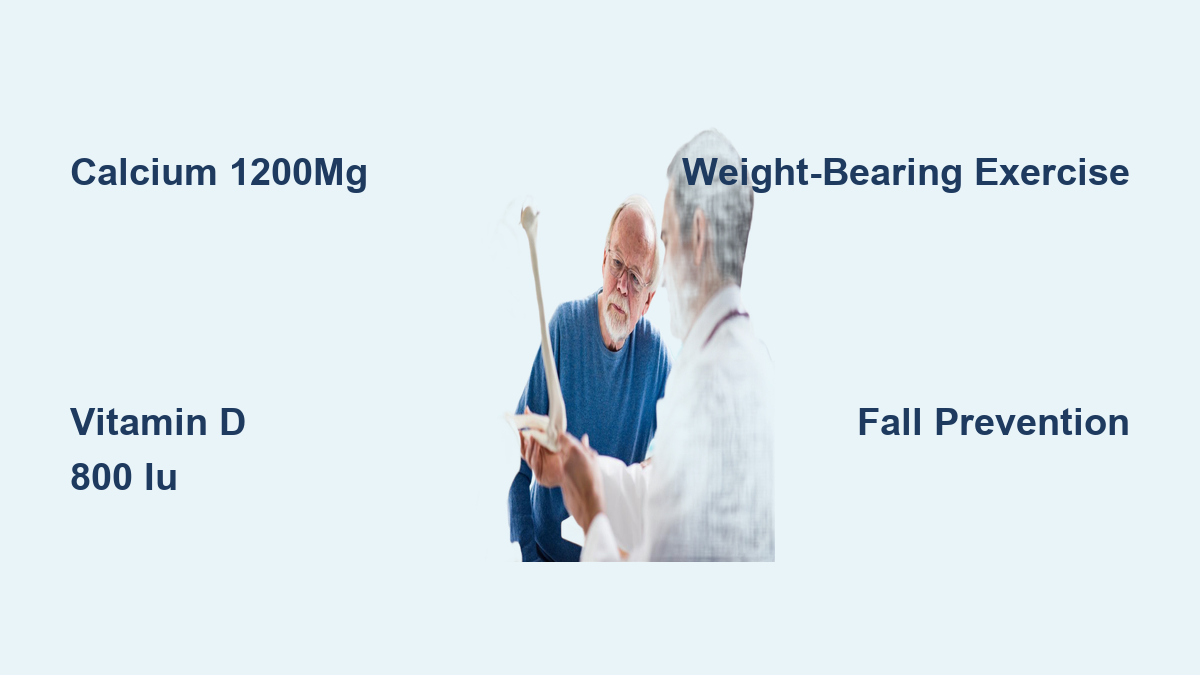
Bone health becomes critically important as we age, especially for adults over 50. Age-related bone loss accelerates during this time, increasing the risk of osteoporosis, fractures, and loss of independence. For many elderly individuals, a simple fall can lead to a hip fracture, one of the most serious consequences of weak bones, with up to 24% of patients dying within a year of injury. But here’s the good news: bone remains responsive to lifestyle changes even in later life. With the right strategies, it is possible to slow, halt, or even partially reverse bone deterioration.
This guide delivers actionable, evidence-based steps to strengthen bones in the elderly, drawing from clinical research and expert recommendations. Whether you are caring for a loved one or managing your own bone health, these proven methods can help maintain mobility, prevent fractures, and support long-term independence.
Optimize Calcium and Vitamin D Intake
Calcium and vitamin D are the cornerstone nutrients for bone strength. Without enough calcium, bones become porous and fragile. Without sufficient vitamin D, the body cannot absorb calcium effectively, rendering even high-calcium diets ineffective.
Meet Daily Calcium Needs
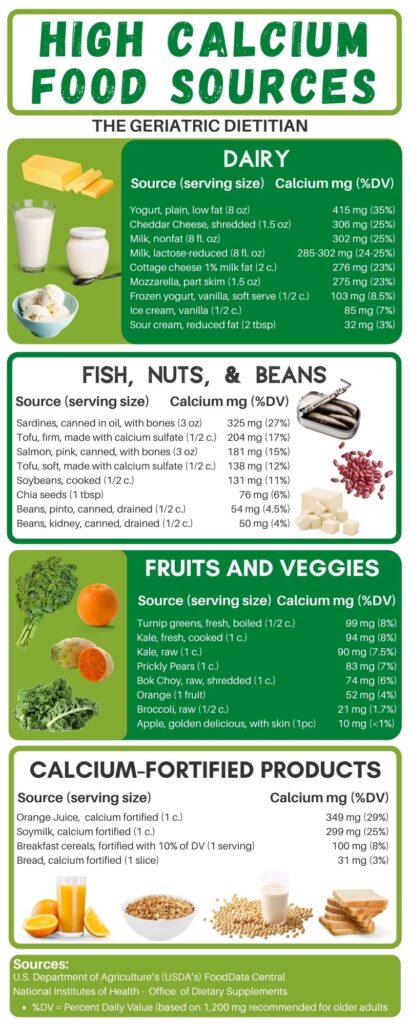
Older adults need 1,200 mg of calcium per day (women over 50, men over 70). This supports the mineral structure of bones and helps counteract natural bone loss.
Best dietary sources include:
• Dairy: 1 cup milk or yogurt provides about 300 mg
• Fortified plant milks: 300 to 400 mg per cup
• Canned sardines with bones: 350 mg per 1.75 oz can
• Collard greens cooked: 260 mg per cup
• Calcium-set tofu: up to 800 mg per 4 oz
• White beans: about 190 mg per cup
Spread calcium intake across meals. The body absorbs only about 500 mg at a time. For supplements, use calcium citrate if you have low stomach acid, which is common in elderly individuals. Take calcium carbonate with food for better absorption. Avoid exceeding 2,000 to 2,500 mg total daily from all sources to reduce kidney stone risk.
Ensure Sufficient Vitamin D
Vitamin D boosts calcium absorption and supports muscle function, which is critical for fall prevention. Adults 51 to 70 need 600 IU (15 micrograms) daily, while those 71 and older need 800 IU (20 micrograms).
Fatty fish like salmon provides 450 IU per 3 oz serving, and egg yolks provide 40 IU each. Fortified foods and brief sunlight exposure also help. Most elderly individuals need supplements due to reduced skin synthesis and limited sun exposure. A blood test for 25-hydroxyvitamin D can confirm deficiency. Aim for levels at or above 30 ng/mL.
Eat Bone-Supportive Foods Daily
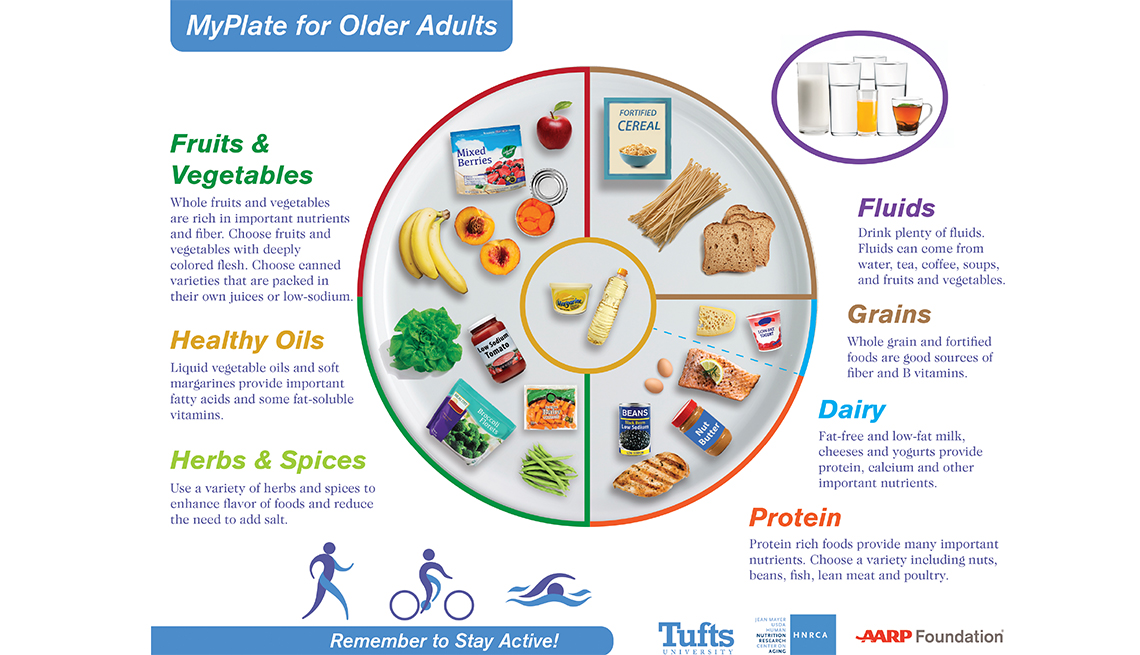
Beyond calcium and vitamin D, several other nutrients work together to maintain and rebuild bone.
Prioritize Protein for Bone and Muscle
Protein makes up about 50% of bone volume and is essential for collagen formation. Target 1.0 to 1.2 g of protein per kg of body weight daily. For a 70 kg (154 lb) person, that means 70 to 84 g per day.
Good sources include:
• Greek yogurt: 17 g per cup
• Chicken breast: 26 g per 3 oz
• Lentils: 18 g per cup
• Eggs: 6 g each
• Tofu: 10 g per half cup
Inadequate protein is more harmful than excess. Older adults with sarcopenia may benefit from up to 1.5 g/kg/day.
Add Prunes and Leafy Greens
Eating 5 to 6 prunes daily has been shown to preserve hip bone density in postmenopausal women. Prunes are rich in vitamin K, potassium, and polyphenols that help reduce bone resorption.
Leafy greens like kale, bok choy, and collard greens offer calcium, vitamin K, and magnesium. Vitamin K activates osteocalcin, a protein that binds calcium to bone. Avoid relying on spinach for calcium because its high oxalate content reduces absorption to just 5%.
Include Omega-3s and Antioxidants
Foods rich in omega-3 fatty acids and antioxidants may reduce inflammation linked to bone breakdown. Try adding fatty fish like salmon and mackerel, flaxseeds and chia seeds, olive oil, blueberries and strawberries, and broccoli (which is also high in vitamin C for collagen synthesis).
Avoid Bone-Damaging Foods and Habits
Certain dietary and lifestyle choices accelerate bone loss.
Limit Sodium and Caffeine
High sodium increases calcium loss through urine. Each 2,300 mg of sodium causes 40 to 60 mg of calcium to be excreted. Reduce processed foods, canned soups, and salty snacks. Keep sodium intake under 2,300 mg daily.
Excess caffeine above three cups of coffee per day may interfere with calcium absorption. Limit coffee and consider adding milk to offset calcium loss.
Skip Colas and Limit Alcohol
Colas (not other sodas) are linked to lower bone density, possibly due to phosphoric acid or replacing milk with soda. Alcohol consumption beyond one drink per day for women or two drinks per day for men increases fracture risk and impairs bone healing.
Do Not Smoke
Smoking reduces bone mineral density, impairs calcium absorption, speeds up menopause, and slows fracture recovery. Quitting at any age improves bone and overall health.
Perform Weight-Bearing and Resistance Exercises
Exercise is one of the most effective ways to strengthen bones. Bones adapt to stress, and the more force you safely apply, the stronger they become.
Walk and Dance Regularly
Weight-bearing activities where your bones support your body weight stimulate bone formation. Best options include brisk walking for 30 minutes most days, stair climbing, dancing, hiking, and pickleball or tennis if joints allow.
For those with low fracture risk, aim for 50 moderate-impact activities daily like 10 jumps, 20 steps, and 20 dance moves. With spinal fractures, stick to 20 minutes of low-impact activity like walking. Swimming and cycling do not count because they are great for heart and joints but do not load bones.
Lift Weights or Use Resistance Bands
Muscle-strengthening exercises create tension on bones, triggering remodeling. Do this 2 to 3 sessions per week on non-consecutive days.
Follow this progression approach:
- Start with beginner exercises like chair squats, wall presses, and band-assisted rows
- Progress to intermediate moves like hands-free squats, push-ups, and single-arm dumbbell rows
- Advance to barbell squats and heavier resistance over time
Perform 8 to 12 reps per set until fatigued, increase resistance gradually, and focus on form. Avoid bending forward or twisting the spine. No gym required. Use resistance bands at home, carry groceries, or dig in the garden.
Improve Balance to Prevent Falls
Most fractures happen from falls. Strengthening bones must be paired with fall prevention.
Practice Tai Chi or Yoga
Tai Chi reduces fall risk by up to 50%. It improves balance, coordination, and confidence. Yoga enhances flexibility and core strength. Choose gentle or chair yoga if mobility is limited. Do at least 2 sessions per week.
Try Simple Balance Drills
Add these to daily routines:
• Heel-to-toe walk down a hallway
• Single-leg stands (hold a chair for support)
• Sideways walking for 10 steps
• Timed Up and Go (TUG) test: rise from chair, walk 3 meters, turn, return, sit. Time over 12 seconds indicates higher fall risk.
Get a Bone Density Test
Early detection is key. Many people do not know they have osteoporosis until they fracture a bone.
Schedule a DEXA Scan
This gold standard test measures bone mineral density at hip and spine. It involves low radiation, is painless, and takes about 15 minutes.
Get tested if you are a woman 65 or older, a man 70 or older, anyone over 50 who has broken a bone, or if you have risk factors like low weight, family history, or steroid use.
Results (T-score) indicate:
• Normal: -1.0 or higher
• Osteopenia: -1.0 to -2.5
• Osteoporosis: -2.5 or lower
Repeat the test every 1 to 2 years if bone loss is detected.
Review Medications and Health Conditions
Some medications and conditions silently weaken bones.
Check for Bone-Harming Drugs
Common culprits include steroids like prednisone that accelerate bone loss even at low doses, proton pump inhibitors like omeprazole that may reduce calcium absorption with long-term use, and antidepressants, antipsychotics, or sedatives that increase dizziness and fall risk. Ask your doctor to review all medications annually.
Address Hormonal Changes
Postmenopausal women experience dropping estrogen that increases bone loss by 2 to 5% per year. Low testosterone in men is linked to reduced bone mineral density. Talk to your provider about hormone therapy or other treatments if appropriate.
Maintain a Healthy Body Weight
Body weight affects bone health in complex ways.
Avoid Being Underweight
BMI below 18.5 is linked to lower bone density and higher fracture risk. This is often tied to poor nutrition and muscle loss. Focus on nutrient-dense foods and strength training to build lean mass.
Manage Obesity Carefully
High BMI may increase bone mineral density due to mechanical loading, but excess fat raises risks for wrist and arm fractures, vitamin D deficiency (stored in fat, less available), inflammation, and poor balance. Achieve a stable, healthy weight through balanced diet and activity, not rapid loss.
Partner with Your Healthcare Team
Bone health is a team effort. Proactive care prevents crises.
Ask About Fracture Risk
Discuss bone health at every visit. Request a fracture risk assessment using tools like FRAX. Explore Fracture Liaison Services if you have had a break after 50.
Consider Medications if Needed
For diagnosed osteoporosis or high fracture risk, several medications are available. Bisphosphonates like alendronate slow bone loss. Denosumab is an injection given every 6 months. Teriparatide stimulates new bone formation. Romosozumab boosts formation and reduces resorption. Never self-prescribe. Discuss benefits, side effects, and treatment duration with your doctor.
Frequently Asked Questions About Strengthening Bones in Elderly
Can bones actually get stronger in your 70s or 80s?
Yes. While age-related bone loss is natural, bones remain metabolically active throughout life. Weight-bearing exercise, adequate calcium and vitamin D, and strength training can slow, halt, or partially reverse bone deterioration even in later years. The key is consistency with evidence-based interventions.
How much calcium do seniors actually need?
Women over 50 and men over 70 need 1,200 mg of calcium daily. Men between 51 and 70 need 1,000 mg. It is best to get calcium from food sources first, spreading intake across meals because the body only absorbs about 500 mg at a time.
What is the best exercise for elderly bone health?
Weight-bearing exercises like brisk walking, dancing, stair climbing, and resistance training are most effective. Balance exercises like tai chi reduce fall risk. Swimming and cycling, while great for cardiovascular health, do not significantly benefit bone strength because they are non-weight-bearing.
Should elderly people take calcium supplements?
Supplements should only be used when dietary intake is insufficient. If needed, calcium citrate is better absorbed for those with low stomach acid, while calcium carbonate works well when taken with food. Total intake from diet and supplements should not exceed 2,000 to 2,500 mg daily to avoid kidney stone risk.
How often should older adults get bone density tests?
Women should get their first DEXA scan at 65, men at 70, or earlier if they have risk factors or have broken a bone after age 50. If bone loss is detected, repeat the test every 1 to 2 years to monitor changes.
What foods should be avoided for bone health?
Limit high-sodium foods that increase calcium excretion through urine, excess caffeine above three cups of coffee daily, colas (which are linked to lower bone density), and more than one alcoholic drink per day for women or two for men. Smoking also significantly damages bone health.
Key Takeaways for Strengthening Bones in Elderly
Strengthening bones in the elderly is not about one magic fix. It is about consistent, daily choices that add up over time. Focus on three core pillars: optimize nutrition with adequate calcium (1,200 mg daily), vitamin D (600 to 800 IU), and protein (1.0 to 1.2 g per kg), engage in weight-bearing and resistance exercise most days, and partner with healthcare providers for bone density testing and medication review when needed.
Start small. Add a serving of yogurt, take a 10-minute walk, do wall presses while brushing your teeth. These habits, combined with medical support and fall prevention, can dramatically reduce fracture risk and preserve independence.
It is never too late. Even with osteopenia or osteoporosis, lifestyle changes improve bone density and quality of life. Begin today. Your bones will thank you tomorrow.