Keeping elderly fingernails clean is a vital part of senior health care. As people age, nails thicken, yellow, and become brittle, trapping dirt, bacteria, and fungi that can lead to infections or serious health complications. Seniors with arthritis, dementia, or limited mobility often cannot clean their own nails, making this task essential for caregivers. This guide provides step-by-step instructions on how to clean elderly fingernails safely, gently, and effectively while protecting dignity and preventing health issues.
You will learn the proper tools, soaking techniques, cleaning methods, and trimming practices that keep elderly nails healthy. The article covers handling resistance, preventing infections, nutritional support, and knowing when to seek professional care.
Gather the Right Supplies for Elderly Nail Care
Before you begin learning how to clean elderly fingernails, assemble all necessary supplies within easy reach. Having everything ready prevents interruptions that can agitate seniors, especially those with cognitive challenges.
Collect these essential items:
• Warm water in a small basin
• Mild antibacterial soap
• Soft-bristled brush (pediatric toothbrush or silicone scrubber)
• Alcohol prep pads
• Orange stick (wooden manicure tool)
• Cotton swabs
• Clean towels
• Sanitized nail clippers
• Emery board or electric nail file
• Cuticle oil or hand lotion
Sharp, sanitized clippers prevent crushing or splitting fragile elderly nails. Electric nail files work well for thick, hardened nails that traditional clippers cannot handle. Long-handled tools help caregivers reach fingernails on seniors who are immobilized or seated in wheelchairs.
Create a Comfortable Cleaning Environment
The setting significantly impacts how well the cleaning session goes. A calm, trusting environment reduces resistance and makes the process smoother for both caregiver and senior.
Choose a quiet, well-lit space where the person feels secure. Sit at eye level to build trust and reduce fear. Use a table or lap tray if they are seated in a chair. Play soft music or use scented lotions to create a spa-like atmosphere that feels relaxing rather than medical.
Always explain each step before doing it. Tell them what you will do next, whether you are soaking their hands, cleaning under a nail, or applying lotion. This transparency builds cooperation and maintains their dignity throughout the process.
Soften Elderly Nails Before Cleaning

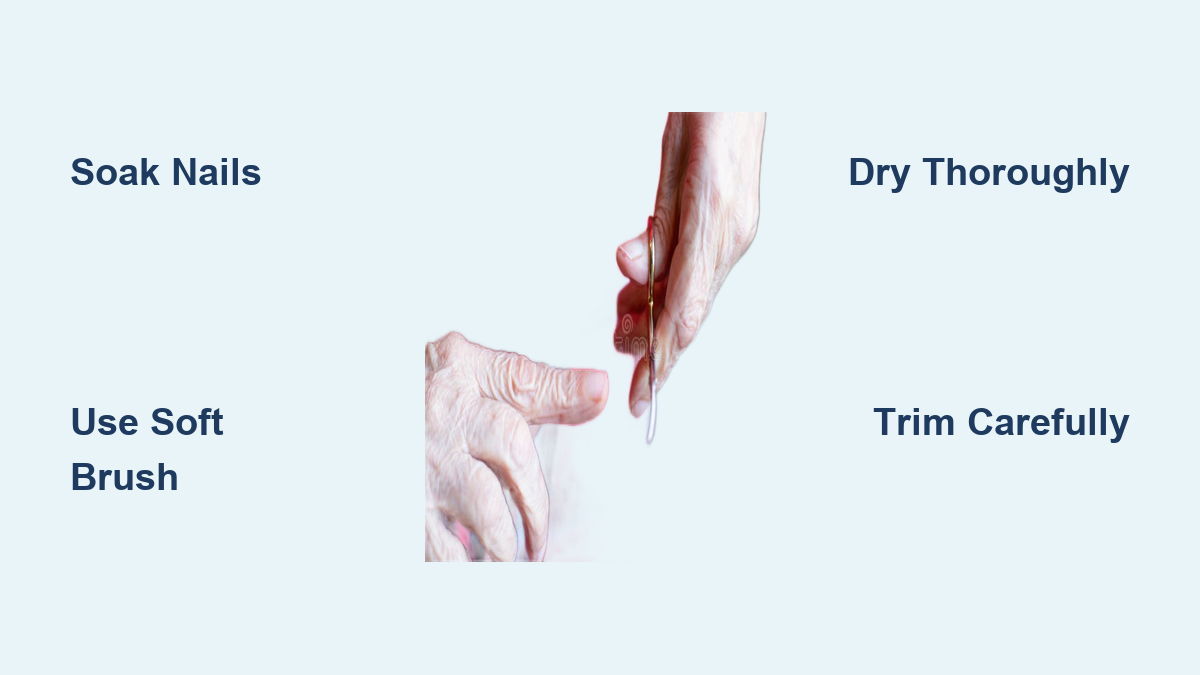
Soaking is the most important step when learning how to clean elderly fingernails effectively. Warm water loosens debris, softens thickened nails, and makes cleaning safer and more comfortable for seniors with brittle or sensitive nails.
Fill a basin with warm water at a comfortable temperature, never hot. Add a few drops of mild soap. Submerge the fingertips for 5 to 10 minutes to allow the water to penetrate and soften the nail plate and surrounding skin.
For enhanced cleaning, consider these optional additives. Epsom salt helps soften skin and reduce mild inflammation. Diluted hydrogen peroxide (mixed 1:1 with water) disinfects and lightens buildup under nails. Some caregivers successfully use dissolved denture cleaner tablets for brightening nails, though this is an off-label use and should never be applied to broken skin.
Avoid harsh chemicals like bleach or strong disinfectants. These can dry out aging skin and cause irritation or chemical burns.
Remove Dirt From Under Elderly Fingernails
After soaking, gently clean around and under the nails using appropriate tools. The goal is to remove trapped debris without damaging the delicate nail bed or surrounding skin.
Use a soft-bristled toothbrush or silicone scrubber for general cleaning. Gently scrub around the nail edges using small circular motions. Focus on the tip and sides where dirt accumulates most heavily. Rinse fingers under clean water after scrubbing.
For stubborn buildup, wrap an alcohol prep pad around the slanted end of an orange stick. Gently slide it under the nail edge and sweep outward to remove trapped material. Use a fresh pad for each finger to prevent spreading bacteria between digits.
For sensitive cases where the senior resists tools or has very tender skin, use cotton swabs dipped in warm soapy water. Gently roll the swab under the nail to lift debris without applying pressure. Never force any tool deep under the nail, as this can injure the nail bed and cause pain or bleeding.
Dry and Moisturize After Cleaning
Proper drying and moisturizing complete the cleaning process and help prevent fungal infections, which are common in older adults.
Pat each finger completely dry with a clean, soft towel. Lift each fingertip slightly to dry beneath the nail. Check between fingers for any remaining dampness. Trapped moisture creates an ideal environment for fungal growth, so thorough drying is essential.
Once dry, apply a nourishing lotion or cuticle oil to the nails and surrounding skin. Look for products containing vitamin E, almond oil, beeswax, or olive oil. These ingredients moisturize and protect brittle nails. Avoid heavy ointments if the person sweats easily, as excess product can trap moisture.
Warm the lotion in your hands before application. This feels soothing to the senior and improves absorption into the skin and nails.
Trim and Shape Elderly Fingernails Properly
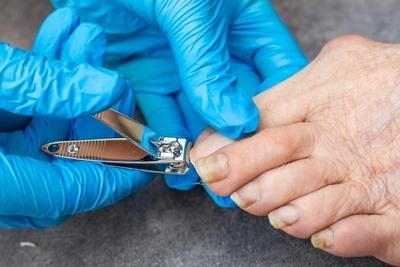
Regular trimming prevents dirt buildup, reduces snagging on clothing, and minimizes the risk of self-inflicted scratches, particularly in seniors with dementia or agitation.
Schedule trims every two to three weeks. The ideal nail length extends no more than a tiny sliver past the fingertip. This length provides protection while preventing excessive dirt accumulation.
Use sharp, sanitized clippers and cut straight across the nail to avoid ingrown edges. Slightly round the corners to prevent sharp points that can scratch skin. File edges smooth with an emery board after clipping.
For very thick nails that resist clipping, file instead of cutting after soaking. Electric nail clippers or Dremel-style rotary files work well for seniors with hardened nails, poor circulation, or diabetes. These tools grind nails down gradually, reducing the risk of cutting too deep or causing pain.
Prevent Infections During Nail Care
Sanitation protects both the caregiver and the senior from bacterial or fungal transmission between cleanings.
Clean all tools after each use to stop bacteria or fungus from spreading. Soak brushes and clippers in rubbing alcohol for 5 to 10 minutes. Wipe orange sticks and files with disinfectant wipes. Replace soft brushes every few months, as bristles harbor bacteria over time.
Never share nail tools between different people. Each senior should have their own set of clippers, brushes, and orange sticks.
Educate seniors (gently) to avoid harmful habits. Remind them not to use nails as tools for opening packages or scratching, as this causes breaks and infections. Instruct them not to remove cuticles, which protect against germs. Teach them to clip hangnails rather than pulling them, which can tear skin and allow bacteria entry.
Support Nail Health Through Nutrition
Strong, healthy nails start from within. Proper nutrition provides the building blocks necessary for nail strength and resilience.
Encourage foods rich in biotin, found in eggs, nuts, beans, and whole grains. Zinc supports nail health and is present in lean meats, shellfish, and eggs. Vitamin C (citrus fruits, bell peppers, broccoli) helps the body absorb iron and produce collagen. Vitamin E (almonds, spinach, sunflower seeds) protects nails from oxidative damage.
Calcium and vitamin D (dairy, fortified foods, sunlight) support overall nail structure. Collagen (bone broth, supplements) improves nail flexibility and reduces brittleness.
Hydration matters too. Dehydration leads to dry, splitting nails. Encourage adequate water intake daily.
Consider supplements after consulting a physician. Biotin supplements at 2.5 to 5 milligrams daily have proven effective for strengthening brittle nails in elderly individuals.
Handle Resistance When Cleaning Senior Nails
Many seniors resist nail cleaning due to fear of pain, loss of control, or dementia-related confusion. Understanding these triggers helps caregivers respond with patience and compassion.
Reframe nail cleaning as a positive experience. Call it “manicure day” or “hand spa time.” Use lavender-scented lotion. Play relaxing music. Add rose petals or a drop of essential oil to the soaking water. This positive framing reduces resistance and builds a routine.
Use engagement tricks that caregivers have tested successfully. Clean your own nails alongside the senior to model the activity. Try reverse psychology by saying the task feels amazing and asking if they want to try. Offer distraction by giving them a soft brush to clean a toy or jewelry while you work. Combine nail cleaning with another activity like washing dishes together, where soapy water naturally cleans nails.
For non-verbal patients or those with severe cognitive impairment, clean one finger at a time during calm moments. Use alcohol-wrapped orange sticks for gentle debris removal before trimming.
Know When to See a Professional
Certain signs indicate that professional medical evaluation is necessary beyond routine home care.
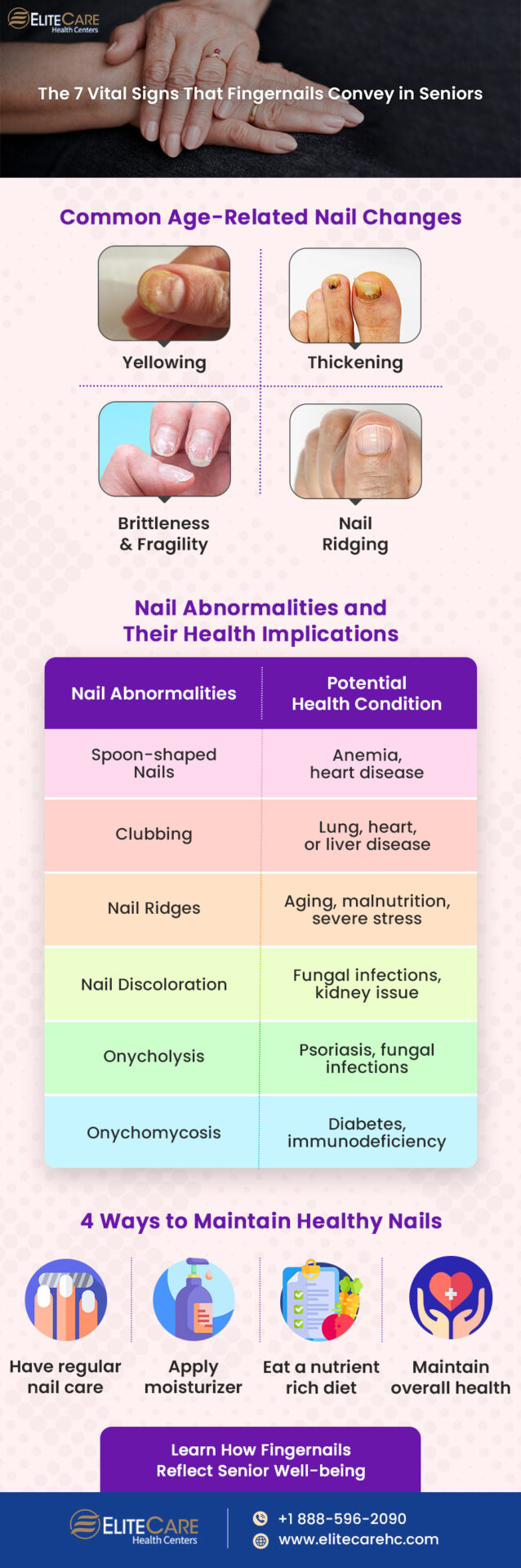
Seek medical help if you notice yellow, green, or black discoloration that does not respond to cleaning. Watch for foul odor under nails, especially when accompanied by soft tissue swelling. Redness, warmth, or pus indicate bacterial infection requiring antibiotics.
Nail lifting from the nail bed (onycholysis), deep ridges, pitting, or sudden shape changes warrant professional evaluation. Pale or bluish nails may signal heart or lung problems requiring immediate medical attention.
Different professionals handle different needs. Family caregivers manage routine cleaning and trimming. Home health aides assist with personal care tasks. Podiatrists specialize in thick, ingrown, or infected nails, though they primarily treat toenails. Dermatologists diagnose infections, psoriasis, or other nail conditions. Primary care physicians evaluate nail changes linked to systemic diseases like diabetes, liver disease, or heart failure.
Note that nursing homes sometimes classify nail clipping as a “surgical procedure,” limiting staff involvement. Family members may need to assume responsibility for regular nail care.
Key Takeaways for Cleaning Elderly Fingernails
Cleaning elderly fingernails requires the right tools, proper technique, and patience. Always soak nails in warm soapy water for 5 to 10 minutes before cleaning to soften thickened nail tissue. Use soft brushes, orange sticks, or cotton swabs to gently remove debris without damaging the nail bed. Dry hands thoroughly and apply moisturizer to prevent fungal growth. Trim nails every two to three weeks, keeping them just past the fingertip. File edges smooth to prevent scratching.
Good nutrition supports nail health from within. Ensure adequate intake of biotin, zinc, vitamins C and E, and collagen. Stay hydrated and consider supplements after consulting a doctor. Handle resistance with compassion by reframing the task positively and maintaining dignity throughout the process.
Watch for signs of infection or systemic disease, and seek professional help when nail abnormalities persist or worsen. Regular nail care is preventive medicine that protects seniors from infection, pain, and complications while honoring their dignity and comfort.
Frequently Asked Questions About Cleaning Elderly Fingernails
How often should you clean an elderly person’s fingernails?
Clean fingernails during regular bathing and perform deeper cleaning weekly. Trim nails every two to three weeks to prevent buildup and snagging. Seniors with diabetes or circulation issues may need more frequent professional care.
What is the best way to soften thick elderly fingernails?
Soak fingertips in warm (not hot) water with mild soap for 5 to 10 minutes. Adding Epsom salt helps soften both nails and skin. For very thick nails, a second soaking session may be necessary to achieve sufficient softening before cleaning or trimming.
Can elderly fingernails be cleaned safely at home?
Yes, with proper technique and gentle tools. Use soft-bristled brushes, orange sticks wrapped in alcohol pads, and cotton swabs. Avoid metal tools that can scratch or damage fragile nail beds. Never force tools under nails or pry at stuck debris.
Why do elderly fingernails get so thick and yellow?
Aging reduces cell turnover, causing nails to thicken and lose translucency. Keratin buildup leads to yellowing. Reduced circulation and nutritional deficiencies also affect nail health. Yellow nails can indicate fungal infection requiring medical treatment.
What causes elderly nail infections, and how can they be prevented?
Moisture trapped under nails creates fungal growth. Poor circulation, diabetes, and compromised immune systems increase infection risk. Prevent infections by drying nails thoroughly, avoiding prolonged water exposure, sanitizing tools, and trimming nails regularly. Seek medical care if discoloration, odor, or swelling develops.