As we age, maintaining muscle strength becomes more than just a fitness goal. It’s a necessity for independence, mobility, and safety. Adults can lose up to 3% of their muscle mass each year after middle age, a condition called sarcopenia. This gradual decline increases fall risk and makes everyday tasks like climbing stairs or carrying groceries more difficult. The good news is that muscle loss isn’t inevitable. With the right approach, seniors can preserve and even build muscle at any age.
This guide delivers actionable, science-backed strategies to improve muscle strength in older adults. You’ll learn how to start safely, choose effective exercises, fuel your body properly, and integrate strength-building into daily life. Whether you’re new to exercise or restarting after a break, these steps are designed for real-world results.
Why Muscle Strength Matters for Older Adults
Muscle strength directly impacts quality of life in profound ways. Strong muscles enable seniors to live independently, perform daily tasks, and avoid dangerous falls. When muscles weaken, even simple activities like getting up from a chair or opening a jar become challenging. This loss of function often leads to decreased confidence and a more sedentary lifestyle, creating a downward spiral of declining health.
Beyond functional benefits, strength training improves bone density and reduces osteoporosis risk. It also boosts metabolism, supports joint health, and enhances mental well-being through endorphin release. Seniors who maintain muscle strength report better sleep, more energy, and greater confidence in their daily lives. The investment in building strength pays dividends across every aspect of aging.
CDC Guidelines for Senior Strength Training
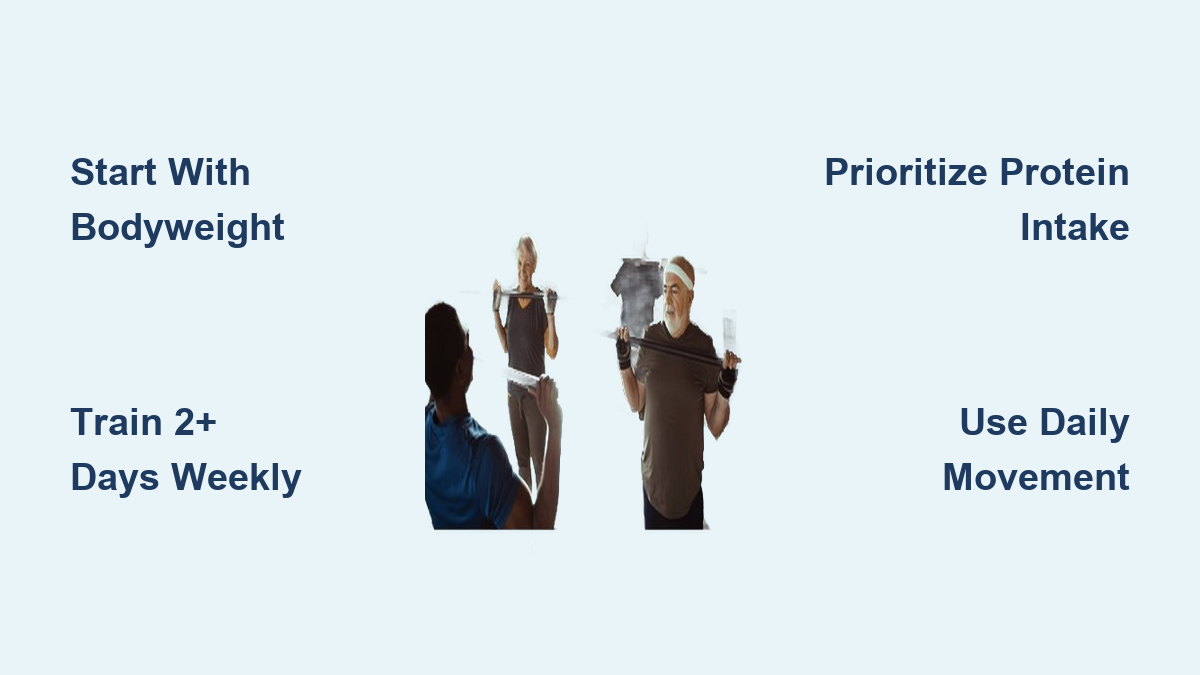
The Centers for Disease Control and Prevention recommends that adults aged 65 and older perform muscle-strengthening activities on 2 or more days per week. Each session should target all major muscle groups including legs, back, chest, arms, shoulders, and core. This minimal standard provides substantial benefits, though more frequent training yields greater results.
Strength training counts include lifting weights, using resistance bands, or performing bodyweight exercises like chair squats and wall push-ups. Even functional activities like stair climbing and gardening qualify. The key is working muscles to the point of fatigue. Pair this with 150 minutes of moderate aerobic activity weekly and balance exercises to create a complete fitness routine.
How to Begin Strength Training Safely
Starting strength training requires a thoughtful progression to prevent injury. Begin with bodyweight exercises only, focusing on proper form and controlled movements. Aim for 8 to 12 repetitions per set. Once you can complete three sets of 12 with good form, add resistance using bands, dumbbells, or household items like water bottles or soup cans.
Choose resistance that causes muscle fatigue by rep 8 to 12 while still allowing perfect form. Start with one set per exercise and progress to 2 to 3 sets as strength improves. Rest 30 to 60 seconds between sets. Quality always matters more than quantity. A single well-performed set delivers more benefit than multiple sloppy ones.
Best Lower Body Exercises for Seniors
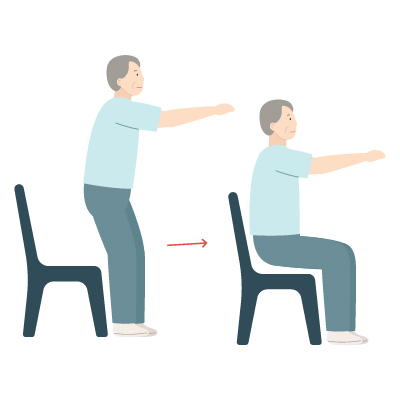
Lower body strength supports mobility, balance, and independence in daily activities.
Chair Squats
Chair squats target quads, glutes, and hips. Stand with feet shoulder-width apart, arms extended forward. Slowly lower onto a sturdy chair, keeping weight on your heels. Rise back up, squeezing your glutes at the top. Perform 3 sets of 10 repetitions.
Heel Raises
Heel raises build calf and ankle strength for better walking stability. Stand holding a chair for balance. Rise onto the balls of your feet over 4 seconds. Lower slowly over 4 seconds. Complete 3 sets of 10 repetitions.
Diagonal Step-Back
This exercise targets glutes, hamstrings, and quads. Step one foot diagonally backward into a controlled lunge. Lower slowly, then return to start. Alternate sides for 12 repetitions per side.
Knee Extensions
Knee extensions strengthen quadriceps for stair climbing and standing. Sit in a sturdy chair. Extend one leg fully, hold briefly, then lower with control. Add ankle weights for increased resistance. Perform 3 sets of 10 per leg.
Best Upper Body Exercises for Seniors
Upper body strength aids in lifting, reaching, and performing self-care tasks.
Biceps Curls
Biceps curls build arm strength for carrying groceries and opening containers. Hold dumbbells with palms facing forward. Curl weights toward shoulders, keeping elbows close to your sides. Lower slowly. Complete 3 sets of 10 repetitions.
Wall Push-Ups
Wall push-ups target chest, shoulders, and triceps with low joint impact. Stand arm’s length from a wall. Place hands slightly wider than shoulder-width. Bend elbows to bring chest toward wall, then push back. Perform 2 sets of 10.
Shoulder Press
Shoulder press builds overhead strength for reaching and lifting. Sit or stand with dumbbells at shoulder height. Press arms overhead while keeping your back straight. Lower slowly. Complete 3 sets of 10 repetitions.
Core and Balance Exercises for Stability
Core strength enhances posture, balance, and functional movement throughout daily life.
Side-to-Side Core Press
This exercise targets abs and obliques. Hold one weight with both hands. Press from one side to center, engaging your core as if bracing for a light punch. Move slowly and with control. Complete 12 repetitions.
Hammer Curl with Balance
This dual-task exercise challenges biceps, core, and coordination. Curl one arm while extending the opposite leg. Return to start and switch sides. Perform 12 repetitions per side.
Daily “Strength Snacks” to Build Muscle
You don’t need formal workouts to build strength. Integrate movement throughout your day.
Take the Stairs
Climbing stairs activates quads, glutes, calves, and core. Research shows older adults who climbed 12 stairs four times twice weekly gained as much lower-body power in 12 weeks as those using weight machines. Use the railing for safety and push through your heels.
Stand Up Frequently
Avoid sitting for more than 30 to 60 minutes at a time. Standing activates key muscles and improves circulation. Set a timer to stand, stretch, or march in place throughout the day.
Garden and Clean
Activities like raking, digging, vacuuming, and carrying laundry involve functional strength movements. These real-life actions build muscle better than isolated exercises alone.
Rise from the Floor
Practice sitting on the floor and standing back up with support if needed. This movement mimics squats and lunges, improving functional strength and balance simultaneously.
Nutrition Tips for Muscle Growth

Proper nutrition provides the building blocks your muscles need to grow and repair.
Eat Enough Calories
Undereating accelerates muscle loss. As appetite declines with age, it’s easy to fall short of daily needs. Women should aim for 1,600 to 2,200 calories daily. Men need 2,000 to 2,600 calories. Add nutrient-dense snacks like yogurt, nuts, or peanut butter on whole-grain toast to meet these targets.
Prioritize Protein
Protein repairs and builds muscle. Seniors need more protein than younger adults. Aim for 0.45 to 0.59 grams of protein per pound of body weight daily. A 150-pound senior needs 68 to 89 grams daily. Best sources include eggs, fish, poultry, beans, lentils, and tofu. Limit red and processed meats due to health risks.
Essential Supplements for Seniors
Certain supplements support muscle building when combined with strength training.
Creatine
Creatine increases strength and muscle mass in older adults. Take 3 to 5 grams daily. It’s safe for most people, but consult your doctor if you have kidney issues.
Omega-3s
Omega-3s reduce inflammation and may boost muscle protein synthesis. Get them from fatty fish like salmon or from fish oil supplements.
Vitamin C
Vitamin C supports collagen production and muscle repair. Get it from citrus fruits, bell peppers, or broccoli.
Recovery and Rest for Muscle Building
Muscle growth happens during rest, not during workouts.
Sleep 7 to 9 Hours Nightly
Muscle repair occurs during sleep. Poor sleep disrupts growth hormone and testosterone, both vital for muscle maintenance. A 2023 BMC Public Health study linked poor sleep to faster muscle loss in seniors.
Allow 48 Hours Between Sessions
Don’t work the same muscle group on consecutive days. For example, train legs and core on Monday, then upper body on Thursday. This rest period allows muscles to recover and grow.
Stay Hydrated
Dehydration reduces strength and endurance. Sip water before, during, and after exercise.
Safety Tips for Senior Exercise
Safe exercise prevents injury and ensures long-term success.
Consult Your Doctor First
Get medical clearance before starting a new routine if you have heart disease, diabetes, osteoporosis, or joint issues.
Use Proper Form
Maintain shoulders over hips and knees over ankles. Keep your back straight, not rounded. Avoid locking joints or making jerking movements.
Breathe Correctly
Exhale during effort (standing up, lifting). Inhale when returning to start. Proper breathing prevents blood pressure spikes and supports core stability.
Stop If You Feel Pain
Discomfort is normal during challenging exercise. Sharp or joint pain is not. Stop immediately if you feel pain. Movement should be challenging but safe.
Equipment Options for Home Workouts
You don’t need expensive gym equipment to build strength.
Start with What You Have
Use water bottles filled with water or sand, resistance bands (light to medium tension), or household items like soup cans and laundry jugs. A sturdy chair supports balance and seated exercises.
Adapt to Your Ability
Reduce range of motion if needed. Use walls or counters for balance. Move slower. Control beats speed every time.
Tracking Progress and Staying Consistent
Consistent effort over time produces measurable results.
Look for These Signs of Progress
You might lift heavier weights, complete more reps or sets, or notice easier movement in daily life. Getting up from a chair or climbing stairs becomes effortless. These functional improvements matter more than scale weight.
Make It a Habit
Schedule strength sessions like appointments. Pair them with daily routines like morning coffee or your favorite television show. Most seniors see noticeable improvements in 4 to 8 weeks with regular effort.
Frequently Asked Questions About Senior Muscle Strength
How much protein do seniors need to build muscle?
Seniors need 0.45 to 0.59 grams of protein per pound of body weight daily. A 150-pound person needs 68 to 89 grams. Spread protein intake across meals for optimal absorption.
Can seniors build muscle at any age?
Yes. Research shows seniors can build muscle well into their 80s and 90s through resistance training. The key is starting appropriately and progressing gradually.
How often should seniors do strength training?
The CDC recommends at least 2 days per week. Many seniors benefit from 3 to 4 sessions weekly, training different muscle groups each session.
What is the best exercise for seniors to start with?
Chair squats and wall push-ups are excellent starting points. They use bodyweight, require no equipment, and teach proper form. Add resistance once you can perform 3 sets of 12 easily.
Does walking build muscle?
Walking maintains muscle but doesn’t build significant strength. It provides cardiovascular benefits and supports overall mobility. Combine walking with targeted resistance training for best results.
How long does it take to see results?
Most seniors notice improvements in 4 to 8 weeks with consistent training. Functional changes like easier stair climbing often appear first, followed by increased strength.
Key Takeaways for Building Senior Muscle Strength

Improving muscle strength for seniors requires a combined approach of regular resistance training, proper nutrition, and daily movement. Strength train at least 2 days per week, targeting all major muscle groups with 1 to 3 sets of 8 to 12 repetitions. Increase resistance when 3 sets of 12 become easy.
Nutrition plays a critical role. Eat enough calories and prioritize protein at 0.45 to 0.59 grams per pound of body weight. Supplement with creatine if approved by your doctor. Sleep 7 to 9 hours nightly and stay hydrated.
Integrate “strength snacks” throughout your day by taking stairs, standing frequently, gardening, and practicing floor-to-standing movements. These small efforts add significant muscle-building stimulus over time.
Your strongest years don’t have to be behind you. Start small, stay consistent, and focus on progress rather than perfection. Every step you take toward building strength is a step toward greater independence and quality of life.