
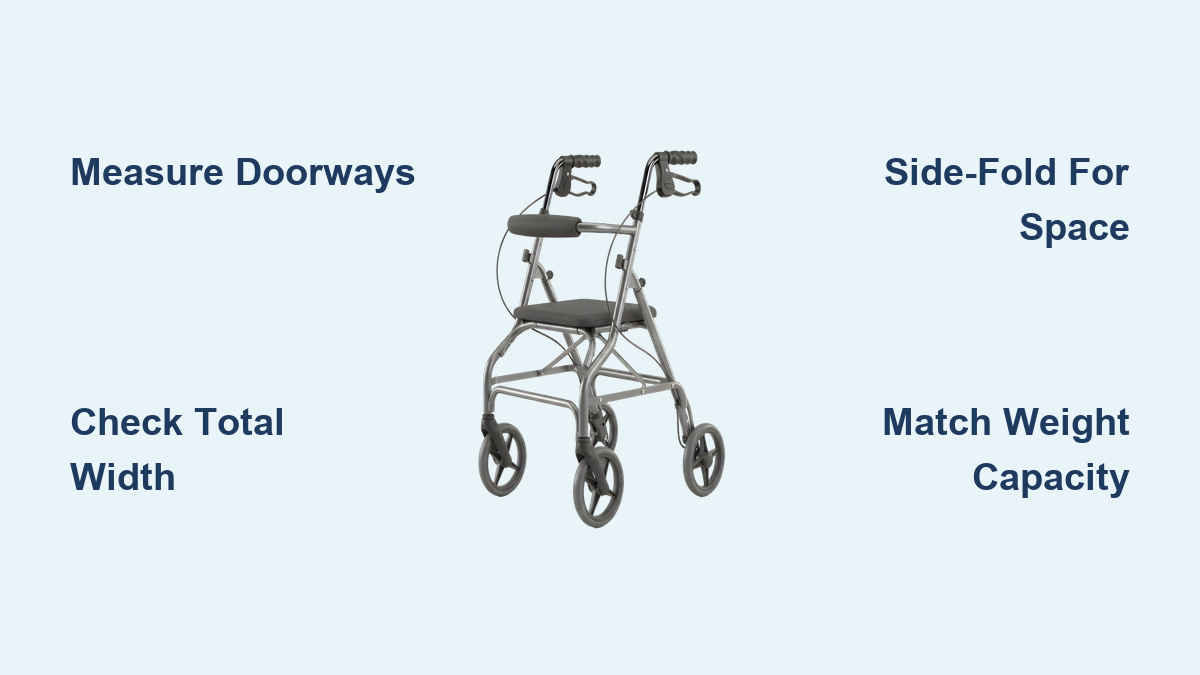
If you’re shopping for a walker for an older adult, one of the most practical and often overlooked questions is: how wide are walkers for seniors? It’s not just about mobility support; it’s about whether the walker can actually fit through a bathroom door, hallway, or apartment entrance. A walker that’s too wide can become a hazard instead of a help. On the other hand, one that’s too narrow may lack stability.
The typical width of adult walkers ranges from 24 to 26 inches, but this number varies significantly depending on the type, weight capacity, and design. Bariatric models can reach up to 29 to 30 inches wide, while compact upright walkers go as narrow as 22.5 inches. Even more critical: when folded, some models compress down to just 8 to 11 inches, making them ideal for tight spaces. In this guide, you’ll learn exactly how wide different types of walkers are, how to measure for fit in your home, and which models offer the best balance of stability and space-saving design.
Measure Doorways First
Before selecting any walker, measure your home’s narrowest passages, especially bathroom and bedroom doors. This simple step prevents costly returns and frustration.
Know Your Doorway Sizes
Standard interior doors range from 24 to 32 inches wide. Older homes often have 24-inch bathroom doors. Exterior doors are usually 28 to 36 inches wide. ADA-compliant spaces require at least 32 inches of clearance.
Pro Tip: Choose a walker at least 2 to 3 inches narrower than your smallest doorway. A 26-inch walker won’t reliably fit through a 26-inch door due to wheel alignment, carpet resistance, or user angle.
What Width to Measure on the Walker?
Don’t just look at handle width. Check the full footprint instead. Bottom width measures the distance between outer rear wheels, which is often the widest point. Handle width measures the distance between handgrips at user height. Armrest width, if present, can extend beyond handles. Folded width matters for side-collapsible models because it determines passability.
Warning: Rear wheels are usually wider than front ones. A walker may seem narrow at the top but still get stuck at the base.
Standard Walkers: 24–26 Inches Wide
Most seniors start with a standard walker, ideal for indoor use and average builds.
Who Should Use a Standard Walker?
Standard walkers work best for users with a weight capacity up to 300 pounds, those with average frame size, and homes with doorways 28 inches or wider. These walkers provide balanced support without excessive bulk. While they’re not built for outdoor terrain, they’re lightweight at 7 to 9 pounds and easy to fold for storage.
Common Models and Widths
The Nova Standard Folding Walker measures 24.5 inches wide. The Drive Medical Deluxe Walker measures 25 inches between handles and approximately 26 inches overall. The Medline Basic Walker has a 24-inch base width.
Expert Note: Even within standard sizes, small differences matter. A 24-inch versus 26-inch model could be the difference between smooth passage and daily struggle.
Heavy-Duty Walkers: 26–28 Inches Wide
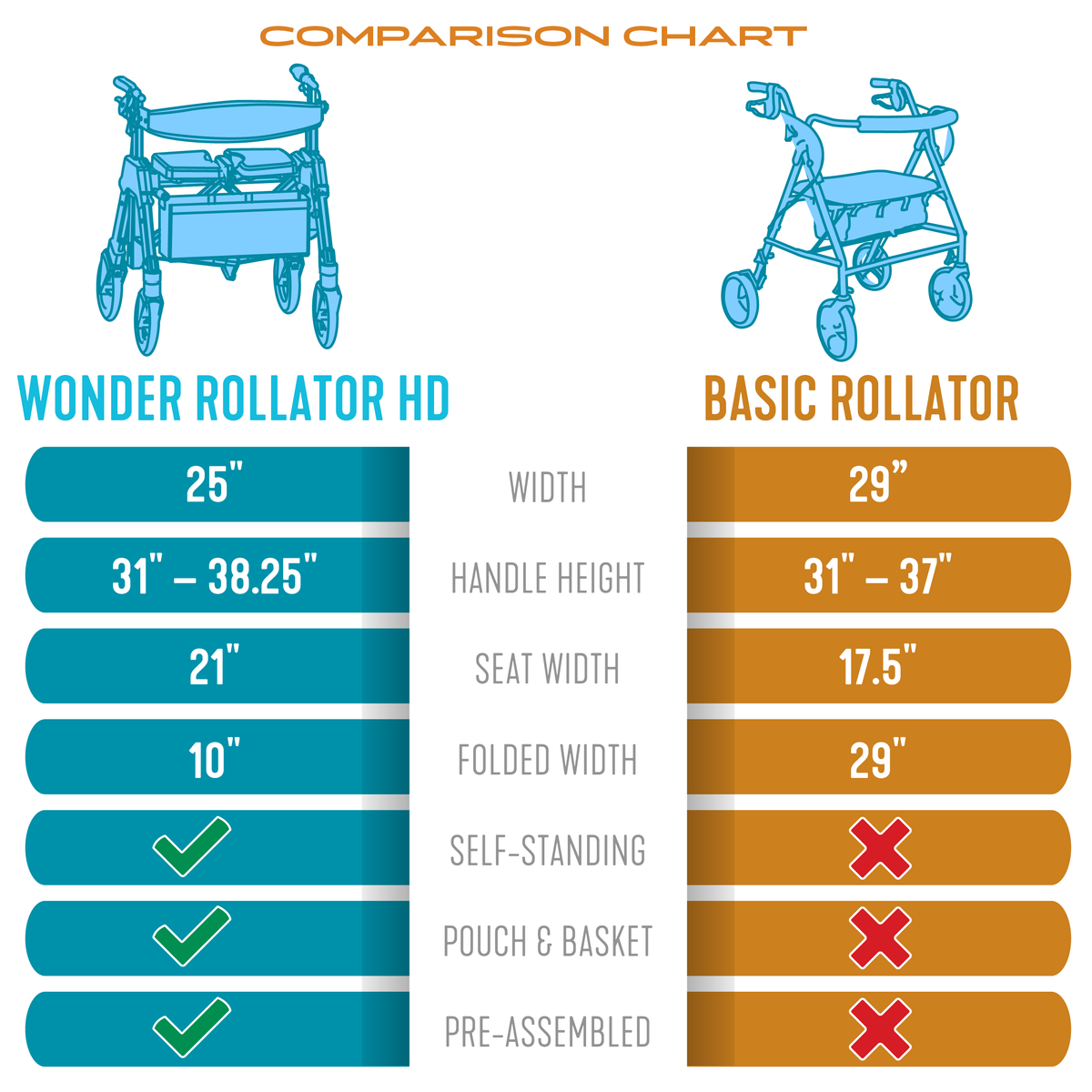
For users needing extra strength and support, heavy-duty walkers offer reinforced frames and wider stances.
Who Needs a Heavy-Duty Walker?
Heavy-duty walkers suit users with a weight capacity of 300 to 500 pounds, taller or broader-framed individuals, and those requiring greater stability. These models use thicker tubing and often include dual front wheels for smoother movement. However, their increased width means they’re less suited to older homes.
Width Considerations
Handle spread typically measures 20.5 to 22 inches. Overall width reaches up to 28 inches due to wheel placement. Most heavy-duty walkers do not fold side-to-side, only front-to-back.
Top Picks
The Nova Heavy Duty Folding Walker 4095 measures 22 inches between handles and approximately 27 inches overall. The Medline Extra-Wide Two-Button Wheeled Walker has a 20.5-inch handle width and 28-inch base. The Drive Bariatric Two-Button Walker 10220-1WW offers 20.5-inch handle width and 28 inches total.
Reality Check: Many heavy-duty walkers advertise 20.5-inch width but don’t clarify that this is between handles, not overall. Always confirm total footprint.
Bariatric Walkers: Up to 29–30 Inches Wide
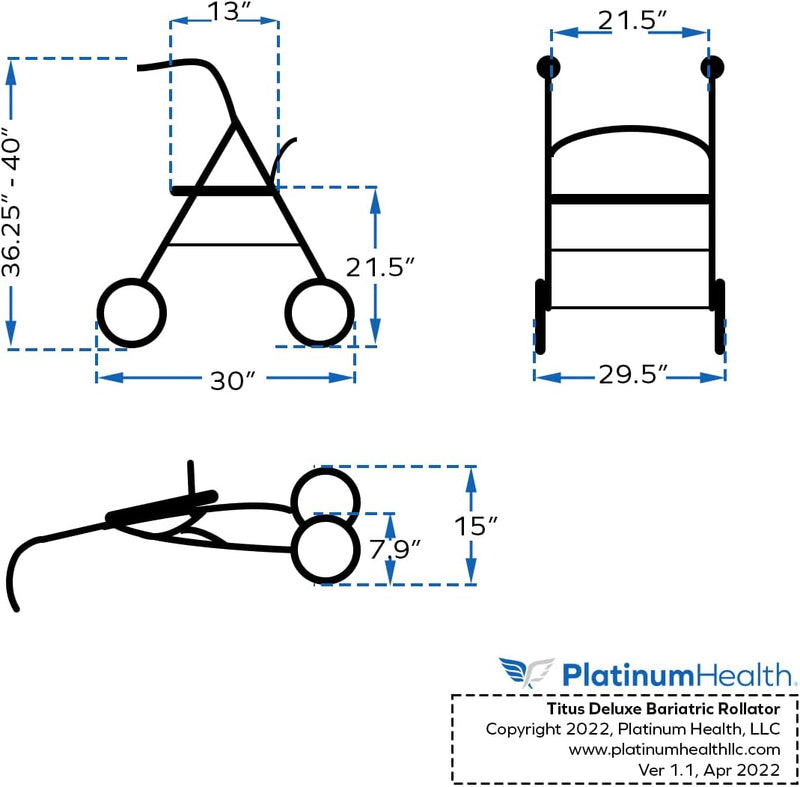
Built for maximum support, bariatric walkers prioritize safety over compactness.
Who Should Use a Bariatric Walker?
Bariatric walkers are designed for users with a weight capacity of 500 to 700 pounds, users with wide hips or broad shoulders, and those needing maximum lateral stability. These walkers feature steel or reinforced aluminum frames and wide bases to prevent tipping. But their size can be a drawback.
Typical Widths
Handle width typically measures 19 to 24 inches. Overall width reaches 28 to 30 inches. Bariatric walkers often have no side-folding capability due to rigid crossbars.
Key Models
The Tuffcare W500BW Bariatric Walker measures 24 inches between handles and approximately 30 inches overall, with the highest capacity at 700 pounds. The Elenker Heavy Duty Upright Walker is 29 inches wide, one of the broadest available. The Probasics Bariatric Folding Walker WKABW2B has 19 to 21 inches handle width and approximately 28 inches base.
Takeaway: Bariatric walkers are not recommended for homes with doors under 30 inches unless side-folding is available.
Rollators: Width Varies by Wheel Size
Four-wheeled rollators combine mobility with seating, but their width depends heavily on wheel size and frame design.
Standard Rollators: 24–26 Inches
Standard rollators offer weight capacity up to 350 pounds, wheel size of 6 to 8 inches, and work well for indoor and outdoor mix. Common models like the Lumex RJ4318 measure approximately 25.5 inches wide, fitting most standard homes.
Bariatric Rollators: 28–30 Inches
Bariatric rollators provide weight capacity of 400 to 500 pounds, larger 8-inch wheels for improved traction, and a seat integrated into a wider frame.
Popular Bariatric Rollators
The Protekt RLBAST-BLK offers 22-inch handle width and approximately 28 inches overall. The Probasics RLAB8 has 23.5-inch handle width and approximately 28.5 inches overall. The Ascent XR Euro Rollator measures 24 inches between handles and approximately 30 inches overall. The Nova STAR HD 4289 offers 22-inch handle width and approximately 28 inches overall.
Key Insight: Larger wheels increase overall width. An 8-inch wheel adds nearly 3 inches per side compared to a 5-inch glide.
Narrowest Walkers: Under 24 Inches
For seniors living in older homes or tight apartments, narrow walkers are essential.
Best Compact Options
The OasisSpace Original Upright Walker measures 22.5 inches wide, one of the narrowest on the market. The Zler Heavy Duty Walker opens to 28.2 inches but folds side-to-side to under 11 inches. Select Elenker models offer lateral folding for storage and passage.
These models prove you don’t have to sacrifice strength for size. Many support up to 500 pounds while remaining slim.
Pro Tip: Look for side-folding capability if space is limited. Front-to-back folding doesn’t reduce width. Only side-collapse does.
Widest Walkers: 29–30 Inches
Maximum width means maximum stability, but also maximum space requirements.
When to Choose a Wide Walker
Choose a wide walker when the user needs high weight support of 500 pounds or more, when used primarily in accessible modern homes, and for frequent outdoor use on uneven terrain. Wider bases lower the center of gravity, reducing fall risk. However, these models are not suitable for 24-inch doors or narrow hallways.
Widest Models Available
The Ascent XR Bariatric Euro Rollator measures approximately 30 inches overall. The Tuffcare W500BW measures approximately 30 inches total width with 700-pound capacity. The Elenker Heavy Duty measures 29 inches wide.
Warning: These walkers may not fit in elevators, cars, or small bathrooms. Always verify dimensions before purchase.
Folding vs. Fixed Width: What’s the Difference?

Not all walkers reduce width when folded. Understanding the types helps avoid surprises.
Front-to-Back Folding
This is the most common type. It reduces length, not width. It does not help with narrow doors. This folding style is used in standard and heavy-duty models.
Side-to-Side Folding (Width Adjustment)
This is rare in bariatric models. It compresses width to 8 to 11 inches, allowing passage through tight doors. This feature is found in the Zler Heavy Duty, OasisSpace Original, and some Elenker models.
Best for Apartments: Choose side-folding if you have doors under 28 inches.
Real-World Fit: What Users Say
Customer feedback reveals how specs don’t always match reality.
Common Complaints
Users report that their walker doesn’t fit through the bathroom door, even though it’s listed as 26 inches. Others say the wheels catch on the jamb when turning. Some report that while stable, they can’t get the walker into the bedroom.
Positive Feedback
Users say the walker is just right for standard doorways, referring to a 25.5-inch Lumex model. Others appreciate that it folds sideways and fits in the closet and car, referring to the Zler. Some say it’s wide enough to feel safe but narrow enough for their condo, referring to a 26-inch rollator.
Lesson: Total footprint and wheel position matter more than advertised handle width.
Choosing by Home Type
Your living environment should dictate walker width.
Modern, ADA-Compliant Homes
Maximum recommended width is 29 inches. These homes can accommodate bariatric rollators, heavy-duty walkers, and all standard models. With 32-inch-plus doors, nearly any walker will fit.
Older Homes with 28-Inch Doors
Maximum recommended width is 26 inches. Recommended models include the Probasics RLAB8, Lumex RJ4318, and Medline MDS86410XWW. Leave room for maneuvering. Don’t push the limit.
Homes with 24-Inch to 26-Inch Bathroom Doors
Maximum recommended width is 24 inches. The best option is the OasisSpace Original at 22.5 inches. An alternative is side-folding models like Zler. Even a 25-inch walker may struggle in a 24-inch door.
Need to Store in Car or Closet?
Look for side-folding capability. Ideal folded width is under 11 inches. Top picks include the Zler Heavy Duty, OasisSpace Original, and select Elenker models.
Space-Saving Hack: Measure your car trunk width. Many rollators won’t fit diagonally if over 28 inches.
Weight Capacity vs. Width: The Trade-Off
There’s a direct relationship between how much weight a walker supports and how wide it is.
Key Trends
Walkers under 300 pounds capacity are typically 24 to 26 inches wide. Walkers at 300 to 500 pounds capacity are usually 26 to 28 inches wide. Walkers over 500 pounds capacity are almost always 28 inches or wider. Seven-hundred-pound models reach up to 30 inches wide and don’t fold.
Reality: You can’t have maximum weight support and minimum width in the same walker. Choose based on priority, either space or strength.
Final Tips for Choosing the Right Width
Measure first and buy later. Use a tape measure on all key doors, including bathroom, bedroom, and front entrance. Include base width, not just handles.
Prioritize side-folding for tight spaces. Front-fold doesn’t help with width. Side-collapse can cut width by 75 percent.
Match handle width to body size. Arms should rest naturally, not stretched or squeezed. Wider users need 22 inches or more between handles.
Consider total footprint. Wheel size, frame spread, and armrests all add bulk. Test maneuverability in tight turns.
Check return policy. Buy from retailers with free returns in case it doesn’t fit.
Frequently Asked Questions About Walker Width for Seniors
What is the average width of a standard walker for seniors?
Standard walkers for seniors typically measure 24 to 26 inches wide when fully opened. This width accommodates most standard interior doors, which usually measure 28 to 32 inches. These models work best for users weighing up to 300 pounds with average frame size.
How do I know if a walker will fit through my bathroom door?
Measure your bathroom door width first. Choose a walker at least 2 to 3 inches narrower than the door. Remember to account for the walker’s total footprint, not just handle width. Rear wheels are often wider than the front, so measure the base width, not just the top.
Are narrow walkers less stable than wider ones?
Narrow walkers offer slightly less lateral stability than wider models, but they still provide adequate support for users within their weight capacity. The stability trade-off is generally acceptable for seniors in tight spaces. For higher weight needs, look for narrow models with reinforced frames rather than choosing a wider standard model.
What is the narrowest walker available for seniors?
The OasisSpace Original Upright Walker measures 22.5 inches wide, making it one of the narrowest available. The Zler Heavy Duty Walker folds side-to-side to under 11 inches for passage through tight doors while still supporting up to 500 pounds when open.
Do bariatric walkers fold down small enough for narrow doors?
Most bariatric walkers do not offer side-folding capability. They only fold front-to-back, which reduces length but not width. For bariatric users in homes with narrow doors, look for models like the Elenker Heavy Duty that offer lateral folding, or consider a standard walker with higher weight capacity.
Does wheel size affect walker width?
Yes, wheel size significantly affects overall walker width. Larger wheels, typically 8 inches, add nearly 3 inches per side compared to 5-inch wheels. This means an 8-inch wheel rollator can be 6 inches wider overall than a comparable model with smaller wheels.
Key Takeaways for Choosing Walker Width
Walker width for seniors ranges from as narrow as 22.5 inches to as wide as 29 to 30 inches, depending on design, weight capacity, and intended use. The right walker balances safety, stability, and space. Most seniors do well with 24 to 26-inch models, but those with higher weight needs or larger frames may require up to 29 to 30 inches. For older homes, narrow 22.5-inch or side-folding models are essential. Always measure your doorways before purchasing, and choose a walker at least 2 to 3 inches narrower than your smallest doorway. Consider total footprint, including wheels and armrests, not just handle width. Prioritize side-folding capability if storage or passage through tight spaces is a concern. Match the walker’s weight capacity to the user’s needs without sacrificing home compatibility.