
You’ve been at your company for five years. A new position opens up, and you expect to be first in line. Instead, a coworker hired six months ago gets the promotion. Or maybe you’re told to give up your preferred shift to someone with less experience. What gives?
The answer lies in how seniority works in your specific workplace. Seniority determines who gets priority for promotions, vacation picks, shift schedules, and layoff protection—but here’s the catch: it only matters if it’s written into a contract or policy. Without formal recognition, tenure alone doesn’t grant you any special rights.
This guide breaks down exactly how seniority functions across different industries, from unionized workplaces to tech companies. You’ll learn how seniority is calculated, where it applies legally, and what you can do to protect your position.
Seniority vs. Years of Service: Understanding the Difference
These terms get used interchangeably, but they operate in fundamentally different ways.
Seniority determines your relative rank compared to coworkers. It answers questions like: Who gets laid off first? Who picks vacation dates? Who gets promoted when qualifications are equal? This is a comparative system—your standing depends on where others fall.
Years of service, by contrast, triggers benefits eligibility. It determines how much PTO you earn, whether you qualify for severance, and your pension accrual rate. This applies uniformly to everyone in the same tenure bracket.
For example, two employees might both have four years of service and receive identical PTO allocations. But if one has higher seniority, they get first choice of vacation dates while the other gets the leftovers.
| Feature | Seniority | Years of Service |
|---|---|---|
| Purpose | Determines priority among employees | Triggers benefits eligibility |
| Use Case | Who stays in a layoff? Who picks vacation first? | How much PTO? Eligible for severance? |
| Basis | Relative ranking (you vs. others) | Absolute time (your total tenure) |
Legal Foundations: Where Seniority Has Real Power
Union Contracts Create Enforceable Rights
In unionized workplaces, seniority becomes a legally protected right through collective bargaining agreements (CBAs). These contracts specify exactly how seniority affects promotions, layoffs, transfers, shift bidding, and recall rights.
The critical point: seniority provisions must be explicitly written into the CBA. Without that specific clause, seniority doesn’t exist as a legal right—even in a union shop.
A federal government employee might be unionized but lack seniority-based layoff protection if the CBA simply doesn’t include it. Unionization does not automatically grant seniority rights.
Non-Union Workplaces: At-Will Employment Rules
In most private-sector jobs, especially in the United States, employment is at-will. This means employers can change schedules anytime, promotions aren’t owed based on tenure, and layoffs can target long-term employees first.
Unless seniority is written into a policy, handbook, or individual contract, it carries no legal weight.
A revealing real-world case: A San Francisco worker with twelve years at a company was denied a preferred morning shift over a coworker hired two months earlier. She had absolutely no recourse—no policy granted her seniority rights, and at-will employment allowed the employer to make that choice.
The bottom line: if it’s not documented, it doesn’t count.
How Seniority Gets Calculated: The Rules That Matter
Start Date and Continuous Service
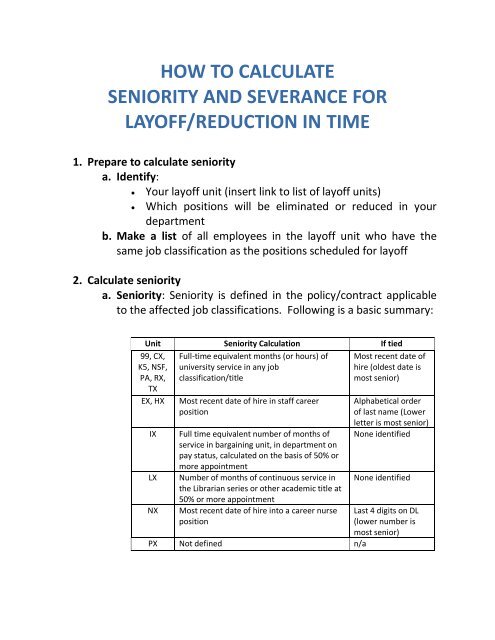
Seniority typically begins on your first day in a covered position—not your original hire date if you transferred between departments or roles.
Several factors influence this calculation:
- Probation period: Many systems exclude the first 30 to 90 days from seniority calculations
- Breaks in service: Leaves of absence, layoffs, or employment gaps may freeze or reset seniority entirely
- Continuous service: Uninterrupted employment is usually required to maintain seniority accrual
Types of Seniority Structures
Different industries and organizations use different approaches:
| Type | How It Works | Common In |
|---|---|---|
| Departmental | Only counts time in one department | Manufacturing, steel plants |
| Company-Wide | Total time with employer across all roles | Used to correct past discrimination |
| Job Class | Tracked per job title or classification | Skilled trades, craft unions |
| Plant-Wide | Applies across all departments in a single facility | Auto factories, refineries |
After a merger, airline pilots fight intensely over seniority integration—because it determines who flies the premium long-haul routes and who stays stuck on regional jets for decades.
Common Exceptions to the Rule
Even strong seniority systems allow overrides in certain situations:
- Ability to perform: The employee must be able to learn the job within a reasonable time
- Performance issues: Discipline or poor reviews can block advancement despite seniority
- Qualifications: Required certifications or training may take priority over tenure
A typical contract clause might read: “Seniority governs promotions, provided the employee can perform the job satisfactorily within a reasonable time.” This small phrase introduces subjectivity and potential disputes.
Key Applications of Seniority in the Workplace
Layoffs: The Last In, First Out Rule
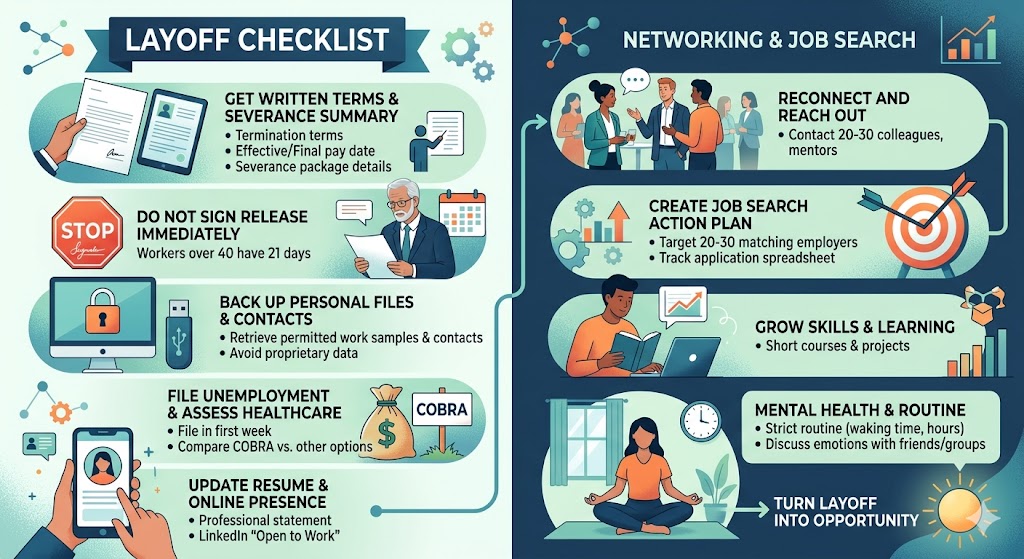
The most common seniority application is LIFO—Last In, First Out. The least senior employee gets laid off first, while the most senior workers receive protection. When positions open again, recalls happen in reverse order with the most senior returning first.
This system is used widely in education, where teachers with more years are shielded during budget cuts. It protects institutional knowledge and rewards loyalty.
The trade-off: high-performing employees with shorter tenure can be let go while less effective but longer-serving workers keep their jobs.
Promotions and Job Bidding
When a vacancy opens, positions are often posted internally. Multiple employees may apply, and the rules vary:
- Equal qualifications: When everyone meets the requirements equally, the most senior candidate wins
- Most senior qualified: Some contracts require hiring the most senior qualified candidate, even if less senior applicants appear more capable
This approach ensures fairness but creates controversy in industries like tech and healthcare, where skill and recent training may outweigh time on the job.
Vacation and Shift Selection
Employees typically select shifts, holidays off, and work schedules in strict seniority order. The highest-ranking employee chooses first, working down to the most junior.
The result: new hires consistently get weekends, holidays, and undesirable rotations while senior workers claim the best schedules.
Bumping Rights and Transfers
Senior employees can sometimes bump junior workers in similar roles when their own positions are eliminated. This creates a domino effect where a senior worker displaced from one job takes a junior worker’s position, who must then find another role or face layoff.
This becomes especially critical in airline mergers, where thousands of careers hinge on where pilots land on the combined seniority list.
Pay Progression: Step Increases
In seniority-based pay systems, employees move up a pay scale automatically with time. A typical progression might be $20 per hour, then $22, then $24—all based solely on tenure.
This contrasts sharply with merit-based pay, where raises depend entirely on performance reviews. Union advocates argue it prevents favoritism and ensures everyone reaches top pay with satisfactory performance.
Seniority in Non-Union Corporate Hierarchies
In most tech, finance, and service companies, “seniority” means level of responsibility, not tenure-based rights. It reflects demonstrated expertise, leadership ability, and business impact rather than just how long someone has been employed.
Corporate Seniority Levels
| Level | Titles | Key Traits |
|---|---|---|
| Entry-Level | Junior Developer, Analyst | Learning, supervised tasks |
| Mid-Level | Engineer, Manager | Independent work, project ownership |
| Senior-Level | Senior Engineer, Director | Mentoring, decision-making |
| Lead/Principal | Staff Engineer, CTO | Org-wide influence, innovation |
In companies like Google or Amazon, you don’t “age into” senior roles. You earn them through demonstrated impact. A 30-year-old staff engineer may outrank a 50-year-old mid-level coder—not by age, but by contribution and leadership.
Industry-Specific Seniority Systems
Aviation: Pilot Seniority Determines Careers
A pilot’s seniority number essentially determines their entire career trajectory. It controls which aircraft they fly, which routes they work, what their schedule looks like, and when they can upgrade to captain.
After mergers like United-Continental, pilots negotiate seniority integration fiercely—because it can add or erase decades from career progression. Without strong seniority, a pilot might fly cargo routes for years while others jet to international destinations.
Rail Transport: Engineers by Rank
Senior train engineers receive predictable schedules, preferred routes, and day shifts. Junior staff serve as backups, cover emergencies, and work overnight rotations.
Military: Command Based on Promotion Date
Among officers of the same rank, earlier promotion date means higher seniority. A captain promoted in 2018 outranks one promoted in 2020—even if the latter has more experience. This ensures clear chain of command in joint operations.
Education: Teacher Tenure and LIFO
Teachers with more years get first pick of classes and schools, receive protection in layoffs under LIFO, and gain transfer preferences. The controversy: critics argue it rewards time over teaching quality, while supporters say it ensures stability and preserves experienced educators.
Seniority in Tech: Impact Over Tenure
In software and engineering, seniority reflects professional maturity, not just years employed.
Tech Seniority Framework
| Level | Experience | Role |
|---|---|---|
| Junior | 0–2 years | Bug fixes, code reviews |
| Mid-Level | 2–6 years | Feature development |
| Senior | 6+ years | System design, mentoring |
| Lead | 7–10+ years | Cross-team coordination |
| Principal/Staff | 10+ years or mastery | Org strategy, innovation |
What Each Level Actually Delivers
| Level | Contribution |
|---|---|
| Junior | Learns fast, fixes bugs, supports team |
| Mid-Level | Owns features, mentors juniors |
| Senior | Designs solutions, sets standards |
| Lead | Coordinates teams, shapes roadmaps |
| Principal | Advises executives, drives long-term vision |
Promotions in tech require demonstrated leadership and impact, not just survival. You earn seniority through what you deliver.
Advantages and Disadvantages of Seniority Systems
Benefits Worth Considering
Seniority systems offer genuine advantages for workers and organizations:
- Job security for loyal employees: Long-term workers are last to go in layoffs, rewarding commitment and encouraging retention
- Predictability and fairness: Everyone knows the rules—who gets promoted, who picks vacation first, when they might be laid off. This reduces favoritism and bias
- Encourages workforce stability: Workers stay longer when they know tenure brings real benefits, building experienced teams
- Protects new hires after probation: Even workers who recently passed probation gain layoff order protection
Real Problems and Criticisms
These systems also carry significant drawbacks:
- Penalizes high-performing new hires: A brilliant junior employee can be passed over for promotion, assigned worst shifts, or laid off despite exceptional performance. This frustrates talented workers in fast-paced industries
- Rewards longevity over competence: Weak but long-tenured workers may get promoted, block better candidates, and slow innovation. “We’ve always done it this way” becomes cultural norm
- Limits managerial flexibility: Managers cannot always assign the best person for the job, even if they’re less senior. This creates problems in emergencies or specialized projects
- Can reinforce past discrimination: Historically, departmental seniority excluded Black workers from better jobs in steel and auto industries. Courts ruled in the 1970s that such systems violated Title VII, leading to reforms like company-wide seniority
The lesson: design matters. Poorly structured systems can entrench bias. Well-designed ones balance loyalty, skill, and equity.
How to Protect Your Seniority Rights
Step 1: Know the Rules
Start by understanding what actually applies to you:
- Check your employee handbook for seniority policies
- Review your union contract if you’re in a union shop
- Ask HR directly for the seniority policy in writing
If it’s not written down, it probably doesn’t exist as a legally enforceable right.
Step 2: Document Everything
Keep records of your hire date, performance reviews, emails about assignments, and any promotions or transfers. This proof matters if a dispute arises.
Step 3: Speak Up Early
If you’re denied a right you believe you have:
- Request clarification in writing
- Escalate to HR or your union steward
- Consult an employment attorney if needed
Don’t assume fairness will prevail—verify the policy and advocate for yourself.
Frequently Asked Questions About Seniority
Does seniority automatically protect me from layoffs?
No. Seniority only provides layoff protection if it’s written into a union contract, employee handbook, or other formal policy. In at-will employment states, employers can lay off anyone regardless of tenure.
Can my employer change seniority rules whenever they want?
In non-union workplaces, yes—unless those rules are documented in a contract or policy. In union shops, changes require negotiation through the collective bargaining process.
Does seniority apply to promotions in all companies?
Only where it’s formally recognized. Tech companies and startups typically value demonstrated impact over tenure. Traditional industries with union contracts usually enforce seniority-based promotions.
What’s the difference between seniority and tenure?
Tenure is your total time employed. Seniority is your rank relative to coworkers. You can have high tenure but low seniority if you’ve been promoted slowly, or high seniority with moderate tenure in a fast-growing company.
Can seniority be calculated differently for different departments?
Yes. Many organizations use departmental seniority, where time in a specific department counts rather than total company tenure. This is common in manufacturing and skilled trades.
Final Thoughts on How Seniority Works
Understanding seniority comes down to three key points. First, seniority isn’t automatic—time on the job doesn’t grant rights unless backed by contract or formal policy. Second, union contracts make seniority real and enforceable; without one, you have no guaranteed protections. Third, non-union employment means at-will rules apply, so employers can change schedules, deny promotions, or lay off long-tenured workers without reason.
The biggest takeaway: seniority is evolving. While traditional models reward time served, modern organizations increasingly value demonstrated impact. The future belongs to systems that blend tenure, competence, and contribution—creating career ladders that are fair, flexible, and motivating for everyone.
Whether you’re navigating a layoff, aiming for a promotion, or simply want to understand your rights, the most important action you can take is to know the specific rules that apply to your situation. Check your documents, understand your standing, and advocate for yourself accordingly.