Constipation in the elderly is not a normal part of aging. It affects up to 40% of older adults living at home and up to 80% of those in long-term care facilities. Left untreated, it can lead to fecal impaction, falls, and significantly reduced quality of life. The good news is that most cases can be resolved with a structured approach combining diet, hydration, movement, and targeted treatments. This guide delivers science-backed strategies to help you cure constipation in elderly adults, focusing on root causes, safe interventions, and sustainable relief.
You will learn how to identify what is really causing the issue, whether it is medications, dehydration, or underlying health conditions, and apply practical fixes that work. From dietary adjustments to laxative choices and knowing when to seek professional help, this is your complete roadmap to restoring regular, comfortable bowel movements.
Recognizing Constipation Signs in Older Adults
Constipation is not just about infrequent bowel movements. For older adults, the key signs include fewer than three bowel movements per week, hard lumpy stools that match Bristol Stool Types 1 or 2, and straining during defecation. You may also notice a feeling of incomplete evacuation, the need to use fingers to assist with bowel movements, and bloating or abdominal discomfort. Chronic constipation requires these symptoms to persist for at least three months within the past year.
Not all constipation is the same. Understanding the subtype guides effective treatment. Normal-transit constipation means normal frequency but hard stools and straining, which is common in elderly patients. Slow-transit constipation involves delayed colonic motility due to aging or nerve dysfunction, leading to infrequent stools and bloating. Defecation disorders occur when pelvic floor muscles fail to relax during bowel movements and are often missed without specialized testing. Identifying which type you are dealing with helps determine the best approach.
Checking for Warning Signs That Need Medical Attention
Before starting treatment, ensure constipation is not a sign of something more serious. Seek medical evaluation immediately if you notice unintentional weight loss, rectal bleeding or blood in stool, new-onset constipation after age 50, severe or worsening abdominal pain, fever, vomiting, or inability to pass gas. A family history of colorectal cancer and nighttime symptoms also warrant prompt medical attention. These may indicate structural issues like colorectal cancer, strictures, or bowel obstruction.
When red flags are present, your doctor may order specific tests. A colonoscopy or CT colonography checks for tumors or blockages. An abdominal X-ray assesses fecal loading. Blood tests can check TSH for hypothyroidism, CBC for anemia, ferritin for iron deficiency, and glucose for diabetes. A digital rectal exam can detect impaction, hemorrhoids, fissures, or rectal masses, even if the patient feels no urge to have a bowel movement.
Reviewing Medications That Cause Constipation
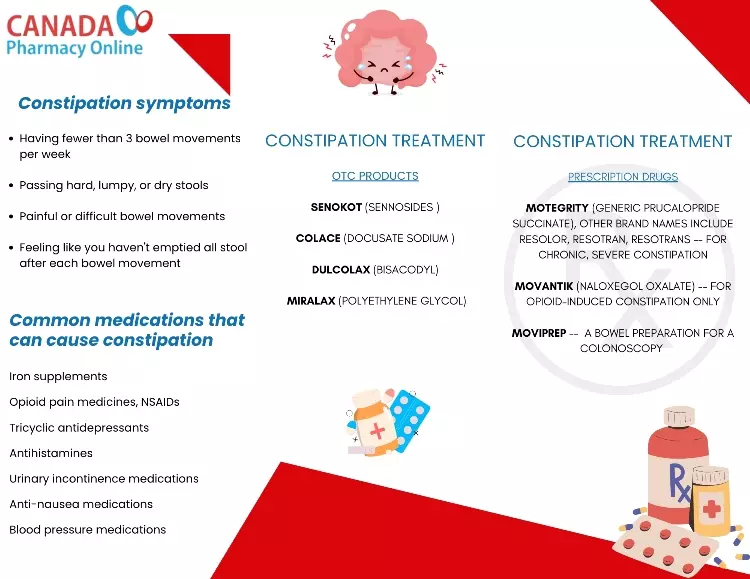
Over 50 commonly used medications worsen constipation. Opioids like morphine and oxycodone carry the highest risk, affecting 25 to 90% of users. Tricyclic antidepressants such as amitriptyline and nortriptyline also pose high risk due to anticholinergic effects. Antipsychotics, anticholinergics like oxybutynin, calcium channel blockers particularly verapamil, iron supplements, diuretics, and calcium supplements all commonly contribute to the problem.
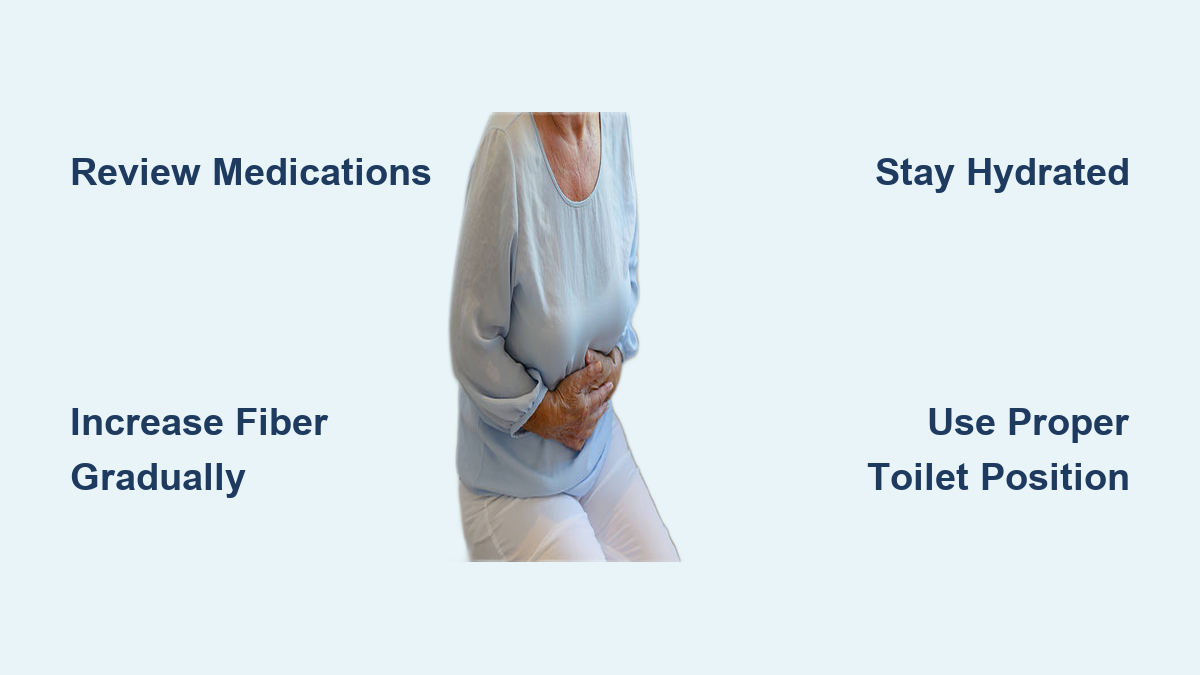
Review all medications with your doctor to identify constipating agents. Use tools like Beers Criteria to evaluate potentially inappropriate medications for older adults. Where possible, switch to alternatives with lower constipation risk. For example, switching verapamil to a dihydropyridine calcium channel blocker or replacing amitriptyline with a non-anticholinergic sleep aid can make a significant difference. Addressing medication-related causes is often the fastest way to achieve relief.
Optimizing Diet With Fiber That Actually Works

Fiber is a first-line treatment, but it must be introduced gradually to avoid gas and bloating. Aim for 20 to 35 grams of fiber daily, adding about 5 grams per week until you reach the target. Focus on soluble fiber, which forms a gel, softens stool, and has stronger evidence than insoluble types. The best sources include psyllium, inulin, oats, apples, and pears.
Prunes are particularly effective and work as well as psyllium but taste better. Eating 50 grams or about 12 prunes twice daily provides 6 grams of fiber plus 14.7 grams of sorbitol. Studies show prunes increase weekly bowel movements and improve consistency. This equals approximately 120 calories per day, which is safe for most people but should be monitored in diabetic patients.
Sample fiber-rich meals include oatmeal with sliced pears and ground flaxseed for breakfast, lentil soup with whole-grain bread and spinach salad for lunch, an apple with skin or a handful of prunes for a snack, and quinoa with grilled salmon and steamed broccoli for dinner. However, avoid high-fiber diets if the patient has slow-transit constipation or pelvic floor dysfunction, as these patients may do better with puréed or well-cooked fiber to reduce straining.
Hydration Strategies for Softer Stools
Dehydration is a major cause of hard stools. Older adults often drink less due to diminished thirst sensation. Target 1.5 to 2.5 liters of fluids daily, including water, herbal teas, warm lemon water, and fruit juices. Prune, apple, and pear juices contain natural sorbitol that helps pull water into the colon. Limit caffeine because it has a diuretic effect and avoid alcohol, which is dehydrating.
Never increase fiber without increasing fluids, as this can actually cause impaction. For every fiber supplement dose, take at least 250 milliliters or one cup of water. For patients concerned about frequent urination, spread intake throughout the day and reduce evening fluids to avoid nighttime trips to the bathroom.
Exercise Recommendations to Stimulate Bowel Movement
Even light movement enhances colonic motility. Walking after meals activates the gastrocolic reflex, signaling the colon to move. Effective activities include a 10-minute walk after breakfast and dinner, chair yoga or tai chi, and gentle stretching or seated leg lifts. Exercise alone may not cure constipation in nursing home residents, but combined with fluid and fiber, it helps significantly.
Try this post-meal routine. Wake up and do a light stretch or short walk. Drink a warm or caffeinated beverage, which stimulates the colon. Eat a high-fiber meal such as oatmeal with fruit. Sit on the toilet for 10 to 15 minutes, even without an urge. This routine leverages natural digestive rhythms to encourage regular bowel movements.
Perfecting Toilet Habits and Positioning
The gastrocolic reflex is strongest after breakfast. Encourage sitting on the toilet 15 to 30 minutes after eating, even without urgency. Allow privacy and adequate time, and avoid bedpans in long-term care settings whenever possible.
Sitting upright on a standard toilet creates a kink in the rectum. To straighten it and reduce straining, elevate feet on a small stool, sometimes called a Squatty Potty, and lean forward slightly with elbows on knees. This aligns the anorectal angle and makes evacuation much easier. For caregivers, help position patients properly and ensure safe transfer to the toilet.
Using Laxatives Safely and Effectively
Start with bulking agents such as psyllium, methylcellulose, or inulin. These absorb water, increase stool bulk, and stimulate peristalsis. Onset takes 12 to 72 hours. Start with 5 grams per day and increase to 20 to 30 grams as tolerated. Take with at least 250 milliliters of water to prevent blockage. Avoid bulking agents if the patient has dysphagia, dehydration, cognitive impairment, or fecal impaction.
If bulking agents fail, step up to polyethylene glycol known as PEG 3350 or MiraLax. The dose is 17 grams or one capful in water daily, with onset in 48 to 96 hours. PEG has strong evidence with a number needed to treat of 3 and is safe for long-term use even in heart or kidney disease. Lactulose is an alternative but may cause more gas and bloating.
Add stimulant laxatives such as bisacodyl or senna when needed. These stimulate colonic nerves to increase motility, with onset of 6 to 12 hours for oral forms and 15 to 60 minutes for suppositories. Use one to three times per week as needed. The myth that stimulant laxatives cause dependence is not supported by evidence with typical use. However, avoid daily long-term use, as it can cause melanosis coli, which is harmless pigmentation.
Docusate sodium or stool softeners have limited evidence of benefit. Their best use is short-term after surgery or heart attack to prevent straining. The Beers Criteria describes them as ineffective but not harmful, so they may serve as an adjunct.
Handling Impaction and Getting Immediate Relief

Glycerin suppositories work fast and safely, with onset in 15 to 60 minutes. They provide osmotic effect in the rectum and are useful for mild impaction or when immediate relief is needed. Warm the suppository slightly or use lubricant for easier insertion.
Never use phosphate enemas such as Fleet, which risk hyperphosphatemia, kidney injury, and arrhythmias, especially in elderly patients with renal or heart issues. Also avoid soapsuds enema, which can irritate the colon lining. Safer alternatives include mineral oil enema, which lubricates and softens impacted stool, or a warm water enema for a gentle mechanical flush.
For severe fecal impaction, manual disimpaction may be necessary. Apply 2% lidocaine gel to reduce discomfort, then use a lubricated gloved finger to break up the stool. Follow with a mineral oil or warm water enema and start maintenance laxatives afterward. This procedure may require sedation in agitated or cognitively impaired patients.
Managing Special Situations
Opioid-induced constipation affects 25 to 90% of patients on opioids and does not improve with tolerance. Start prophylactic laxatives when prescribing opioids. Combination therapy using PEG plus senna or bisacodyl often works best. If refractory, prescription options called PAMORAs such as methylnaltrexone or naloxegol can help without affecting pain relief, though they are expensive.
In patients with cognitive impairment or dementia, constipation may show as agitation, refusal to eat, delirium, or functional decline. Simplify the regimen to once-daily PEG, ensure caregiver support for hydration and toileting, and use bowel charts to track frequency and response.
For pelvic floor dysfunction, which is common but underdiagnosed, patients strain but cannot push effectively. Diagnosis requires anorectal manometry or balloon expulsion test. Treatment involves biofeedback therapy, which teaches proper muscle coordination. This requires cognitive ability and participation. Refer to gastroenterology if there is no improvement with standard care.
Monitoring Progress and Preventing Return
Set realistic goals aiming for soft formed stools, Bristol Types 3 to 4, at least three bowel movements per week, no straining or incomplete evacuation, and relief of bloating and discomfort. Reassess every one to two weeks and increase laxative dose gradually if needed. Space other medications by two hours from fiber supplements to avoid binding.
Prevent future episodes with daily habits including 20 to 35 grams of fiber, 1.5 to 2.5 liters of fluids, 10 or more minutes of movement daily, and scheduled toileting after meals. Regular medication reviews prevent recurrence, especially when new drugs are added.
When to See a Specialist
Refer to a gastroenterologist if there is no response after four to six weeks of stepwise treatment, suspected colonic inertia, confirmed pelvic floor dysfunction, need for biofeedback therapy, or concern for structural disease such as cancer. Advanced prescription options like prucalopride for women with chronic constipation or linaclotide may be appropriate in these cases.
Key Takeaways for Curing Constipation in Elderly
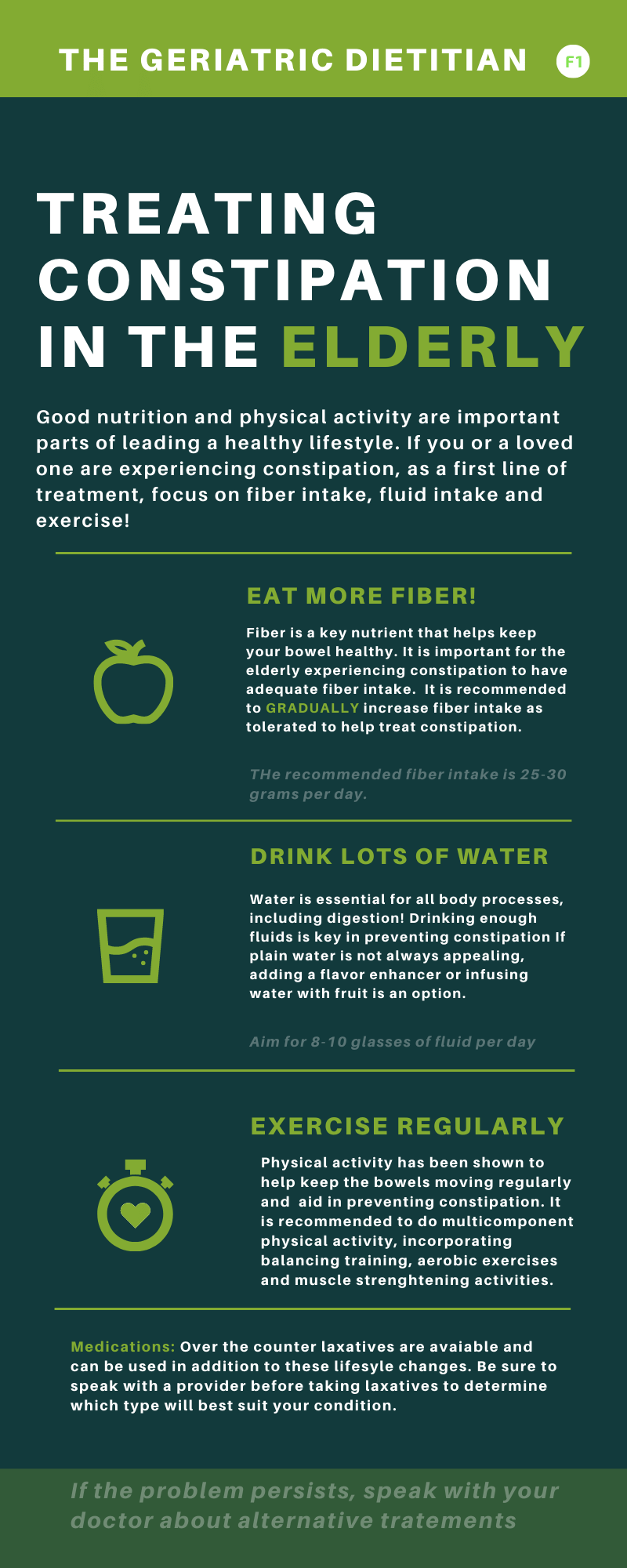
Constipation in older adults is treatable and not an inevitable part of aging. Start by reviewing medications with a doctor to identify constipating agents, then optimize diet with 20 to 35 grams of daily fiber introduced gradually, and ensure adequate hydration matching 1.5 to 2.5 liters per day. Combine these lifestyle changes with safe laxatives, starting with bulking agents and progressing to osmotic options like PEG, then stimulants as needed. Use proper toilet positioning with a footstool to reduce straining, and establish a routine that leverages the gastrocolic reflex after meals. With this methodical approach addressing medications, diet, hydration, movement, and bowel habits, nearly every older adult can achieve comfortable regular bowel movements and improved quality of life.
Frequently Asked Questions About Constipation in Elderly
What is the fastest way to relieve constipation in the elderly?
Glycerin suppositories provide the fastest relief, working within 15 to 60 minutes. For more severe cases, a warm water enema or mineral oil enema can help within 30 minutes. However, addressing the underlying cause with diet, hydration, and appropriate laxatives prevents recurrence.
How much fiber does an elderly person need daily?
Older adults should aim for 20 to 35 grams of fiber daily. Increase gradually by about 5 grams per week to avoid gas and bloating. Focus on soluble fiber sources like psyllium, oats, apples, and pears for the best results.
Are stimulant laxatives safe for long-term use in elderly patients?
Stimulant laxatives like senna and bisacodyl are generally safe when used occasionally, up to three times per week. Daily long-term use is not recommended as it may cause melanosis coli, a harmless pigmentation of the colon. They do not cause dependence in typical use.
When should I worry about constipation in an elderly person?
Seek medical attention if constipation is accompanied by unintentional weight loss, rectal bleeding, severe abdominal pain, fever, vomiting, new-onset constipation after age 50, or nighttime symptoms. These could indicate serious conditions like colorectal cancer or bowel obstruction.
Can dehydration cause constipation in older adults?
Yes, dehydration is a major cause of constipation in elderly patients. Older adults often drink less due to diminished thirst sensation. Aim for 1.5 to 2.5 liters of fluids daily, and always increase fluid intake when increasing fiber to prevent impaction.