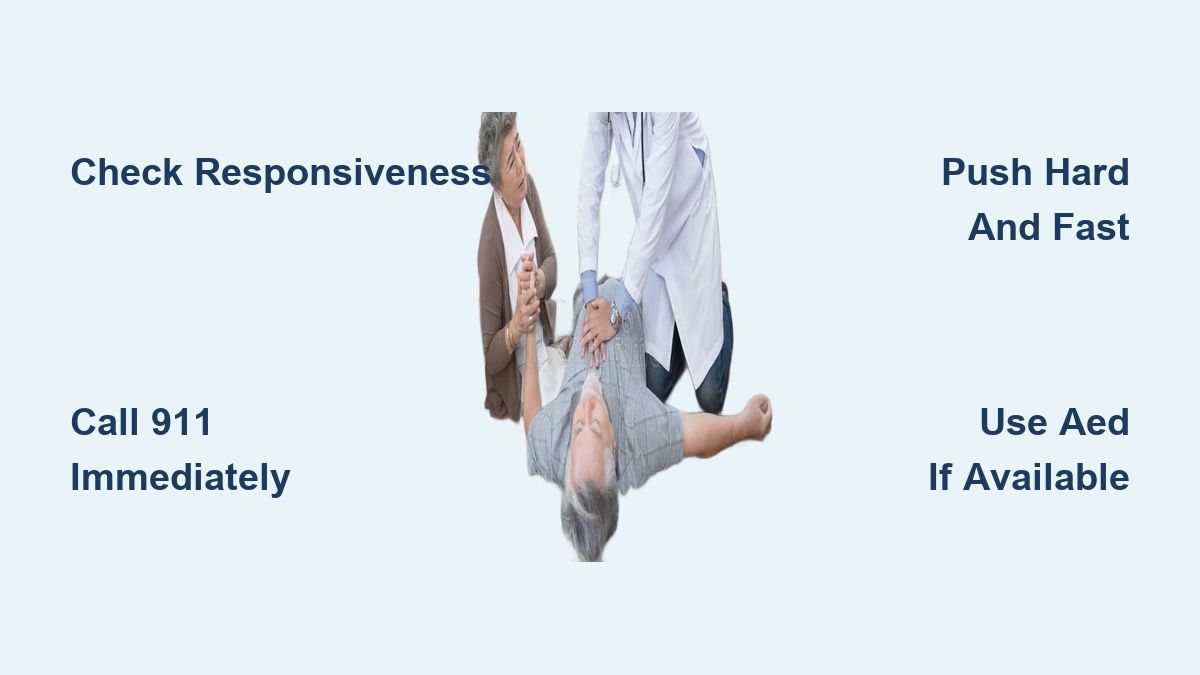
Every year, thousands of elderly individuals experience sudden cardiac arrest outside of hospitals, where immediate bystander CPR can mean the difference between life and death. Knowing how to do CPR on elderly adults requires understanding age-related changes like fragile bones, chronic conditions, and implanted medical devices. This guide covers exactly how to perform CPR on a senior, avoid common mistakes, use an AED safely, and recognize when not to start.
Check Responsiveness First
Before starting CPR, confirm the person is unresponsive. Approach calmly and tap their shoulder firmly while shouting, “Are you okay?” near their ear.
Allow Extra Response Time
Elderly individuals may respond slowly due to dementia, hearing loss, or medication effects. Allow 5 to 10 seconds for a response.
• Do not mistake confusion or delayed movement for consciousness
• If there is no verbal response or purposeful movement, assume cardiac arrest
• Never leave the person to seek help until after calling EMS
Pro Tip: Shout clearly. Many seniors have hearing aids that may be off or malfunctioning.
Call Emergency Services Immediately
Time is critical. Every minute without CPR reduces survival chances by 7 to 10 percent.
What to Say When Calling 911
State your location clearly, including apartment number, floor, or landmarks. Say the person is unresponsive and not breathing normally. Mention if they are elderly, have known heart disease, or wear a pacemaker. Ask if the dispatcher can guide you through CPR.
Hands-Free Coordination
If alone, place your phone on speaker mode so you can begin chest compressions while talking. If someone else is present, send them to call 911 and get an AED while you start CPR.
Key Fact: Dispatcher-assisted CPR increases survival rates by up to 40 percent.
Assess Breathing Accurately
Look, listen, and feel for normal breathing for no more than 10 seconds.
Recognize Agonal Gasps
Seniors often exhibit agonal breathing, which is irregular, gasping breaths that look like snoring or choking. This is not normal breathing. It indicates cardiac arrest and requires immediate CPR.
Beware of Shallow Breaths
Chronic lung conditions like COPD cause weak, shallow breaths that can be mistaken for responsiveness. Focus on chest rise. If it is absent or minimal, begin compressions.
Rule of Thumb: When in doubt, start CPR. Delaying compressions lowers survival more than unnecessary CPR raises risk.
Perform Proper Chest Compressions
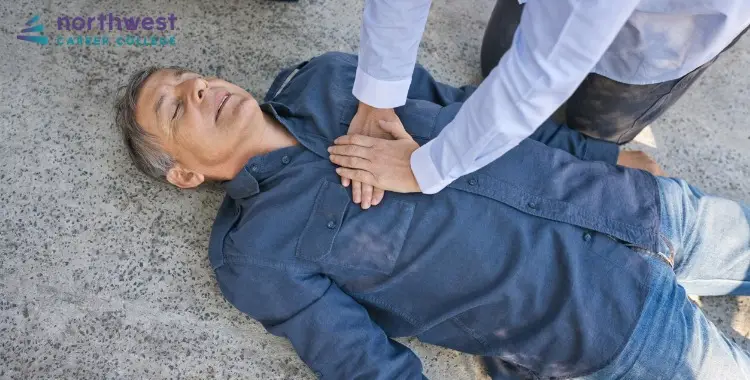
High-quality chest compressions are the most important part of CPR for elderly patients.
Correct Hand Placement
Place the heel of one hand in the center of the chest, on the lower half of the sternum. Place your other hand on top and interlock fingers. Keep arms straight and shoulders aligned over hands.
Compression Depth and Rate
Push at least 2 inches deep but no more than 2.4 inches. Compress at 100 to 120 per minute, matching the beat of “Stayin’ Alive.” Allow full chest recoil between pushes to let the heart refill.
Adjust for Frailty
Many seniors have osteoporosis, increasing fracture risk. You may hear or feel rib cracking. This is common and acceptable. Do not stop CPR for suspected fractures. Slightly reduce force only if the chest feels extremely rigid or collapses abnormally.
Expert Note: A broken rib heals. Lack of blood flow does not. Prioritize circulation over injury prevention.
Deliver Rescue Breaths (If Trained)
Only give breaths if you are trained and comfortable. Otherwise, stick to hands-only CPR.
Use Gentle Ventilation
After 30 compressions, open the airway with head-tilt, chin-lift. Pinch the nose and seal your mouth over theirs. Give two breaths, each lasting 1 second, just enough to make the chest rise.
Prevent Stomach Inflation
Forceful breaths can push air into the stomach, causing vomiting or aspiration, especially dangerous in seniors. Use small, gentle puffs, not deep lunges of air. If the chest does not rise, reposition the head and try again.
Handle Dentures Carefully
Leave well-fitting dentures in place. They help maintain facial structure. Remove them only if loose or blocking the airway.
Hands-Only Alternative: For untrained rescuers, continuous compressions without breaths are strongly recommended by the American Heart Association.
Use an AED Safely on Seniors
Automated External Defibrillators are safe and effective for elderly patients, even those with pacemakers.
Apply Pads Correctly
Turn on the AED and follow voice prompts. Expose the chest and wipe away sweat or lotions. Place one pad on the upper right chest, below the collarbone. Place the other on the lower left side, under the armpit.
Avoid Implants
If you see a bulge indicating a pacemaker or ICD, place pads at least 1 inch away from the device. Do not delay AED use. It will not harm the implant.
Protect Fragile Skin
Remove pads gently after use to avoid skin tears. Never reuse pads. Replace with a new set.
Myth Busting: AEDs do not restart stopped hearts. They shock specific deadly rhythms like ventricular fibrillation.
Continue CPR Until Help Arrives
Keep going until the person starts breathing, coughing, or moving. Continue until EMS takes over, the scene becomes unsafe, or you are physically exhausted.
Fight Rescuer Fatigue
CPR is exhausting. Switch with another person every 2 minutes if possible. Even brief pauses reduce effectiveness. Minimize interruptions.
Expect Delayed Response
Seniors may take longer to respond to resuscitation. Do not stop too soon. Ongoing CPR improves neurological outcomes. Survival is possible even after 10 or more minutes of high-quality CPR.
Critical Insight: CPR does not restart the heart. It buys time for paramedics to deliver advanced care.
Special Considerations for Elderly Patients
Manage Bone Fragility
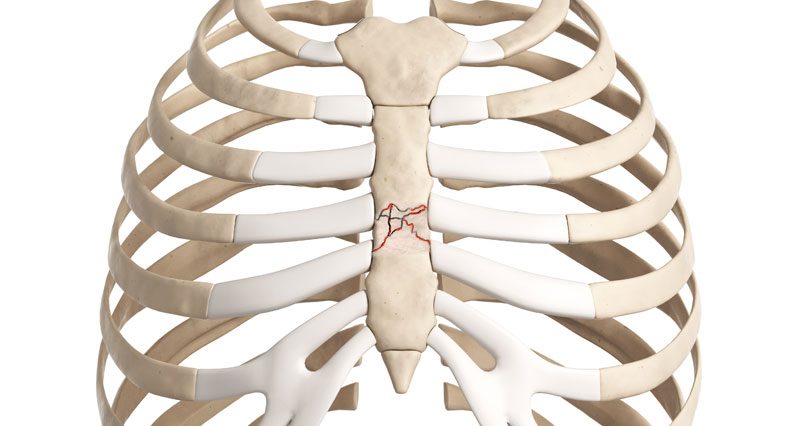
Osteoporosis increases fracture risk during compressions. Rib fractures occur in 30 to 80 percent of elderly CPR cases. Sternal or spinal fractures are also possible. These injuries are not reasons to stop CPR. Effective blood flow is the priority.
Identify Medical Devices Early
Look for signs of pacemakers or ICDs, which appear as small metal bumps under the upper left chest. Look for central lines or ports under the skin. Look for surgical scars from bypass or valve replacement. Avoid direct pressure on devices if possible, but never delay compressions.
Recognize Do Not Resuscitate Orders
Respecting end-of-life wishes is ethically and legally essential.
How to Identify a DNR
Check for a medical alert bracelet, necklace, or wallet card. Look for a signed DNR form posted in the home, common in hospice patients. Ask family members or caregivers if the person has advance directives.
Legal Protection
If a valid DNR exists, do not perform CPR. You are protected by law for honoring it. If unsure, start CPR until EMS arrives and clarifies status.
Ethical Reminder: CPR may prolong life but not always with meaningful recovery, especially in frail elderly with multiple illnesses.
Common Causes of Cardiac Arrest in Seniors
Understanding what leads to cardiac arrest helps prevent delays in care.
Top Triggers in Older Adults
• Heart attack is the most common cause and can trigger fatal arrhythmias
• Heart failure weakens the heart muscle, increasing arrest risk
• Arrhythmias like VF or VT disrupt blood flow
• Respiratory failure from COPD, pneumonia, or choking can lead to arrest
• Severe strokes may cause secondary cardiac arrest
• Falls or trauma with head injury or internal bleeding can be fatal
FAST Alert: Recognize stroke signs. Face drooping, Arm weakness, Speech difficulty, Time to call 911.
Emotional Readiness for Family and Caregivers
Performing CPR on a loved one is emotionally overwhelming.
Stay Calm Under Pressure
Training reduces panic and improves decision-making. Focus on the steps: call, compress, use AED. Remember, you are giving them the best chance to survive.
Support Family Members
Explain what you are doing. Say, “I am doing chest compressions to keep blood flowing.” Reassure them help is on the way. Avoid false hope. Be honest but compassionate.
Pro Tip: Caregivers in nursing homes or assisted living should be CPR-certified. Many states require it.
Get Certified in Elder-Specific CPR
Standard CPR training works, but programs that include elderly scenarios build better preparedness.
Best Certification Options
• BLS (Basic Life Support) is ideal for healthcare workers and professional caregivers
• Online CPR certification offers flexibility and affordability with in-person skills checks
• First Aid plus CPR combo covers choking, bleeding, and medical emergencies
Look for These Features
Choose programs with manikins that simulate frail chests or implanted devices. Look for scenarios involving DNR decisions and family communication. Take refresher courses every 1 to 2 years to maintain skills.
Resource Tip: Programs like the Save a Life Scholarship offer free or discounted certification for caregivers.
Understand Survival Odds and Outcomes
CPR success varies widely based on health and response time.
Realistic Survival Rates
Out-of-hospital cardiac arrest has only 5 to 10 percent survival to hospital discharge. Rates drop further with advanced age, cancer, or kidney failure. Immediate bystander CPR doubles or triples survival chances.
Post-CPR Complications
Survivors may face rib or sternal fractures, lung injury or pneumothorax, cognitive decline or memory loss, and emotional trauma including PTSD or anxiety.
Quality of Life After CPR
Some recover fully, especially if CPR was fast and short. Others face long rehabilitation or permanent disability. Advance care planning helps align treatment with patient values.
Takeaway: CPR saves lives, but it is not always the right choice for every elderly person.
Key Takeaways for How to Do CPR on Elderly
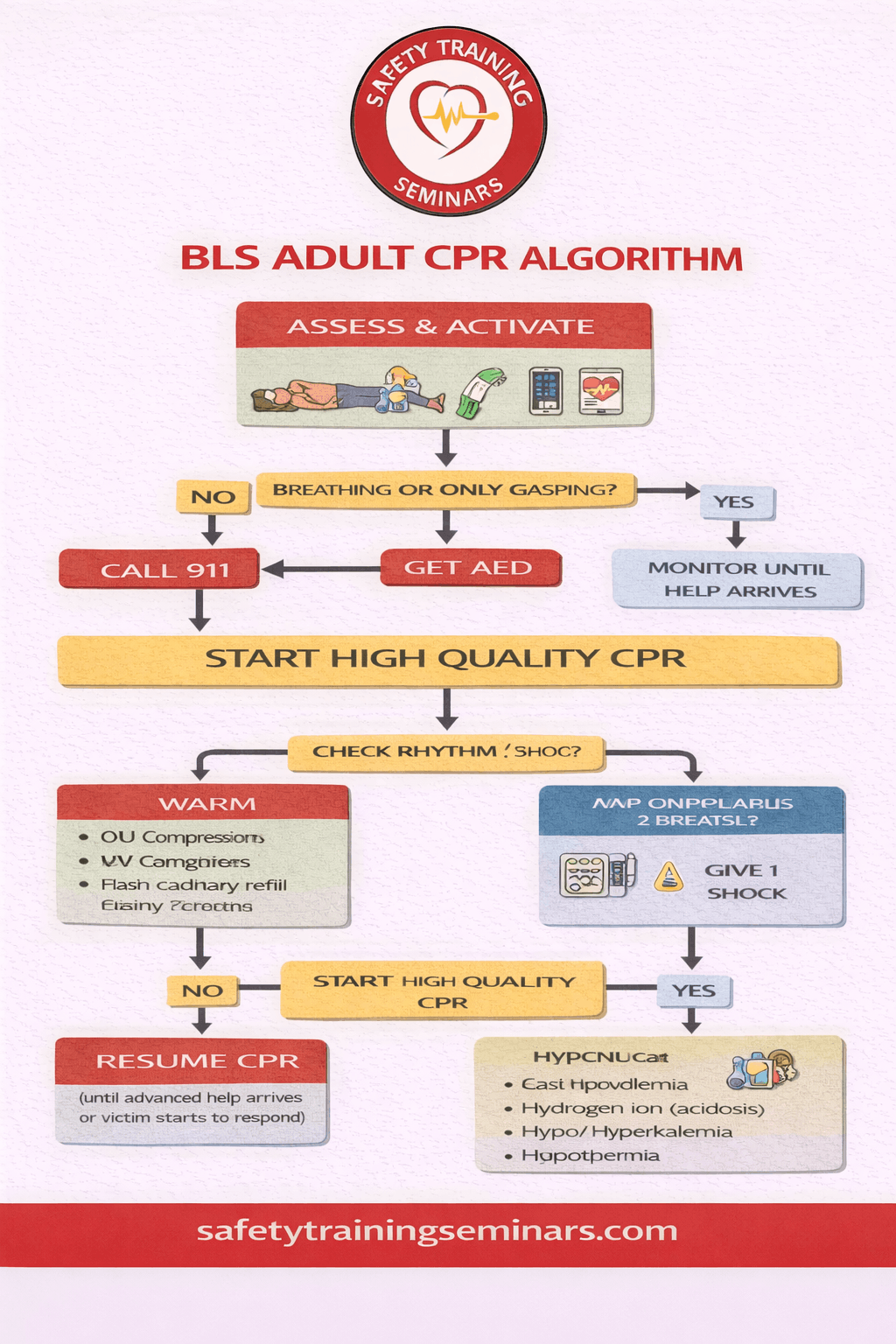
• Start CPR immediately if the elderly person is unresponsive and not breathing normally
• Call 911 first and use speakerphone to multitask
• Push hard and fast, adjusting slightly for frailty but not going below 2 inches
• Use an AED as soon as available. It is safe for pacemakers
• Continue until help arrives. Do not stop too soon
• Respect DNR orders if clearly documented
• Get trained and practice regularly
Bottom Line: You do not need to be perfect. Just willing to act. Even imperfect CPR is better than none.
Frequently Asked Questions About How to Do CPR on Elderly
Is CPR different for elderly than for younger people?
The core steps of CPR remain the same across all ages. However, elderly patients may require slight adjustments due to bone fragility from osteoporosis, chronic lung conditions, and implanted medical devices like pacemakers. The priority is always maintaining blood flow.
Should I perform CPR if the elderly person has a pacemaker?
Yes. Pacemakers and implanted cardioverter-defibrillators do not prevent CPR or AED use. Simply place AED pads at least 1 inch away from the device. The electrical current will not harm the implant.
What if I hear ribs cracking during CPR?
Rib fractures occur in 30 to 80 percent of elderly CPR cases. This is common and acceptable. Do not stop CPR. A broken rib heals. Lack of blood flow to the brain and heart does not.
How long should I continue CPR on an elderly person?
Continue CPR until one of these occurs: the person starts breathing, coughing, or moving; EMS takes over; the scene becomes unsafe; or you are physically exhausted. Do not stop too soon. Seniors may take longer to respond.
What should I do if the elderly person has a DNR order?
If a valid DNR order exists, do not perform CPR. Check for medical alert bracelets, wallet cards, or posted forms in the home. If you are unsure, start CPR until EMS arrives and clarifies the situation. You are legally protected for honoring a valid DNR.
Can I perform hands-only CPR on an elderly person?
Yes. The American Heart Association recommends hands-only CPR for untrained rescuers. It is highly effective and better than no CPR at all. If you are trained, use the 30:2 compression-to-breath ratio.
Final Thoughts on How to Do CPR on Elderly
Performing CPR on elderly individuals combines technical skill with compassion. With the right knowledge, you can respond confidently, respect patient dignity, and potentially save a life. The key is starting immediately, calling for help, and pushing hard and fast while allowing full chest recoil. Remember that rib fractures are common and acceptable. Prioritize circulation over injury prevention.
Understanding special considerations like bone fragility, medical devices, and DNR orders ensures you provide appropriate care. Emotional preparedness helps you stay calm during a crisis and support family members effectively. Consider enrolling in a CPR certification course today. Your readiness could make all the difference tomorrow.