If you’re over 60 and wondering how to exercise safely, you’re not alone. Millions of seniors want to stay strong, mobile, and independent, but many do not know where to start. The good news? You do not need a gym, expensive equipment, or hours of time. Just 10 to 30 minutes a day of the right movements can dramatically improve your strength, balance, energy, and brain health.
Research shows that regular physical activity slows muscle loss, cuts fall risk, lowers dementia risk by over 40 percent, and helps manage chronic conditions like arthritis, diabetes, and heart disease. Even if you have been sedentary for years, starting now can reverse functional decline and restore confidence in daily tasks like standing up, carrying groceries, or climbing stairs.
Strength Exercises to Combat Muscle Loss

Building muscle is essential to counteract sarcopenia, the age-related loss of muscle mass that accelerates after 60. Strong muscles support joints, boost metabolism, and make daily tasks easier. Perform these exercises 2 to 3 times per week, starting with bodyweight and progressing as you gain strength.
Sit-to-Stand from Chair
This exercise mimics real-life actions like rising from a toilet or sofa. It builds leg strength and improves balance.
• Sit on a sturdy chair with feet flat on the floor
• Lean slightly forward, engage your core, and stand without using your hands
• Lower slowly with control
• Do 2 to 3 sets of 10 reps
• Progression: Use a lower chair or hold light weights
Wall Push-Ups for Upper Body Strength
Wall push-ups build upper-body strength for pushing motions like opening doors or getting up from the floor.
• Stand 2 to 3 feet from a wall with hands at shoulder height
• Bend elbows to lean in toward the wall, then push back
• Keep your body straight without sagging at the hips
• Do 10 slow reps
• Progression: Move feet farther from the wall
Calf Raises for Stability
Calf raises strengthen calves for stair climbing, walking, and balance.
• Stand hip-width apart, holding a chair or wall for support
• Lift your heels and rise onto your toes, pause, then lower slowly
• Do 10 to 20 controlled reps
• Variation: Seated heel raises isolate calf muscles if standing is difficult
Overhead Press with Light Weights
This exercise improves your ability to reach into cupboards or place items on shelves.
• Hold water bottles or light dumbbells at shoulder level
• Press arms upward until straight, then lower slowly
• Keep your core engaged to avoid arching your back
• Do 10 smooth reps
Step-Back Lunges for Stability
Step-back lunges enhance stability for walking, stair use, and floor-to-standing transitions.
• Stand tall and step one leg back
• Bend both knees to 90 degrees, then push forward to return
• Alternate legs and do 5 reps per leg
• Safety: Use a chair for balance if needed
Balance Training to Prevent Falls
Falls are a leading cause of injury in seniors. Balance exercises strengthen stabilizing muscles and improve coordination. Do these exercises 3 or more days per week, ideally during daily routines like brushing your teeth.
Single-Leg Stand
This exercise improves unilateral stability, which is critical for walking on uneven terrain.
• Stand on one leg with the other foot off the ground and knee bent
• Hold for 10 to 30 seconds, then switch sides
• Do 3 holds per leg
• Progression: Close your eyes, stand on a cushion, or move the lifted foot forward, side, or back
Heel-to-Toe Stance
Tandem stance trains dynamic balance and hip strength.
• Place one foot directly in front of the other, heel to toe
• Hold the position for 20 to 30 seconds
• Use a wall for support if needed
• Progression: Walk heel-to-toe in a straight line
Standing Up Without Hands
This practice builds a key functional skill: rising from a chair independently.
• Sit on a chair with arms crossed over your chest
• Stand up using only your leg strength
• Lower slowly and repeat 5 to 10 times
Flexibility and Mobility Routines
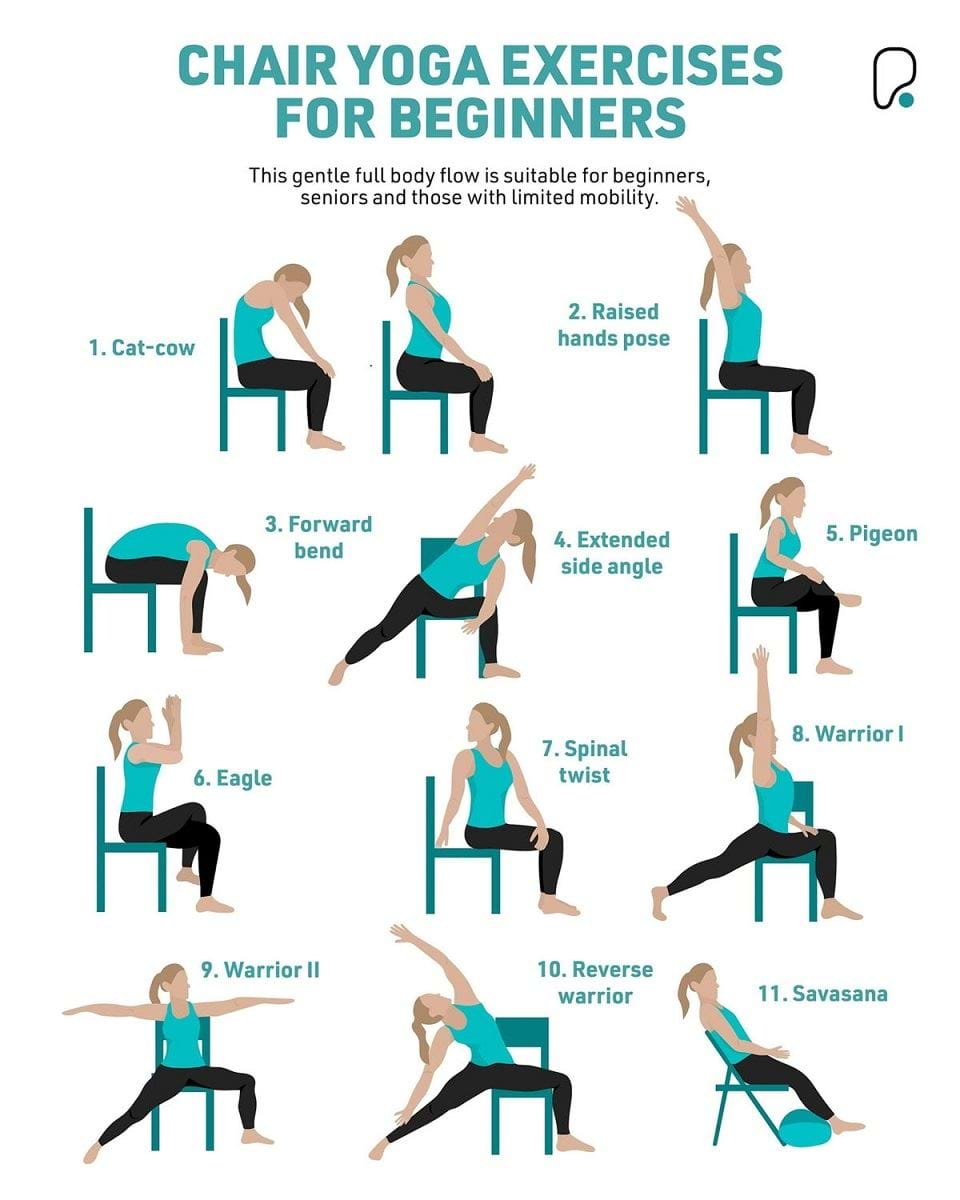
Stiff joints make movement harder. Daily stretching maintains range of motion and supports posture. Stretch after warming up or post-exercise, holding each stretch for 20 to 30 seconds without bouncing.
Neck and Shoulder Stretches
These stretches relieve tension from slouching or screen use.
• Neck Turn: Slowly turn your head to one side, hold for 20 seconds, repeat on the other side
• Shoulder Cross-Body Stretch: Bring one arm across your chest and gently pull with the opposite hand
• Upper Back Reach: Sit with arms forward, backs of hands together, and fingers pointing outward
Hip and Spinal Mobility Exercises
These movements improve turning while driving, bending, and walking.
• Seated Twists: Sit tall with arms crossed and rotate your torso left and right
• Hip Circles: Hold a wall and rotate hips clockwise and counterclockwise
• Side Bends: Sit or stand and gently bend to each side with a hand on your thigh
Ankle and Wrist Rotations
These exercises boost circulation and prevent stiffness.
• Ankle Rotations: Lift your foot and rotate 5 times in each direction
• Wrist Stretches: Extend your arm with palm up and pull fingers back, then repeat with palm down
Low-Impact Cardio for Heart Health
Cardio keeps your heart strong, lungs efficient, and energy high. Aim for 150 minutes weekly of moderate activity, broken into 10 to 15 minute sessions if needed.
Brisk Walking
Walking is the simplest, most effective cardio for seniors.
• Walk fast enough that you can talk but not sing
• Aim for 8,000 to 10,000 steps per day
• Use a pedometer or phone tracker to monitor progress
Water Aerobics or Swimming
Water-based activities are zero-impact and ideal for arthritis or joint pain.
• Builds endurance without stressing knees or hips
• Classes often available at community centers or YMCAs
Chair-Based Marching
This option is perfect for limited mobility or beginners.
• Sit tall and lift knees alternately as if marching
• Add arm swings to increase intensity
• Do 2 to 3 rounds of 1 to 2 minutes
Dancing or Zumba Gold
Dancing is fun, social, and great for coordination.
• Improves balance while boosting mood
• Many free senior-friendly videos are available online
The Four Daily Foundational Exercises
Physical therapists recommend these four exercises for daily practice to maintain independence.
Sit-to-Stand
This movement builds leg strength for rising from chairs. Stand up from a chair without using your hands and aim for 5 to 10 reps daily. Progression involves using a lower chair or adding light weights.
Tandem Stance
This exercise sharpens balance and hip control. Stand heel-to-toe and hold for 20 seconds. Progress by closing your eyes or holding a light weight in one hand.
Farmer’s Walk
This movement strengthens grip and core, key for carrying groceries. Walk 10 to 15 steps holding light weights with shoulders back, core tight, and eyes forward.
Single-Leg Stand
This exercise prevents falls by training stability. Stand on one leg and hold for 10 to 15 seconds. Perform 3 times per leg, 2 to 3 times daily.
Sample Weekly Exercise Plan
This balanced schedule covers all four pillars: strength, cardio, balance, and flexibility.
• Monday: 15-minute walk twice daily, sit-to-stand and wall push-ups, single-leg stand, neck and shoulder stretches
• Tuesday: Chair marching for 10 minutes, calf raises and overhead press, heel-to-toe walk, ankle and wrist rotations
• Wednesday: 30-minute water aerobics, step-back lunges and toe taps, tandem stance, hip circles and seated twist
• Thursday: Rest or light walk, full strength circuit, standing up without hands, full-body stretch
• Friday: 30-minute walk or cycling, knee lifts and bicep curls, weight shifting, shoulder and spine mobility
• Saturday: Pickleball or dancing, resistance band circuit, balance routine, yoga or tai chi for 30 minutes
• Sunday: Rest or gentle stretch, abdominal contractions and pelvic tilts, seated leg lifts, cool-down flow
Start slow and begin with 2 to 3 days per week, then build up. Consistency beats intensity.
Chair-Based Full-Body Routine
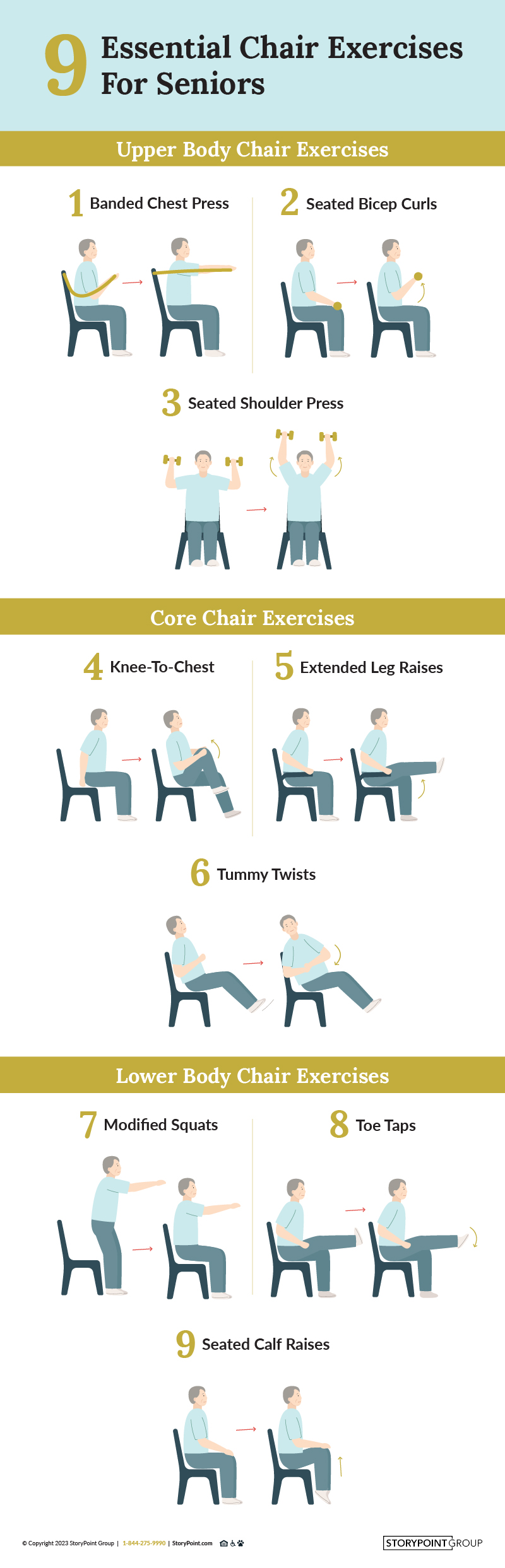
This 45-minute routine is ideal for low mobility or beginners. All exercises can be done seated or with chair support.
Warm-Up (Seated)
• Leg extensions: 10 per leg
• Seated twists: 10 left and right
• Reach-ups: alternate arms 10 times each
• Side bends: 8 per side
• Shoulder shrugs and rolls: 10 each
• March in place: 1 minute
Standing Phase with Chair Support
After each movement, add progressive squats.
• Heel flicks for 45 seconds followed by 1 squat
• Side kicks for 45 seconds followed by 2 squats
• Calf raises for 15 seconds followed by 4 squats
• Overhead reach followed by 7 squats
• Band press followed by 8 squats
• Continue up to 20 squats
Resistance Band Circuit (3 Rounds)
• Bicep curls: 10 reps
• Overhead press: 10 reps
• Side-step walk: 10 steps each way
Cool-Down Stretch
• Seated hamstring stretch
• Shoulder cross-body stretch
• Neck turns
• Wall calf stretch for 30 seconds per side
When and How to Progress
You are ready to progress when movements feel easy, you complete all reps with good form, and there is no pain or excessive soreness.
Safe Progression Strategies
• Increase reps from 10 to 12 or 15
• Add resistance using bands or 1 to 3 pound weights
• Reduce support by trying sit-to-stand without hands
• Slow down movements to 3 seconds up, 3 seconds down
• Challenge balance by closing eyes during single-leg stands
Progress only one variable at a time.
Safety First: Avoiding Injury
Even gentle exercise carries risks if done incorrectly. Get medical clearance if you have heart disease, diabetes with neuropathy, osteoporosis, joint replacements, or balance disorders.
Key Safety Practices
• Use a sturdy, non-wheeled chair
• Keep a wall or counter nearby for balance
• Wear non-slip shoes
• Hydrate before and after exercise
• Stop immediately if you feel chest pain, dizziness, shortness of breath, or joint pain
Fall Prevention at Home
• Remove loose rugs and cords
• Install grab bars in bathrooms
• Ensure good lighting
• Use a cane or walker if needed
Real-World Benefits: Why Exercise Matters
Exercise is not just about fitness. It is about keeping your independence.
| Daily Task | Exercise That Helps |
|---|---|
| Standing from chair | Sit-to-stand |
| Carrying groceries | Farmer’s walk, bicep curls |
| Climbing stairs | Step-back lunges, calf raises |
| Putting on socks | Hip mobility, hamstring stretches |
| Turning head while driving | Neck turns, seated twists |
| Walking on grass | Single-leg stands, balance drills |
Seniors who exercise regularly are less likely to need assisted living.
Mental and Cognitive Benefits
Exercise is brain medicine. It lowers dementia risk by over 40 percent through improved blood flow and neural stimulation. It reduces depression and anxiety by boosting endorphins. It improves sleep quality and duration. It enhances memory and focus, especially with aerobic and coordination activities. It promotes social connection in group classes like tai chi or SilverSneakers.
Minimal Equipment You Can Use
You do not need much to get started.
• Sturdy chair for support and seated exercises
• Water bottles or canned goods as substitutes for dumbbells
• Resistance bands that are lightweight, scalable, and portable
• Wall for push-ups, balance, and stretches
• Non-slip mat for floor stretches
A 10 dollar resistance band lasts years and replaces a full set of weights.
Recommended Free Exercise Videos
Certified trainers offer safe, effective routines for seniors.
• 5-Minute Low-Impact Cardio with Belinda for morning warm-up
• 10-Minute Sit and Stand with Cedric for leg strength
• 15-Minute Mobility with Belinda for joint flexibility
• 5-Minute Sit and Stand for Cardio for quick energy boost
• 15-Minute Balance and Stability with Belinda for fall prevention
Find these videos on the Planet Fitness YouTube channel or senior wellness websites.
Key Takeaways for Starting Your Exercise Journey
You do not need to be fit to start. You need to start to be fit. The best exercise program is one you can do consistently, safely, and enjoyably.
• Do strength, cardio, balance, and flexibility each week
• Start small with 5 to 10 minutes daily
• Use everyday moments like TV time, waiting, or walking to move more
• Progress gradually, prioritizing form over speed and control over intensity
• Every movement counts, even standing up builds strength
Exercise is not about looking younger. It is about living stronger, longer, and independently. Start today.
Frequently Asked Questions About How to Exercise for Seniors
What is the best type of exercise for seniors who have been sedentary?
Start with low-impact activities like chair-based exercises, walking, or water aerobics. Focus on the four pillars: strength, cardio, balance, and flexibility. Begin with just 5 to 10 minutes daily and gradually increase duration. The key is consistency rather than intensity.
How often should seniors exercise each week?
The CDC recommends at least 150 minutes of moderate aerobic activity per week, plus strength training 2 or more days per week, balance training 3 or more days per week, and flexibility work daily or several times per week. You can break cardio into 10 to 15 minute sessions throughout the day.
Can seniors build muscle after 60?
Yes. Muscle building is possible at any age through resistance training. Sarcopenia, the age-related muscle loss, can be slowed and partially reversed with regular strength training. Start with bodyweight exercises and progress to light weights or resistance bands.
What exercises are safest for preventing falls?
Single-leg stands, heel-to-toe walking, tandem stance, and standing up from a chair without using hands are all effective for fall prevention. Practice these balance exercises daily, ideally during routine activities like brushing teeth.
Do I need special equipment to exercise at home?
No. A sturdy chair, water bottles or canned goods for weights, and a wall for support are sufficient. Resistance bands are inexpensive and replace the need for multiple dumbbells. No gym membership or expensive equipment is required.
How long does it take to see results from exercising?
Many seniors notice increased energy and better balance within 2 to 4 weeks. Strength improvements typically appear within 6 to 8 weeks. Long-term benefits like reduced fall risk and improved cognitive health continue to build over months of consistent practice.